Anorexia nervosa is a serious eating disorder that affects both physical and mental health. It can lead to severe weight loss, emotional distress, nutritional deficiencies, and life-threatening medical complications if left untreated. Many individuals struggle silently with distorted body image, fear of gaining weight, and unhealthy eating behaviors that interfere with daily life. Seeking professional treatment for anorexia is one of the most important steps toward recovery and long-term wellness.
At Boston Neurobehavioral Associates, individuals receive compassionate and evidence-based care designed to address the emotional, behavioral, and medical aspects of anorexia. Effective treatment focuses not only on restoring physical health but also on helping individuals rebuild a healthier relationship with food and self-image.
Understanding Anorexia Nervosa
Anorexia nervosa is more than a dieting issue. It is a complex mental health condition that often develops due to a combination of psychological, biological, and environmental factors. People with anorexia may severely restrict food intake, overexercise, or engage in harmful behaviors to avoid weight gain.
Common symptoms include:
- Extreme weight loss
- Intense fear of gaining weight
- Obsession with calories or dieting
- Distorted body image
- Fatigue and weakness
- Mood swings and social withdrawal
- Irregular heartbeat or dizziness
Without proper care, anorexia can impact the heart, bones, digestive system, and brain. Early diagnosis and professional treatment significantly improve recovery outcomes.
Why Professional Treatment Matters
Many people believe they can overcome anorexia alone, but recovery often requires professional support. Since anorexia affects both the mind and body, treatment must address emotional struggles alongside nutritional rehabilitation.
Professional treatment for anorexia helps individuals:
- Restore healthy eating patterns
- Improve emotional well-being
- Identify triggers and unhealthy thought patterns
- Build coping skills for stress and anxiety
- Prevent relapse and long-term complications
A structured treatment plan provides medical supervision, therapy, and nutritional guidance tailored to the individual’s unique needs.
The Role of Medical Monitoring
Anorexia can create serious physical health risks that require ongoing medical attention. During treatment, healthcare professionals monitor vital signs, weight changes, hydration, and nutritional deficiencies.
Medical monitoring is essential because individuals with anorexia may experience:
- Low blood pressure
- Heart complications
- Electrolyte imbalances
- Hormonal changes
- Weak immune function
Healthcare providers ensure that the recovery process remains safe while supporting gradual physical stabilization.
Nutritional Counseling and Meal Support
One of the primary goals of treatment for anorexia is restoring proper nutrition. Many individuals develop fear and anxiety around food, making mealtime emotionally difficult. Nutritional counseling helps patients understand their body’s needs and rebuild balanced eating habits.
Registered dietitians work closely with patients to:
- Create realistic meal plans
- Address fears related to food
- Promote healthy nutrition education
- Encourage gradual weight restoration
- Support long-term healthy eating habits
Meal support can also help individuals feel more comfortable during the recovery process. Learning to eat regularly again is a major step toward physical and emotional healing.
Therapy for Emotional Healing
Therapy plays a critical role in anorexia recovery because the disorder is often connected to deeper emotional struggles. Anxiety, depression, perfectionism, trauma, and low self-esteem commonly contribute to disordered eating behaviors.
Different therapeutic approaches may be used during treatment, including:
Cognitive Behavioral Therapy
Cognitive Behavioral Therapy helps individuals identify harmful thoughts and behaviors related to food, body image, and self-worth. Patients learn healthier ways to manage emotions and stress.
Family-Based Therapy
Family support can be highly beneficial, especially for adolescents and young adults. Family-based therapy helps loved ones understand anorexia while improving communication and support at home.
Individual Counseling
One-on-one counseling provides a safe environment for individuals to discuss personal challenges, fears, and emotional triggers connected to the disorder.
Group Therapy
Group sessions allow patients to connect with others experiencing similar struggles. Sharing experiences can reduce feelings of isolation and encourage motivation during recovery.
Addressing Co-Occurring Mental Health Conditions
Many people with anorexia also experience other mental health conditions such as anxiety disorders, depression, obsessive-compulsive behaviors, or trauma-related disorders. Effective treatment for anorexia often includes care for these co-occurring challenges.
Integrated mental health support can improve recovery outcomes by helping individuals better manage emotional stressors that contribute to disordered eating patterns.
Importance of Early Intervention
Early treatment can reduce the risk of severe medical complications and improve the chances of long-term recovery. Unfortunately, many individuals delay seeking help because of shame, denial, or fear of change.
Warning signs that indicate professional support may be needed include:
- Rapid weight loss
- Skipping meals frequently
- Obsession with body size or food
- Excessive exercise habits
- Emotional distress related to eating
- Social isolation or mood changes
Recognizing these symptoms early allows healthcare professionals to begin treatment before the condition becomes more dangerous.
Building a Long-Term Recovery Plan
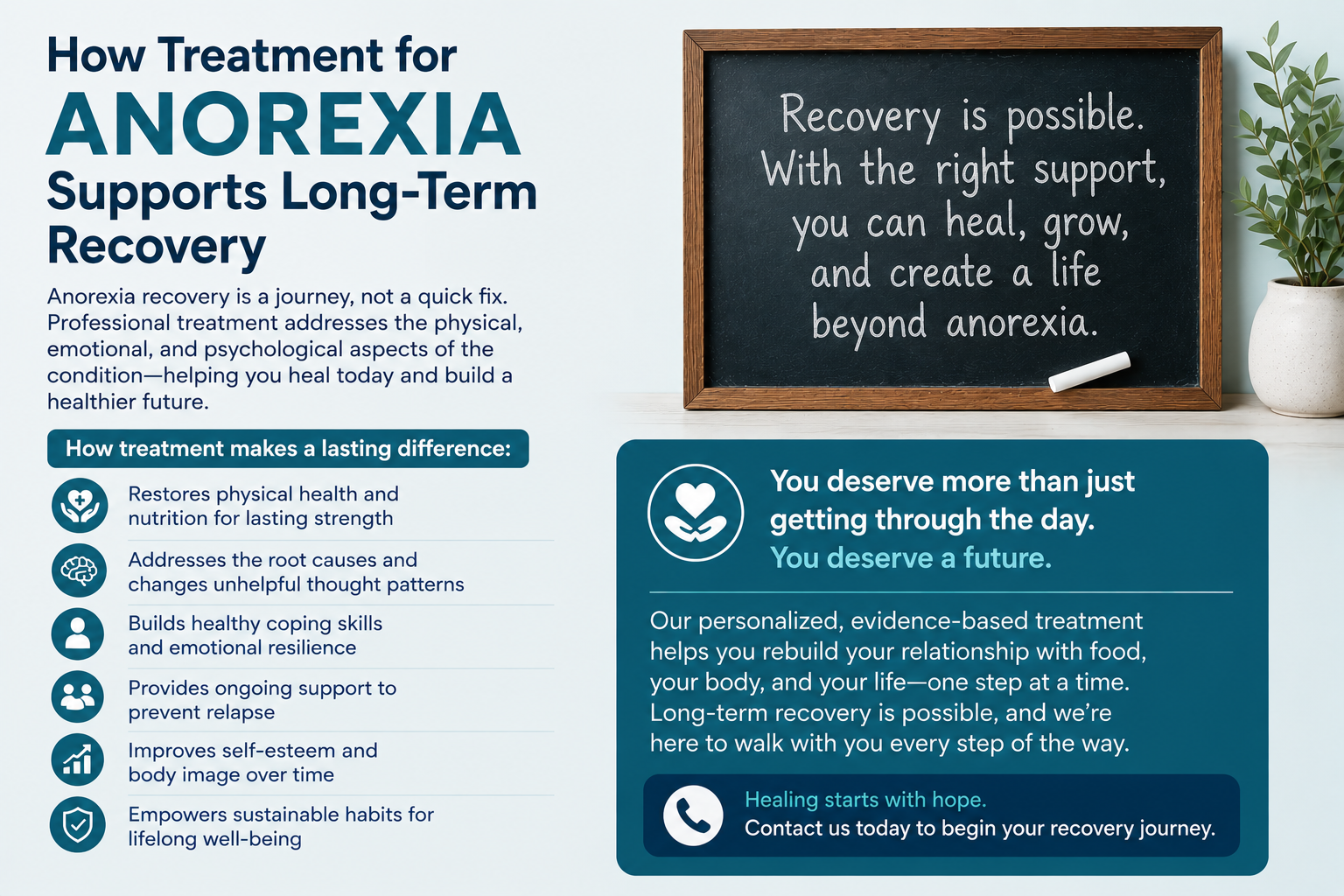
Recovery from anorexia is a gradual process that requires ongoing support and commitment. Treatment does not end after weight restoration. Long-term success depends on developing healthy coping strategies and maintaining emotional balance.
A comprehensive recovery plan may include:
- Continued therapy sessions
- Nutritional follow-up appointments
- Stress management techniques
- Healthy lifestyle habits
- Family and peer support systems
Individuals who stay connected with professional care often experience better emotional stability and reduced relapse risk.
Creating a Supportive Environment
Support from family members, friends, and healthcare providers can make a significant difference during recovery. Encouragement, understanding, and patience help individuals feel less alone while navigating the challenges of healing.
Loved ones can support recovery by:
- Avoiding judgment or criticism
- Encouraging open communication
- Promoting healthy habits
- Supporting treatment participation
- Learning more about eating disorders
A positive and supportive environment strengthens confidence and motivation throughout the recovery journey.
Hope for Recovery
Although anorexia is a serious condition, recovery is possible with the right treatment and support. Every individual’s journey is different, but professional care can help restore physical health, emotional stability, and quality of life.
At Boston Neurobehavioral Associates, compassionate specialists provide personalized treatment for anorexia focused on long-term healing and recovery. With evidence-based therapies, medical guidance, and emotional support, individuals can take meaningful steps toward a healthier future.



 About SPORTIVO Network

 Czech
Czech
 English
 Arabic
 French
 Spanish
 Portuguese
 Deutsch
 Turkish
 Dutch
Dutch
 Italiano
 Russian
 Portuguese (Brazil)
 Greek
Greek