


 About SPORTIVO Network
Walk into almost any modern classroom, and you will see students glued to screens. But what they are doing on those screens matters enormously. Are they rapidly recalling facts in a high-stakes race? Or are they carefully considering each answer, knowing that speed alone will not save them?
Two platforms dominate the live quiz space: Gimkit and Quizizz. Both are excellent. Both are free to start. But they operate on fundamentally different philosophies of how students learn best. Choosing between them requires understanding those differences, not just comparing feature lists.
This breakdown examines gameplay mechanics, data reporting, student engagement, pricing, and practical classroom fit to help your school make an informed decision.
The Core Philosophical Difference
Quizizz was designed as a teacher-first tool. It prioritizes question depth, answer explanations, and robust reporting. Students work at their own pace, but the experience feels like a traditional quiz—just with memes and music.
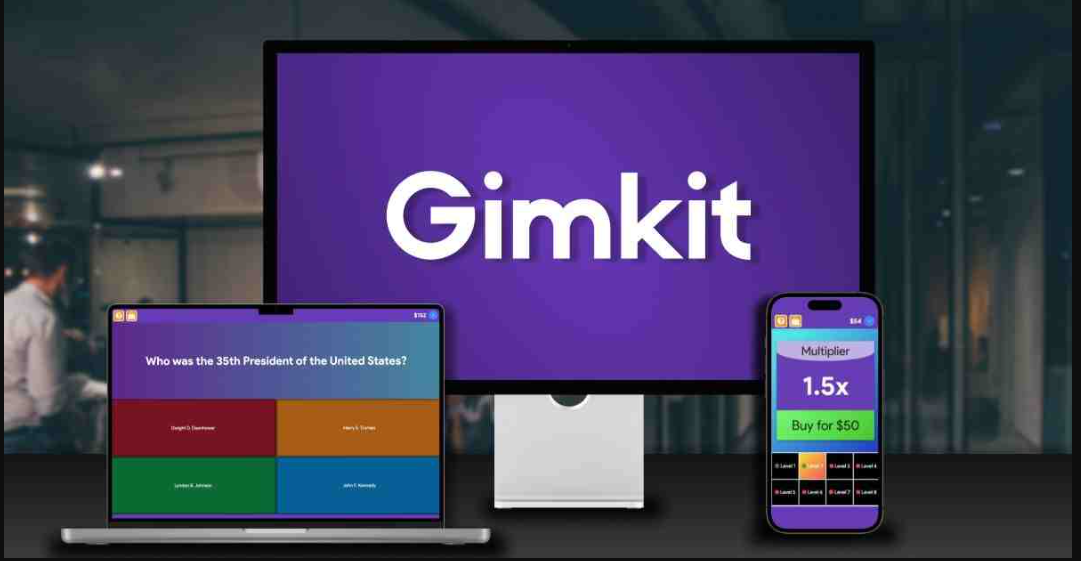
Gimkit was designed by a student. It prioritizes risk, reward, and replayability. Students earn virtual currency for correct answers, then spend that currency on power-ups that boost future earnings. A wrong answer can cost you money. This creates tension, excitement, and strategic thinking.
In short: Quizizz asks, "Do you know the answer?" Gimkit asks, "Do you know the answer well enough to bet on it?"
Gameplay and Student Experience
Quizizz offers a straightforward, low-anxiety experience. Questions appear on student devices one at a time. Each question includes answer choices, and students receive immediate feedback—green for correct, red for incorrect—along with an optional explanation written by the teacher. A leaderboard updates in real time, but students can hide it if they find it distracting.
The pacing is entirely student-controlled. A fast reader can finish fifty questions in ten minutes. A slow processor or English language learner can take thirty minutes without feeling rushed. This inclusivity is a major strength.
Gimkit introduces a layer of strategy that changes student behavior entirely. Correct answers add cash to a virtual wallet. Wrong answers subtract cash or freeze earning potential temporarily. Students then visit a store mid-game to purchase multipliers, insurance against wrong answers, or sabotage against other players.
This economy transforms review sessions. Suddenly, a student who knows the content must decide: invest in a 2x multiplier to double future earnings, or save cash for a "blur" power-up that hides answer choices from rivals? The game becomes about resource management as much as content knowledge.
Which is better for engagement? Gimkit wins for raw excitement and energy. Quizizz wins for focus on content without distraction.
Question Types and Content Depth
Quizizz supports a wider range of question types out of the box. Teachers can create multiple-choice, checkbox (select all that apply), fill-in-the-blank, open-ended, poll, and even drag-and-drop questions. This variety allows for more authentic assessment of complex thinking.
Gimkit focuses almost exclusively on multiple-choice and text-entry questions. While this keeps gameplay fast, it limits the depth of questioning. A Gimkit game is excellent for vocabulary recall, math facts, or basic comprehension checks. It is less suitable for essay preparation, hypothesis formation, or comparative analysis.
Which is better for assessment variety? Quizizz wins decisively. If your school values diverse question formats, this matters.
Data and Reporting for Teachers
Quizizz provides exceptionally detailed reports. After any live game or assigned homework, teachers can see a class-wide mastery breakdown for each standard, individual student performance over time, and a question-by-question analysis showing exactly which distractors students selected. This data exports to Google Classroom and other gradebooks seamlessly.
Gimkit Pro offers solid but less granular reporting. Teachers can see final scores, accuracy percentages, and which questions were most frequently missed. However, the platform does not currently offer the same level of longitudinal tracking or standard alignment tools as Quizizz. You will know who struggled, but you will have to do more manual work to diagnose why.
Which is better for data-driven instruction? Quizizz wins, particularly for schools using response to intervention (RTI) or standards-based grading.
Pricing for Schools and Districts
Both platforms offer free tiers, but the upgrade costs differ significantly in structure.
Quizizz offers a free plan that includes most core features, including live games, assignments, and basic reporting. The paid "Schools and Districts" plan adds advanced reporting, plagiarism detection for open-ended questions, and priority support. Pricing is typically quoted per school or per district based on enrollment size.
Gimkit offers a free plan limited to basic modes and no persistent data. The individual Pro plan costs roughly 10to10to15 per teacher per year, making it exceptionally affordable for individual educators. However, Gimkit's school-wide pricing is less standardized; most schools purchase individual teacher licenses rather than a unified institutional plan.
Which is better for budget-conscious schools? For a single teacher, Gimkit Pro is cheaper. For a school-wide rollout requiring centralized reporting and admin controls, Quizizz offers more institutional features.
Remote and Hybrid Learning Fit
Both platforms perform well asynchronously, but they shine in different scenarios.
Quizizz allows teachers to set a deadline, assign a quiz, and let students complete it anytime within that window. Students see answer explanations immediately, making the platform an effective homework tool. The "Flashcards" mode turns any quiz into a study set, bridging practice and assessment.
Gimkit assignments require students to play through the game economy, which takes longer than a standard quiz. However, the assignment mode still tracks completion and accuracy. The bigger advantage for remote learning is social: students miss the energy of Gimkit's live modes, which feel closer to a video game lobby than a test.
Which is better for hybrid schedules? Quizizz is more flexible. Gimkit is more fun for live synchronous sessions.
Classroom Management and Controls
Quizizz gives teachers granular control over game settings. You can disable the leaderboard to reduce anxiety, turn off music and memes for a serious tone, randomize question order for each student, and require a passing score before moving to the next question.
Gimkit offers fewer management levers. The game economy is central to the experience—you cannot easily strip away the competitive elements without breaking what makes Gimkit unique. This means Gimkit works best with classes that handle competition healthily and struggles with groups prone to frustration or outbursts.
Which is better for challenging classrooms? Quizizz offers more dials to turn down the heat.
The Verdict: Which Should Your School Choose?
There is no single correct answer, but there are clear guidelines based on your goals.
Choose Gimkit if:
-
Your primary goal is raw engagement and energy.
-
You teach vocabulary, math facts, or content with clear right/wrong answers.
-
Your students respond well to game mechanics and strategic thinking.
-
You are willing to pay $10–15 out of pocket for a Pro license.
-
You have a manageable class size and do not need extensive data exports.
Choose Quizizz if:
-
You need diverse question types including open-ended and drag-and-drop.
-
You rely on detailed data to drive small-group instruction.
-
You assign asynchronous homework regularly.
-
Your students include English learners or special education students who need flexible pacing without extra pressure.
-
Your school requires centralized reporting and admin oversight.
The hybrid approach: Many successful schools use both. Quizizz serves as the primary assessment and homework platform. Teachers use Gimkit once per week as a reward or a Friday review session. The two tools complement rather than compete. Budget for a few Gimkit Pro licenses for teachers who request them, while maintaining Quizizz as the school-wide standard.
Final Recommendation
For most traditional K–12 schools, Quizizz is the safer, more versatile investment. Its reporting, question variety, and management controls align better with district assessment policies and diverse student needs.
But for the teacher who struggles with apathetic students, especially in middle and high school, Gimkit can be a lifeline. The first time a normally disengaged student shouts, "I just bought a two-times multiplier!" you will understand its value.
The best tool is the one that actually gets used. Test both with your students. Watch their faces. The data will tell you everything you need to know.

 Czech
Czech
 Arabic
 French
 Spanish
 Portuguese
 Deutsch
 Turkish
 Dutch
Dutch
 Italiano
 Russian
 Romaian
 Portuguese (Brazil)
 Greek
Greek