In modern power transmission and distribution systems, the overhead conductor plays a critical role in ensuring stable, efficient, and cost-effective electricity delivery. From utility grids to industrial infrastructure projects, selecting the right conductor type directly impacts line losses, system reliability, and long-term operational cost.
For procurement engineers, EPC contractors, and utility planners, understanding conductor materials, performance characteristics, and application suitability is essential for building resilient power networks.
As a global manufacturer of overhead conductors and cable solutions, HNBF Power provides advanced conductor technologies designed for modern grid demands.
What is an Overhead Conductor?
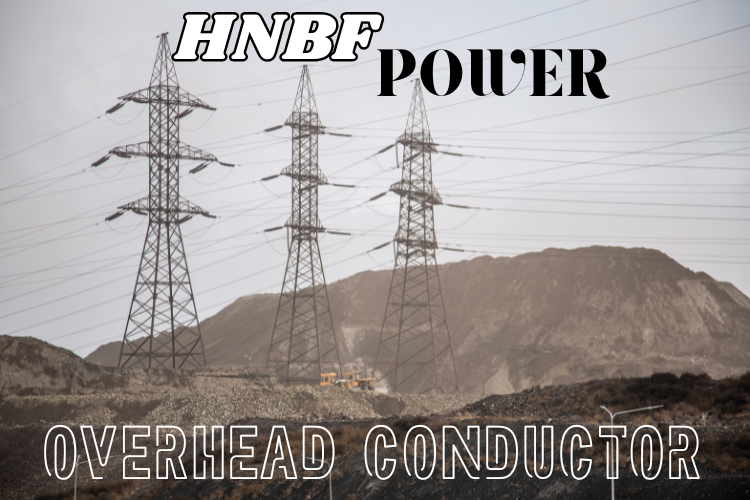
An overhead conductor is a metallic wire or cable suspended between transmission towers or poles used to carry electrical power across long distances. Unlike underground cables, overhead conductors are exposed to environmental conditions, making their mechanical strength and conductivity critical factors.
They are commonly used in:
High-voltage transmission lines
Sub-transmission networks
Rural electrification systems
Industrial power distribution grids
The most widely used types include:
AAC (All Aluminium Conductor)
AAAC (All Aluminium Alloy Conductor)
ACSR (Aluminium Conductor Steel Reinforced)
ABC (Aerial Bundled Cable)
Each type is designed for specific load, span, and environmental conditions.
Key Types of Overhead Conductors and Their Applications
1. AAC – All Aluminium Conductor
AAC is made entirely of aluminum strands, offering high conductivity and lightweight construction.
Best suited for:
Urban distribution lines
Short span applications
Coastal and corrosion-prone areas
Advantages:
Excellent electrical conductivity
Corrosion resistance
Low cost for short-distance networks
However, AAC has lower mechanical strength compared to steel-reinforced options.
2. AAAC – All Aluminium Alloy Conductor
AAAC uses aluminium alloy instead of pure aluminium, improving mechanical strength while maintaining good conductivity.
Best suited for:
Medium span transmission lines
Coastal and industrial environments
Advantages:
Higher strength-to-weight ratio than AAC
Better sag performance
Improved corrosion resistance
3. ACSR – Aluminium Conductor Steel Reinforced
ACSR is one of the most widely used overhead conductors globally. It consists of a steel core surrounded by aluminium strands.
Best suited for:
Long-distance transmission lines
High-voltage power corridors
Heavy load systems
Advantages:
High tensile strength
Suitable for long spans between towers
Cost-effective for high-voltage networks
4. ABC – Aerial Bundled Cable
ABC is a modern overhead distribution solution where multiple insulated conductors are bundled together.
Best suited for:
Urban and rural low-voltage distribution
Dense residential areas
Tree-lined or difficult terrain networks
Advantages:
Reduced power theft
Improved safety
Lower maintenance costs
Better resistance to weather faults
Key Technical Factors in Overhead Conductor Selection
Selecting the right overhead conductor is not just a material choice—it is a system-level engineering decision. Procurement teams and design engineers must evaluate several technical factors:
1. Current Carrying Capacity
The conductor must handle expected electrical load without excessive heating or power loss. Aluminium-based conductors are widely preferred due to their favorable conductivity-to-weight ratio.
2. Mechanical Strength and Sag Control
Conductors must withstand:
Wind load
Ice loading (in colder regions)
Span tension between towers
ACSR and AAAC are commonly selected for higher mechanical strength requirements.
3. Environmental Conditions
Factors such as:
Coastal corrosion
Industrial pollution
Temperature variation
directly influence conductor lifespan and performance.
4. Line Losses and Efficiency
Lower resistance means reduced transmission losses. Proper conductor selection helps improve grid efficiency and reduce energy waste.
5. Installation and Maintenance Cost
While initial cost is important, lifecycle cost analysis (LCC) is critical for utility-scale projects.
Market Demand Trends for Overhead Conductors
The global demand for overhead conductors is increasing due to:
Rapid expansion of power infrastructure in developing countries
Upgradation of aging transmission networks
Integration of renewable energy (solar and wind farms)
Rural electrification programs
Smart grid development projects
In particular, utilities are shifting toward high-efficiency AAAC and ACSR conductors for long-distance transmission and ABC cables for safer urban distribution networks.
Manufacturers like HNBF Power are supporting this demand with customized conductor designs optimized for different voltage levels and environmental conditions.
Why Conductor Quality Matters in Power Projects
Poor-quality overhead conductors can lead to:
Higher transmission losses
Frequent line faults
Increased maintenance cost
Reduced grid stability
Shortened infrastructure lifespan
High-quality conductors ensure:
Stable voltage regulation
Reduced sag and mechanical failure
Improved safety compliance
Long-term operational reliability
This is why utilities and EPC contractors prioritize certified manufacturers with strong quality control systems.
Engineering Advantages of Modern Overhead Conductors
Modern conductor technologies now focus on improving both electrical and mechanical performance:
Advanced Alloy Engineering
AAAC and other alloy-based conductors offer better corrosion resistance and mechanical stability compared to traditional aluminium wires.
High-Tensile Steel Core Design
ACSR conductors use optimized steel cores to support long-span transmission lines without excessive sag.
Bundled Cable Technology
ABC systems reduce outage risks caused by environmental contact and are increasingly used in urban infrastructure.
Thermal Optimization
New conductor designs improve heat dissipation, allowing higher current loads without degradation.
Applications Across Power Infrastructure
Overhead conductors are widely used across:
National transmission grids
Industrial power plants
Renewable energy evacuation lines
Urban and rural distribution systems
Cross-border interconnection projects
Each application requires specific engineering calculations for load, span, and environmental stress.
Frequently Asked Questions (FAQs)
1. What is the main purpose of an overhead conductor?
An overhead conductor is used to transmit electrical power across long distances through suspended lines supported by towers or poles.
2. Which conductor is best for long-distance transmission?
ACSR conductors are most suitable for long-distance transmission due to their high mechanical strength and durability.
3. What is the difference between AAC and AAAC conductors?
AAC is made of pure aluminum and offers high conductivity, while AAAC is made of aluminum alloy, providing better mechanical strength and corrosion resistance.
4. Where are ABC cables used?
ABC cables are mainly used in urban and rural low-voltage distribution networks to improve safety and reduce power theft and faults.
5. How do I choose the right overhead conductor for my project?
Selection depends on voltage level, span length, environmental conditions, load capacity, and lifecycle cost analysis.
Conclusion
The overhead conductor is a fundamental component of modern electrical transmission systems. Choosing the right type—AAC, AAAC, ACSR, or ABC—ensures efficient energy transfer, reduced losses, and long-term network stability.
For utilities, EPC contractors, and industrial buyers seeking reliable conductor solutions, working with an experienced manufacturer is essential.
HNBF Power delivers engineered overhead conductor solutions designed to meet global power transmission demands with high efficiency, durability, and compliance standards.
Contact CTA
For customized overhead conductor solutions tailored to your transmission or distribution project requirements, contact HNBF Power today and connect with our engineering team for technical consultation and project support.



 Android App
 About SPORTIVO Network

 Czech
Czech
 English
 Arabic
 French
 Spanish
 Portuguese
 Deutsch
 Turkish
 Italiano
 Russian
 Romaian
 Portuguese (Brazil)
 Greek
Greek