Facial scars can develop from injuries, burns, acne, surgery, or other skin conditions. While scars are a natural part of the healing process, some may become noticeable enough to affect a person's confidence and satisfaction with their appearance. Because the face is one of the most visible areas of the body, many individuals seek treatment to reduce the appearance of scars and achieve smoother, more natural-looking skin.
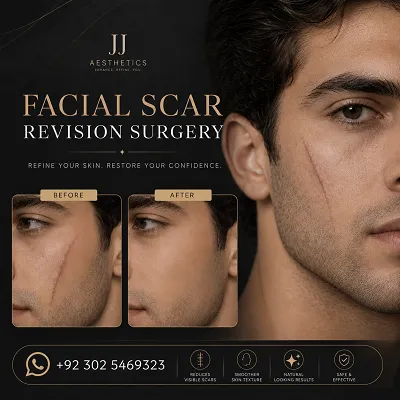
Facial scar revision surgery is a specialized procedure designed to improve the appearance of scars by making them less visible and helping them blend more effectively with the surrounding skin. Although surgery cannot completely remove a scar, it can significantly enhance its appearance and improve overall facial aesthetics.
What Is Facial Scar Revision Surgery?
Facial scar revision surgery is a cosmetic and reconstructive procedure that aims to improve the appearance of existing scars. The surgery involves removing, repositioning, or reshaping scar tissue to create a finer and less noticeable scar.
The procedure may be recommended for scars that are:
Wide or stretched
Raised or thick
Depressed or uneven
Poorly healed
Causing facial asymmetry
Restricting movement or facial expression
Each treatment plan is tailored to the patient's unique scar characteristics and cosmetic goals.
Benefits of Facial Scar Revision Surgery
Reduced Scar Visibility
One of the primary benefits of scar revision surgery is making scars less noticeable. By carefully removing or repositioning scar tissue, surgeons can help scars blend more naturally with surrounding skin.
Improved Skin Texture
Scar revision can smooth uneven or irregular skin surfaces, creating a more refined appearance and improving overall skin quality.
Enhanced Facial Appearance
Scars can sometimes distort facial contours or create asymmetry. Surgical revision helps restore natural facial balance and harmony.
Better Skin Tone Consistency
Although surgery primarily addresses scar shape and texture, it can also improve how light reflects off the skin, making scars appear less prominent.
Increased Confidence
Many patients experience a significant boost in self-esteem after scar revision surgery. Feeling more comfortable with one's appearance often improves confidence in both personal and professional settings.
Who Is a Good Candidate?
Facial scar revision surgery may be suitable for individuals who:
Have fully healed scars
Are unhappy with the appearance of facial scars
Are in good overall health
Have realistic expectations
Do not smoke or are willing to stop during the healing process
A consultation with a qualified cosmetic surgeon is essential to determine whether surgery is the most appropriate treatment option.
Types of Scars Treated with Surgery
Surgical Scars
Scars left from previous operations may become wide, raised, or visible and can often be improved through revision surgery.
Traumatic Scars
Injuries from accidents, cuts, or falls can leave irregular scars that benefit from surgical correction.
Hypertrophic Scars
These raised scars remain within the original wound boundaries and may be flattened or reshaped through surgery.
Keloid Scars
Keloids extend beyond the original wound and may require surgical removal combined with additional treatments to minimize recurrence.
Contracture Scars
Often caused by burns, contracture scars can tighten the skin and affect facial movement. Surgical revision may improve both appearance and function.
The Facial Scar Revision Procedure
The specific technique used depends on the scar's size, location, and type.
Initial Consultation
During the consultation, the surgeon evaluates:
Scar size and depth
Skin type
Medical history
Previous treatments
Desired results
Based on this assessment, a personalized treatment plan is created.
During Surgery
Most facial scar revision procedures are performed under local anesthesia, although larger revisions may require sedation.
The surgeon may:
Remove the existing scar tissue.
Reposition the incision along natural skin lines.
Reshape the surrounding tissue.
Carefully close the wound using advanced suturing techniques.
The goal is to create a thinner, smoother scar that heals more favorably than the original.
Combination Treatments
In some cases, surgery may be combined with additional treatments such as:
Laser resurfacing
Steroid injections
Microneedling
Dermal fillers
These complementary procedures can further improve the final result.
Recovery After Facial Scar Revision Surgery
Recovery varies depending on the extent of the procedure. Most patients experience mild swelling, redness, and discomfort during the initial healing period.
Common recovery guidelines include:
Keeping the incision area clean
Avoiding excessive sun exposure
Following wound care instructions
Attending follow-up appointments
Avoiding strenuous activities as advised
Stitches are often removed within a week, although complete healing and scar maturation can take several months.
What Results Can You Expect?
Facial scar revision surgery can provide significant improvements, but it is important to understand that scars cannot be completely eliminated.
Most patients notice:
A thinner and less visible scar
Smoother skin texture
Improved facial contours
Better skin blending
Enhanced confidence
Results continue to improve as the scar matures and collagen remodeling occurs. Final results may take several months to become fully visible.
Risks and Considerations
Like any surgical procedure, facial scar revision carries certain risks, including:
Infection
Bleeding
Delayed healing
Temporary swelling
Changes in pigmentation
Scar recurrence
Choosing an experienced surgeon and following post-operative instructions carefully can help minimize these risks.
Long-Term Care for Best Results
After surgery, maintaining healthy skin habits can support optimal healing and long-term results.
Helpful practices include:
Daily sunscreen use
Proper skincare routines
Avoiding smoking
Staying hydrated
Following your surgeon’s recommendations
Protecting the healing scar from sun exposure is particularly important because UV damage can cause discoloration and affect the final appearance.
Conclusion
Facial scar revision surgery is an effective solution for individuals seeking to improve the appearance of noticeable facial scars. By reducing scar visibility, smoothing skin texture, and restoring facial harmony, the procedure can deliver both cosmetic and emotional benefits. While scars cannot be completely erased, modern surgical techniques can dramatically enhance their appearance and help patients feel more confident in their skin. A consultation with a qualified specialist is the first step toward understanding your options and achieving the best possible results.



 About SPORTIVO Network

 Czech
Czech
 Arabic
 French
 Spanish
 Portuguese
 Deutsch
 Turkish
 Dutch
Dutch
 Italiano
 Russian
 Romaian
 Portuguese (Brazil)
 Greek
Greek