


 About SPORTIVO Network
Why Soft Jaws Manufacturers Are Critical to Modern Automotive Production
Introduction
In modern automotive production, even a small mistake can lead to significant costs. A single scratch on a painted car door or a damaged chrome trim piece can result in thousands of dollars in repairs, rework, and delays. As vehicle designs become more advanced and materials become lighter and more delicate, manufacturers need better ways to hold and machine components without causing damage.
This is where Soft Jaws Manufacturers play a critical role. Soft jaws are specially designed workholding components that securely grip parts during machining, assembly, and inspection while protecting their surfaces. By reducing damage, improving stability, and increasing production efficiency, soft jaws help automotive manufacturers maintain high quality standards and lower production costs.
In this article, we will explore how soft jaws support modern automotive production and why choosing the right manufacturer can make a major difference in vehicle quality and profitability.
What Soft Jaws Do in Car Manufacturing
Preventing Surface Damage
Automotive parts often require flawless finishes. Exterior body panels, chrome trim pieces, aluminum components, and painted surfaces must remain free from scratches, dents, and marks throughout production.
Traditional steel clamps can leave pressure marks on delicate surfaces. In contrast, soft jaws are commonly made from materials such as aluminum, nylon, urethane, and other polymers that provide a gentler gripping surface.
Soft jaws distribute clamping pressure more evenly across the workpiece. This reduces the risk of surface damage during machining and assembly operations.
Compared to steel jaws, soft jaws offer several advantages:
-
Reduced scratching and marring
-
Better protection for painted surfaces
-
Lower risk of deformation
-
Improved handling of polished components
Maintaining a perfect "Class A" surface finish is especially important in automotive manufacturing. Customers expect flawless body panels and visible components. Soft jaws help manufacturers achieve these standards consistently.
Ensuring Part Stability
Protecting surfaces is only one part of the equation. Parts must also remain stable during machining operations.
Modern vehicles contain many complex components with unique shapes and contours. Standard clamping solutions may not provide enough support for these irregular designs.
Soft jaws can be custom-machined to match the exact shape of a component. This customized fit increases contact area and provides stronger, more secure holding.
Stable workholding helps:
-
Reduce vibration during CNC machining
-
Improve machining accuracy
-
Prevent part movement
-
Increase tool life
-
Improve finished part quality
Many automotive facilities report significant reductions in scrap rates after switching to custom-fit soft jaws. By eliminating movement and reducing damage, manufacturers can produce more acceptable parts and reduce waste.
How Manufacturers Optimize the Production Line
Custom Engineering for EVs
The rapid growth of electric vehicles (EVs) has introduced new challenges for automotive manufacturers.
Many EV components use lightweight materials such as:
-
Aluminum alloys
-
Carbon fiber composites
-
Advanced plastics
-
Hybrid materials
These materials require specialized workholding solutions because they are often more sensitive to clamping pressure than traditional steel components.
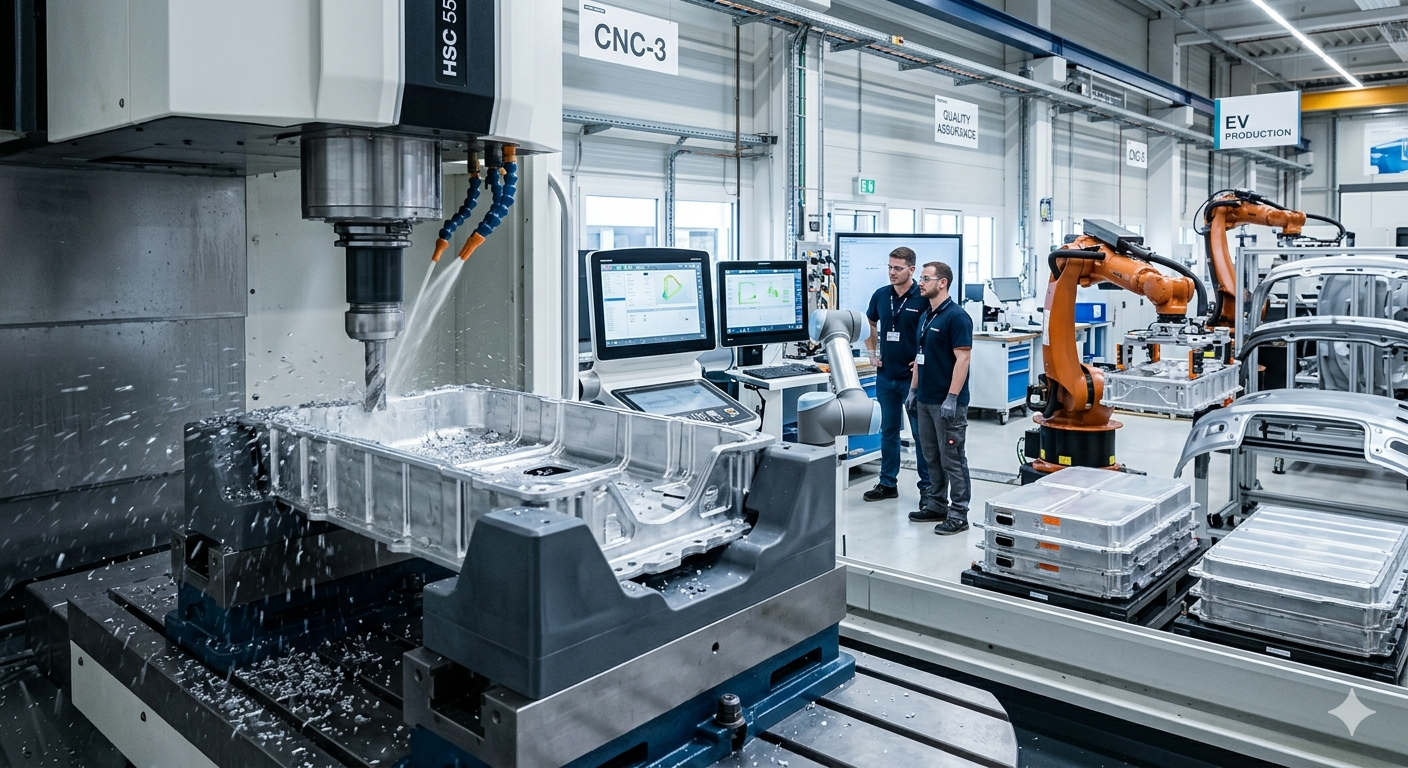
Soft jaw manufacturers design custom solutions specifically for these materials. For example, battery housings often have unusual shapes that require unique gripping surfaces. Custom-engineered soft jaws allow these components to be securely held without causing deformation.
As automotive companies continue transitioning from steel-heavy vehicle structures to lightweight designs, soft jaws become even more important.
Many 2025 and 2026 vehicle models feature increased use of composite materials. Manufacturers rely on customized soft jaws to support these new production requirements while maintaining high quality standards.
Material Selection and Durability
Choosing the right jaw material is essential for performance and longevity.
Different automotive applications require different soft jaw materials:
Nylon Soft Jaws
-
Excellent for delicate surfaces
-
Lightweight and non-marring
-
Good wear resistance
Urethane Soft Jaws
-
Superior grip characteristics
-
Ideal for irregular shapes
-
Strong impact resistance
Aluminum Soft Jaws
-
Easy to machine into custom profiles
-
Suitable for precision applications
-
Cost-effective for many operations
Soft Alloy Jaws
-
Balanced strength and protection
-
Common in high-precision machining
High-volume automotive plants may perform thousands of machining cycles daily. Over time, jaws experience wear and must be replaced.
Reliable manufacturers help customers determine replacement schedules based on:
-
Production volume
-
Material type
-
Clamping pressure
-
Environmental conditions
Matching jaw hardness to part material ensures optimal performance and extends tooling life.
Impact on Total Cost of Ownership (TCO)
Lowering Rework Expenses
One of the biggest hidden costs in automotive manufacturing is rework.
When parts are scratched, dented, or improperly machined, manufacturers must spend additional time and money correcting the problem.
Industry experts often emphasize a simple principle:
"Correct tooling at the start saves hours of sanding at the end."
This statement highlights the importance of investing in quality workholding solutions.
Consider the costs associated with damaged parts:
-
Paint touch-ups
-
Surface refinishing
-
Additional inspections
-
Production delays
-
Increased labor costs
Compared to these expenses, investing in high-quality soft jaws is often a small cost.
Soft jaws also reduce the need for temporary protective films and coverings, simplifying production processes and reducing material expenses.
The result is a lower total cost of ownership and improved profitability.
Speeding Up Cycle Times
Automotive manufacturers constantly look for ways to improve productivity.
Quick-change jaw systems are becoming increasingly popular because they allow operators to switch between jobs quickly.
Benefits include:
-
Faster machine setup
-
Reduced downtime
-
Improved production flexibility
-
Increased equipment utilization
Many production lines manufacture multiple vehicle models using the same equipment.
For example, a facility may switch from producing sedan components to SUV components within the same shift. Standardized soft jaw systems make these transitions much faster.
By reducing setup times and improving flexibility, manufacturers can increase output while maintaining quality standards.
Trends Driving Innovation in 2026
3D Printing and Rapid Prototyping
One of the most exciting developments in workholding technology is additive manufacturing.
Soft jaw manufacturers increasingly use 3D printing to create custom jaws and fixtures.
Advantages include:
-
Faster design iterations
-
Lower prototyping costs
-
Greater design flexibility
-
Reduced lead times
In many cases, engineers can move from design to production-ready jaws within 24 hours.
This speed allows manufacturers to test new gripping geometries before committing to large-scale production.
As vehicle designs continue evolving rapidly, additive manufacturing helps manufacturers respond quickly to changing requirements.
Smart Jaws and Sensor Integration
Industry 4.0 technologies are transforming manufacturing operations worldwide.
Modern soft jaws are becoming smarter through sensor integration.
Advanced systems can include:
-
Pressure monitoring sensors
-
Wear detection systems
-
Real-time performance tracking
-
Automated maintenance alerts
Pressure sensors help prevent over-clamping, which can damage sensitive components.
Wear monitoring systems notify operators when jaws approach replacement limits, reducing unexpected downtime.
Some manufacturers are even connecting jaw performance data to plant-wide AI systems. This creates detailed quality records and helps identify opportunities for process improvement.
These innovations are helping automotive companies achieve higher levels of efficiency and quality control.
Selecting the Right Soft Jaw Partner
Key Technical Requirements
Not all soft jaw suppliers offer the same capabilities.
When evaluating a manufacturing partner, automotive companies should consider several important factors:
-
Precision machining capabilities
-
Tight tolerance control
-
Material selection options
-
Engineering expertise
-
Quality assurance processes
The ability to source specialized non-marring materials is especially important for delicate automotive applications.
Lead times should also be carefully evaluated. Fast replacement part delivery helps minimize production interruptions.
A reliable partner should consistently provide high-quality jaws that meet demanding automotive specifications.
Integration and Support
The best soft jaw manufacturers provide more than just products.
They offer support services that help customers improve production performance.
Important services include:
-
Fixture design consulting
-
On-site engineering support
-
Material testing reports
-
Quality certifications
-
Process optimization recommendations
Global automotive manufacturers often operate facilities across multiple countries.
A supplier that can support multiple production locations provides greater consistency and scalability.
Strong technical support ensures manufacturers receive maximum value from their workholding systems.
Conclusion
Soft jaws may seem like small components, but they have a major impact on automotive manufacturing performance. They protect delicate surfaces, improve machining accuracy, reduce scrap rates, and help production lines operate more efficiently.
As vehicle designs become more advanced and materials become lighter, the importance of experienced Soft Jaws Manufacturers continues to grow. Their ability to create customized, durable, and high-performance workholding solutions directly contributes to better vehicle quality and lower production costs.
For automotive manufacturers looking to improve profitability, one of the smartest steps is reviewing current scrap rates, rework costs, and workholding performance. The right soft jaw partner can reveal tooling gaps and deliver solutions that improve quality, productivity, and long-term success.

 Czech
Czech
 English
 Arabic
 French
 Spanish
 Portuguese
 Deutsch
 Turkish
 Dutch
Dutch
 Italiano
 Russian
 Romaian
 Greek
Greek