


 About SPORTIVO Network
Data Privacy Laws by Country and Cross-Border Data Transfer Regulations: Advanced Compliance Frameworks for Global Organizations
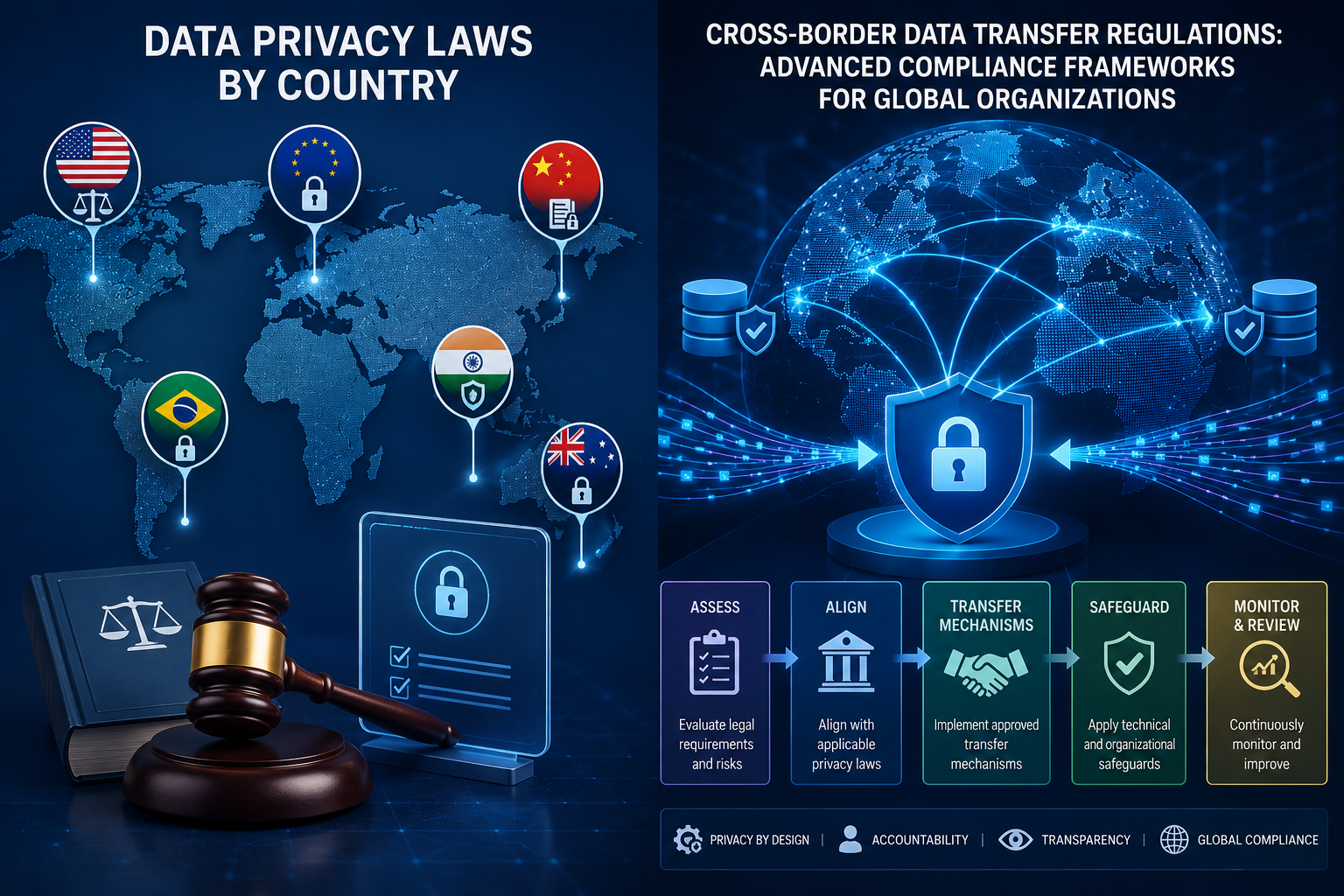
The global expansion of digital services has made data privacy laws by country a core element of regulatory compliance for organizations handling personal information. Governments across regions have introduced detailed legal structures that define how data must be collected, processed, stored, and protected. Alongside these frameworks, cross-border data transfer regulations govern how personal data moves between jurisdictions with differing legal standards. These regulations aim to protect individuals while enabling lawful international commerce and digital operations. For multinational organizations, compliance requires a structured approach that aligns legal obligations, operational processes, and technical safeguards across multiple jurisdictions.
Does India Have a Data Privacy Law?
India has implemented the Digital Personal Data Protection Act, which establishes a modern legal framework for governing digital personal data processing. The law applies to entities processing personal data of individuals within India and introduces obligations centered on lawful processing, transparency, and accountability. Organizations must ensure that personal data is collected only for legitimate purposes and with proper consent where required. The framework also emphasizes security obligations and user rights, including access and correction of personal data. Non-compliance can lead to regulatory penalties, making structured data governance essential for all organizations operating in or interacting with India’s digital ecosystem.
Compliance Structure Under India’s Data Protection Regime
Organizations must build internal systems that ensure consistent compliance with legal obligations:
-
Implement documented consent and lawful processing mechanisms.
-
Maintain accurate records of data usage and retention periods.
-
Apply encryption, access control, and continuous monitoring tools.
-
Provide clear channels for grievance handling and user requests.
-
Establish formal breach notification and incident response protocols.
These measures ensure regulatory alignment and reduce exposure to enforcement risks under Indian privacy law.
Which Countries Have Comprehensive Data Privacy Laws?
Numerous jurisdictions have enacted comprehensive privacy regulations that govern personal data protection at national and regional levels. The European Union’s GDPR is widely regarded as the global benchmark due to its strict requirements and extraterritorial reach. Other countries such as Canada, Brazil, Japan, South Korea, Singapore, Australia, and India have developed robust legal frameworks addressing modern data protection challenges. These laws regulate data collection, processing, storage, and transfer while ensuring individuals retain meaningful control over their personal information. Although enforcement mechanisms differ, most privacy regimes share a commitment to transparency, accountability, and security in data handling practices.
Foundational Elements in Global Privacy Legislation
Despite regional differences, most comprehensive privacy laws share similar structural elements:
-
Clear legal bases for processing personal data.
-
Mandatory transparency obligations for organizations.
-
Strong enforcement mechanisms with administrative penalties.
-
Defined rights for individuals over their personal information.
-
Security requirements to prevent unauthorized access or breaches.
These shared principles enable organizations to develop unified privacy programs adaptable across jurisdictions.
How Do Data Privacy Laws Differ From One Country to Another?
Privacy regulations vary significantly based on legal traditions, enforcement priorities, and policy objectives. Some countries require explicit consent for nearly all processing activities, while others permit broader use of personal data under legitimate interest frameworks. Differences also exist in how regulators define personal data, the scope of sensitive information, and the rights granted to individuals. Enforcement models range from strict penalty-based systems linked to global revenue to more advisory or corrective approaches. These variations create complex compliance requirements for organizations operating internationally.
Key Differences Affecting Global Compliance Strategies
Organizations must adapt to several important regulatory differences:
-
Varying consent requirements and lawful processing standards.
-
Different definitions of personal and sensitive data categories.
-
Inconsistent data retention and deletion rules across jurisdictions.
-
Divergent breach reporting timelines and thresholds.
-
Variation in enforcement intensity and regulatory oversight.
Managing these differences requires localized legal interpretation combined with centralized compliance governance.
Why Are Cross-Border Data Transfer Rules Important?
These rules ensure that personal data retains adequate protection when transferred across international borders. Modern businesses rely on global data ecosystems involving cloud providers, outsourced services, and multinational collaboration platforms. Without transfer restrictions, personal information could be exposed to weaker privacy standards or unauthorized access in foreign jurisdictions. Cross-border rules establish safeguards that maintain consistent protection levels regardless of where data is processed, reinforcing global trust in digital services and international commerce.
These regulations also reduce legal uncertainty by ensuring that organizations follow structured safeguards when transferring data between countries. They help maintain accountability and prevent regulatory gaps in international data flows.
How Do International Data Transfer Regulations Work?
International data transfer frameworks require organizations to satisfy specific legal conditions before moving personal data outside national borders. Regulators typically evaluate whether the destination country ensures an adequate level of protection or whether supplementary safeguards are necessary. Common transfer mechanisms include standard contractual clauses, binding corporate rules, adequacy decisions, and approved certification frameworks. Organizations may also be required to conduct transfer impact assessments to evaluate risks such as government access, cybersecurity vulnerabilities, or lack of enforceable rights for individuals.
Practical Implementation Steps for Compliance
Organizations must adopt structured operational controls to ensure lawful data transfers:
-
Identify all systems and vendors involved in international data flows.
-
Classify data based on sensitivity and regulatory requirements.
-
Apply legally approved transfer mechanisms for each jurisdiction.
-
Conduct periodic transfer risk assessments and compliance reviews.
-
Maintain detailed documentation for audit and regulatory inspection.
-
Continuously monitor legal developments affecting transfer frameworks.
These steps ensure compliance with cross-border data transfer regulations while maintaining secure and efficient global operations.
Conclusion
A comprehensive understanding of data privacy laws by country and cross-border data transfer regulations is essential for organizations operating in a globally interconnected digital economy. Privacy laws continue to evolve as governments strengthen regulatory oversight and respond to increasing data mobility across borders. Businesses must implement structured compliance frameworks that integrate legal, technical, and operational controls to meet diverse jurisdictional requirements. Strong governance, consistent documentation, and proactive risk management are critical for maintaining compliance and reducing regulatory exposure. With the right compliance strategy and professional guidance, organizations can ensure lawful data handling, protect individual privacy rights, and operate confidently across international markets while meeting evolving global standards.

 English
 Arabic
 French
 Spanish
 Portuguese
 Deutsch
 Turkish
 Dutch
Dutch
 Italiano
 Russian
 Romaian
 Portuguese (Brazil)
 Greek
Greek