


 About SPORTIVO Network
What Is OEM Leather Seat Production Process?
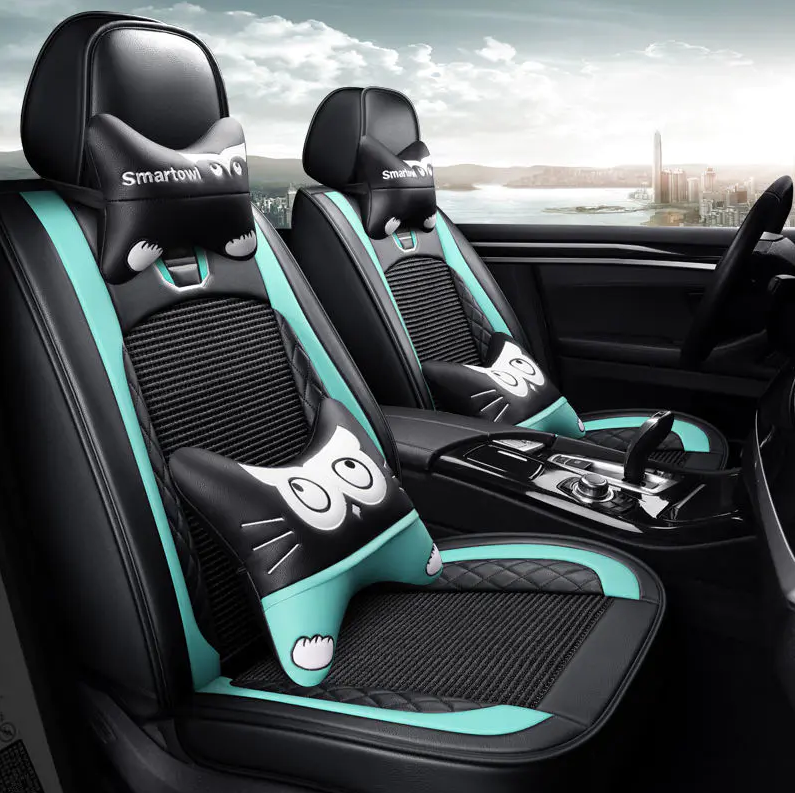
A Genuine Leather Auto Seat Cushion is the result of a multi-stage OEM manufacturing process involving material selection, precision cutting, foam integration, stitching, and quality control. Each stage directly impacts durability, fit accuracy, and final performance.
Raw Material Selection and Inspection
Manufacturing begins with leather grading. Automotive-grade hides are inspected for:
Surface uniformity
Fiber density consistency
Defect tolerance levels below 5–8% usable surface variance
Hides are typically split into thickness ranges of 1.2–1.6 mm for automotive use. This ensures balance between flexibility and wear resistance.
Foam materials are selected based on density requirements ranging from 30–60 kg/m³, depending on comfort classification.
CAD-Based Pattern Design and Cutting
OEM production uses CAD (Computer-Aided Design) systems to create precise seat patterns. These digital templates ensure millimeter-level accuracy for seat curvature and contour alignment.
Cutting methods include:
CNC knife cutting for high precision
Die cutting for large-scale production efficiency
Tolerance deviation is typically maintained within ±1.0–1.5 mm.
Stitching and Panel Assembly
Leather panels are assembled using industrial sewing machines with controlled stitch density ranging between:
3–5 stitches per centimeter
Reinforcement techniques include:
Double stitching in high-stress zones
Edge binding to prevent fraying
Hidden seam reinforcement for aesthetic continuity
Thread tension calibration is critical to avoid material puckering or overstretching.
Foam Lamination and Bonding Process
Leather is laminated to foam backing using heat-activated adhesive layers. Bonding temperature is generally maintained between 70°C and 110°C, depending on adhesive type.
This process ensures:
Stable adhesion between leather and foam
Resistance to delamination under repeated compression
Consistent surface shaping during seat installation
Quality Control and Performance Testing
Each Genuine Leather Auto Seat Cushion undergoes multiple inspections:
Abrasion testing (20,000–40,000 cycles Martindale range)
Flex testing for repeated bending resistance
Colorfastness testing under UV exposure simulation
Dimensional fit verification against OEM seat models
Defect rates are minimized through multi-stage inspection checkpoints.
Final Assembly and Packaging
Completed seat cushions are shaped using final press molding to ensure contour stability. Protective packaging prevents deformation during transport, especially for foam-backed leather products.
Conclusion
OEM manufacturing of a Genuine Leather Auto Seat Cushion combines material science, precision engineering, and quality assurance systems. Each production stage ensures that the final product meets functional durability, ergonomic structure, and interior compatibility requirements.

 Czech
Czech
 English
 Arabic
 French
 Spanish
 Portuguese
 Deutsch
 Dutch
Dutch
 Italiano
 Russian
 Romaian
 Portuguese (Brazil)
 Greek
Greek