


 About SPORTIVO Network
ESG Compliance for Manufacturers in India
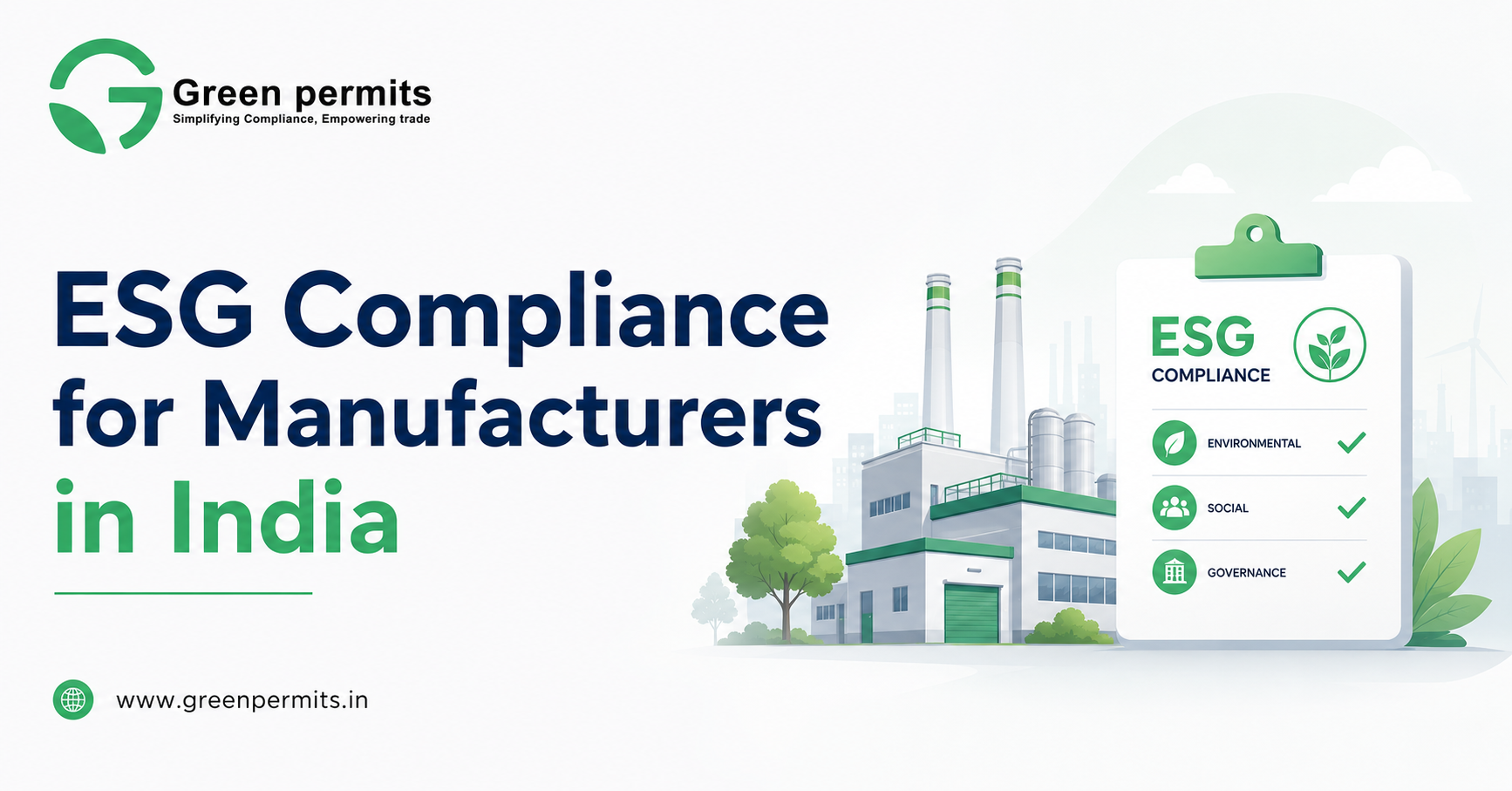
ESG compliance has become an important requirement for manufacturers in India. Earlier, manufacturing companies mainly focused on production capacity, product quality, cost control, and regulatory licenses. Today, businesses are also expected to show how they manage environmental impact, worker safety, resource efficiency, governance practices, and sustainability performance.
Manufacturers are under increasing pressure from investors, customers, regulators, export buyers, banks, and multinational supply chains to adopt Environmental, Social, and Governance standards. Whether a company manufactures chemicals, electronics, plastics, automotive components, pharmaceuticals, textiles, machinery, packaging products, or consumer goods, ESG compliance is becoming a key factor for business growth.
For Indian manufacturers, ESG is not only about reporting. It is about improving factory operations, reducing emissions, managing waste responsibly, ensuring worker safety, strengthening governance, and building a future-ready business.
What is ESG Compliance
ESG compliance refers to the process of implementing policies, systems, controls, and reporting practices related to environmental, social, and governance performance.
For manufacturers, ESG compliance includes monitoring energy use, water consumption, waste generation, emissions, labor practices, health and safety, supply chain responsibility, and corporate governance.
The purpose is to ensure that the manufacturing business operates responsibly while reducing environmental and social risks.
A strong ESG compliance system helps manufacturers demonstrate sustainability performance to investors, buyers, regulators, and stakeholders.
Why ESG Compliance is Important for Manufacturers
Manufacturing operations often have a direct impact on the environment due to energy consumption, raw material use, wastewater generation, emissions, and industrial waste.
ESG compliance helps manufacturers manage these impacts in a structured manner.
It is important because it helps businesses:
- Improve sustainability performance
- Meet buyer and investor expectations
- Reduce operational risks
- Improve resource efficiency
- Strengthen brand reputation
- Prepare for ESG and BRSR reporting
- Access green finance and responsible investment
- Improve export market readiness
Manufacturers that ignore ESG may face supply chain rejection, investor hesitation, reputational risk, and future compliance challenges.
ESG Requirements for Manufacturing Companies
ESG requirements may vary depending on industry, company size, customer expectations, and reporting obligations.
Common ESG focus areas for manufacturers include:
- Carbon footprint assessment
- Energy efficiency
- Water conservation
- Waste management
- Pollution control compliance
- Occupational health and safety
- Labor welfare
- Supply chain sustainability
- Corporate governance
- Sustainability reporting
A manufacturer should first identify which ESG parameters are material to its operations.
Environmental Compliance Under ESG
The environmental pillar is especially important for manufacturers.
It focuses on how the factory uses natural resources and controls pollution.
Key environmental areas include:
- Air emissions
- Wastewater discharge
- Solid waste management
- Hazardous waste handling
- Energy consumption
- Renewable energy usage
- Carbon emissions
- Resource efficiency
Manufacturers must also maintain compliance with Pollution Control Board approvals, Consent to Establish, Consent to Operate, hazardous waste authorization, EPR obligations, and other applicable environmental laws.
Social Compliance for Manufacturers
The social pillar focuses on people connected with the business, including employees, workers, contractors, customers, suppliers, and communities.
For manufacturing companies, social compliance may include:
- Worker health and safety
- Fair wages and labor practices
- Employee training
- Diversity and inclusion
- Human rights protection
- Community engagement
- Contractor safety
- Product responsibility
Factories with strong worker safety and employee welfare systems often perform better in ESG assessments.
Governance Compliance for Manufacturers
Governance focuses on how the business is managed.
For manufacturers, governance compliance includes ethical business practices, legal compliance, internal controls, risk management, transparency, and accountability.
Key governance areas include:
- Compliance policies
- Anti-corruption practices
- Board oversight
- Internal audits
- Risk management systems
- Supplier code of conduct
- Documentation and record keeping
- Legal and regulatory compliance
Strong governance reduces business risk and improves stakeholder confidence.
ESG Compliance Process for Manufacturers
The ESG compliance process starts with understanding the current status of the manufacturing facility.
The company must assess existing environmental, social, and governance practices and identify gaps.
After the assessment, the business should create a practical ESG roadmap with measurable targets.
The process generally includes:
- ESG assessment
- Materiality assessment
- Data collection
- Gap analysis
- Policy development
- Sustainability strategy
- Implementation
- Monitoring and reporting
A structured process helps manufacturers move from basic compliance to measurable sustainability improvement.
Carbon Footprint Assessment
Carbon footprint assessment is one of the most important ESG activities for manufacturers.
It helps calculate greenhouse gas emissions from operations, electricity use, fuel consumption, transportation, raw materials, and supply chain activities.
Manufacturers generally assess:
- Scope 1 emissions
- Scope 2 emissions
- Scope 3 emissions
This data helps companies prepare ESG reports, reduce emissions, improve energy efficiency, and develop net-zero strategies.
Waste Management and EPR Compliance
Many manufacturers generate waste during production, packaging, processing, and dispatch.
Depending on the industry, waste may include plastic waste, e-waste, battery waste, hazardous waste, packaging waste, scrap material, sludge, and rejected products.
Manufacturers may also need to comply with Extended Producer Responsibility requirements for plastic packaging, e-waste, batteries, tyres, or other regulated categories.
Proper waste management helps reduce environmental risk and strengthens ESG performance.
ESG Reporting for Manufacturers
ESG reporting allows manufacturers to disclose sustainability performance to stakeholders.
The report may include information about:
- Energy consumption
- Carbon emissions
- Water usage
- Waste generation
- Pollution control systems
- Worker safety
- Employee welfare
- Governance policies
- Sustainability initiatives
Some companies may report under BRSR, while others may use frameworks such as GRI, SASB, TCFD, or internal sustainability reporting formats.
Documents Required for ESG Compliance
Manufacturers should maintain proper records to support ESG assessment and reporting.
Common documents include:
- Electricity bills
- Fuel consumption records
- Water consumption records
- Waste disposal records
- Pollution Control Board approvals
- Hazardous waste authorization
- EPR registration documents
- Safety audit records
- Employee training records
- Compliance policies
- Supplier documents
Good documentation improves reporting accuracy and audit readiness.
Benefits of ESG Compliance for Manufacturers
ESG compliance provides several business benefits.
Key advantages include:
- Better investor confidence
- Improved buyer trust
- Stronger export readiness
- Reduced compliance risk
- Lower energy and resource costs
- Improved worker safety
- Better brand reputation
- Stronger long-term business resilience
Manufacturers with strong ESG systems are often better positioned to work with large corporates, multinational buyers, and sustainability-focused investors.
Common Challenges in ESG Compliance
Many manufacturers face challenges while implementing ESG systems.
Common issues include:
- Lack of ESG data
- Poor record maintenance
- Limited internal expertise
- Difficulty measuring emissions
- Weak waste tracking
- Unclear reporting format
- Lack of sustainability strategy
Professional ESG consulting helps manufacturers identify gaps and build a practical compliance roadmap.
Role of ESG Consultant for Manufacturers
An ESG consultant helps manufacturers assess current performance, collect data, prepare reports, create policies, and implement sustainability initiatives.
Consulting support generally includes:
- ESG gap assessment
- Carbon footprint assessment
- BRSR reporting support
- Sustainability reporting
- Waste compliance review
- Environmental compliance audit
- ESG policy development
- Net-zero roadmap planning
Expert support helps manufacturers save time, reduce errors, and improve ESG readiness.
Learn the Complete ESG Compliance Process
Planning to improve ESG compliance for your manufacturing business? Understanding environmental compliance, carbon footprint assessment, waste management, worker safety, governance systems, and sustainability reporting is essential before starting.
Read the complete guide here:
👉 https://www.greenpermits.in/05/esg-compliance-for-manufacturers-in-india/
📞 Get Expert Assistance for ESG Compliance
Need assistance with ESG compliance, BRSR reporting, carbon footprint assessment, sustainability reporting, environmental audit, waste compliance, or ESG strategy development? The experts at Green Permits Consulting can guide you throughout the complete process.
🌐 Website: https://www.greenpermits.in/
📞 Phone: +91 78350 06182
📧 Email: wecare@greenpermits.in

 Czech
Czech
 English
 Arabic
 French
 Spanish
 Portuguese
 Deutsch
 Turkish
 Dutch
Dutch
 Italiano
 Romaian
 Portuguese (Brazil)
 Greek
Greek