


 About SPORTIVO Network
Avoid Cracks When Drilling Glass
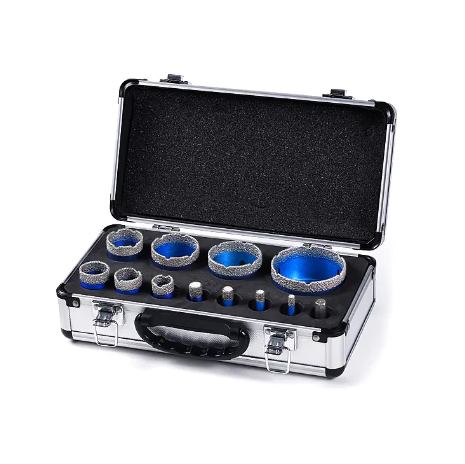
Correct usage of an Electroplated Diamond Hole Saw directly impacts drilling quality, tool life, and material integrity. Because this tool works through abrasive grinding rather than cutting, improper operation can lead to overheating, edge chipping, or premature wear.
Starting Technique
The initial contact between tool and material is critical. A common method is to begin drilling at a slight angle, allowing the diamond rim to establish a groove before transitioning to a vertical position. This stabilizes the cutting path and reduces tool wandering.
Recommended starting approach:
Angle initiation: 10–15 degrees
Transition to vertical once groove is formed
Low initial pressure to avoid surface fracture
Speed Control Parameters
Rotational speed plays a major role in performance. Excessive RPM increases heat buildup, while insufficient speed reduces grinding efficiency.
Typical operating ranges:
Glass: 800–1500 RPM
Ceramic: 1500–2500 RPM
Porcelain: 1200–2000 RPM
Thin stone: 1000–1800 RPM
Maintaining consistent speed ensures uniform diamond wear and prevents localized overheating.
Cooling and Lubrication
Water cooling is essential for all operations. It serves three functions: temperature control, debris removal, and lubrication of the cutting interface. Without proper cooling, diamond particles may lose bond strength and fall off prematurely.
Cooling guidelines:
Continuous water flow at cutting zone
Avoid dry drilling
Pause periodically for deep holes
Flush slurry buildup every few seconds
Pressure Management
Unlike carbide drills, diamond hole saws require minimal pressure. Excess force compresses the material and increases cracking risk, especially in glass and ceramic surfaces.
Best practice:
Let the diamond do the work
Apply only light downward force
Maintain stable hand or machine feed
Common Operational Issues
Several problems can occur if parameters are not controlled:
Edge chipping due to excessive pressure
Burn marks caused by insufficient cooling
Tool glazing from debris accumulation
Uneven hole shape from vibration instability
Each issue is typically related to heat or mechanical stress imbalance.
Maintenance and Tool Care
After use, the tool should be cleaned to remove slurry residue. Storing in a dry environment prevents corrosion of the steel body. Periodic inspection of diamond layer condition helps determine remaining tool life.
Proper handling can significantly extend usable cycles of the Electroplated Diamond Hole Saw, especially in repetitive production environments.

 Czech
Czech
 English
 Arabic
 Spanish
 Portuguese
 Deutsch
 Turkish
 Dutch
Dutch
 Italiano
 Russian
 Romaian
 Portuguese (Brazil)
 Greek
Greek