


 About SPORTIVO Network
How to Fix Pipe Shock Problems?
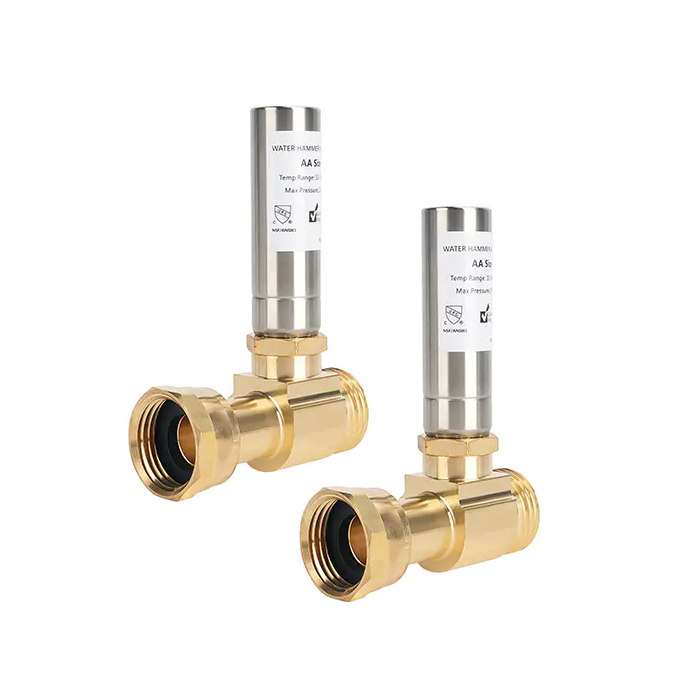
Even with correct installation, plumbing systems may still experience water hammer symptoms or reduced performance from arrestors. Understanding potential causes helps diagnose and correct issues efficiently. A Stainless Steel Water Hammer Arrestor is a reliable device, but its performance depends on correct system conditions.
Common symptoms of failure
Signs that a system is not functioning properly include:
Persistent banging noise after valve closure
Pipe vibration during appliance operation
Sudden pressure fluctuations
Reduced performance of arrestor response
Recurrent loosening of pipe fittings
These symptoms often indicate system-level issues rather than device failure alone.
Cause 1: incorrect installation location
One of the most common problems is improper placement. A Stainless Steel Water Hammer Arrestor must be installed close to the source of pressure shock. If placed too far away, pressure waves lose damping efficiency before reaching the device.
Ideal placement includes:
Directly near solenoid valves
At appliance inlet connections
Close to pump discharge outlets
Cause 2: undersized arrestor
If the arrestor capacity is too small for the system demand, it cannot absorb sufficient energy. This results in continued pressure spikes. Sizing must match:
Pipe diameter
Flow rate
Valve type and closure speed
Cause 3: excessive system pressure
If system pressure exceeds design limits, even a properly sized arrestor may struggle to compensate. In many systems, pressures above 80–100 PSI require pressure regulation upstream.
Cause 4: loose piping or poor support
Water hammer is not only a pressure issue. Mechanical vibration caused by loose pipes can mimic hydraulic shock. Proper pipe strapping and support spacing are essential.
Recommended support spacing:
1.2–1.5 meters for horizontal runs
Closer spacing near directional changes
Cause 5: internal wear or gas loss
Over time, internal components may degrade:
Gas chamber pressure loss
Seal wear on piston assembly
Diaphragm fatigue
These issues reduce the damping efficiency of the Stainless Steel Water Hammer Arrestor and may require replacement.
Diagnostic approach
Troubleshooting steps include:
Measure system pressure using a gauge
Inspect installation position relative to valve
Check pipe support and vibration points
Evaluate arrestor size vs system demand
Listen for localized vs system-wide noise patterns
System improvement strategies
If issues persist, additional measures may help:
Install secondary arrestors on long branches
Add pressure reducing valves upstream
Improve pipe anchoring and insulation
Replace worn or undersized arrestors
Conclusion
A Stainless Steel Water Hammer Arrestor is a highly effective solution for controlling hydraulic shock, but its performance depends on proper installation, correct sizing, and overall system design. Troubleshooting focuses not only on the device itself but also on the entire plumbing environment.

 Czech
Czech
 Arabic
 French
 Spanish
 Portuguese
 Deutsch
 Turkish
 Dutch
Dutch
 Italiano
 Russian
 Romaian
 Portuguese (Brazil)
 Greek
Greek