


 About SPORTIVO Network
Why Family Size Plastic Popcorn Bowls Belong on Every Table?
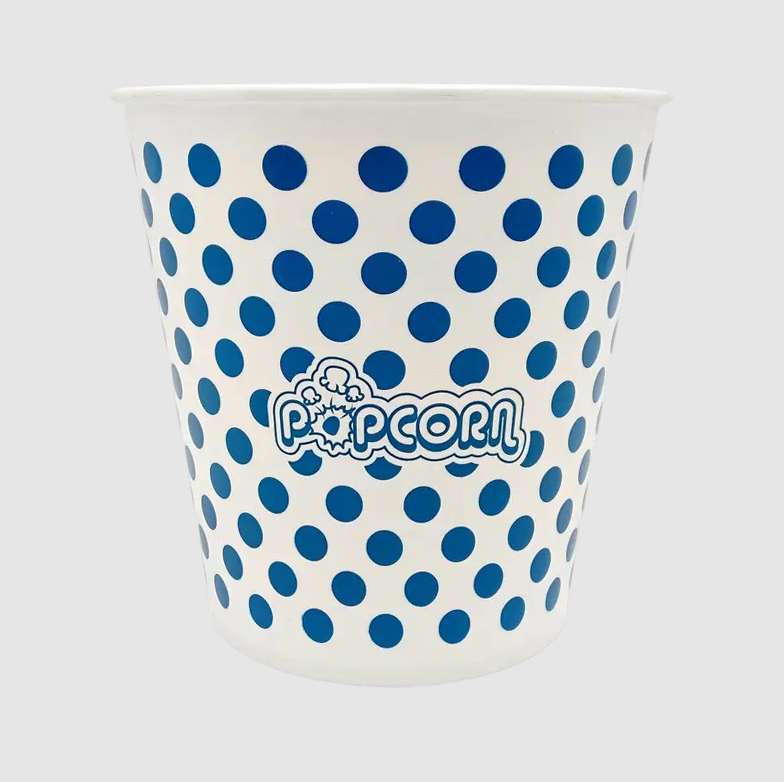
There's a specific kind of Saturday evening that starts with a bag of kernels, ends with an empty bowl on the coffee table, and somewhere in between involves everyone reaching into the same container at the same time. That container, more often than not, is a family size plastic popcorn bowl — and the fact that it doesn't get much credit for holding the evening together doesn't make it any less essential.
Plastic is the material that makes a bowl this size practical for household use. A ceramic or glass bowl at 30-cup capacity becomes heavy, fragile, and awkward to pass between people on a sofa. A metal bowl of the same volume conducts temperature in ways that make butter-coated popcorn feel strange after a few minutes. Plastic — specifically food-grade polypropylene or BPA-free alternatives — hits the right combination of light weight, structural strength at wide diameter, and smooth interior surface that doesn't trap butter or seasoning residue in surface pores.
Bowl geometry does real work in a popcorn context. Wide, shallow bowls with gently flared rims allow easy access from multiple angles without forcing anyone to dig deep for the bottom layer. The flared rim also reduces the chance of the bowl being knocked over when someone reaches across in low light during a tense scene. Deeper, more cylindrical designs hold volume efficiently but make the lower third of the bowl harder to reach without tilting the whole thing — something that tends to redistribute the butter-heavy bottom layer into someone's lap.
Color and surface design are where plastic popcorn bowls move from functional object to something people actually enjoy having on the table. Solid bold colors — red, navy, yellow, teal — are the most common and give the bowl a cinematic, concession-stand energy that fits the occasion. Printed designs featuring film reels, popcorn graphics, striped patterns, or classic cinema typography are popular in retail and gift contexts. Clear or translucent plastic has its own appeal, particularly in designs where the bowl construction itself — ribbing, embossed patterns, or layered color — becomes part of the visual.
Stackability is a feature that matters more to buyers than it might initially appear. A family size plastic popcorn bowl takes up significant cabinet space when stored individually. Bowls designed with a tapered profile that allows them to nest inside each other reduce the storage footprint to a fraction of what a non-stackable set would require. For households that own multiple bowls — one per person, or a set for different occasions — or for retailers and promotional buyers ordering in quantity, the ability to stack cleanly without sticking or scratching is a genuine selling point.

 Czech
Czech
 Arabic
 French
 Spanish
 Portuguese
 Deutsch
 Turkish
 Dutch
Dutch
 Italiano
 Russian
 Romaian
 Portuguese (Brazil)
 Greek
Greek