


 About SPORTIVO Network
CTE CTO Approval Process in India
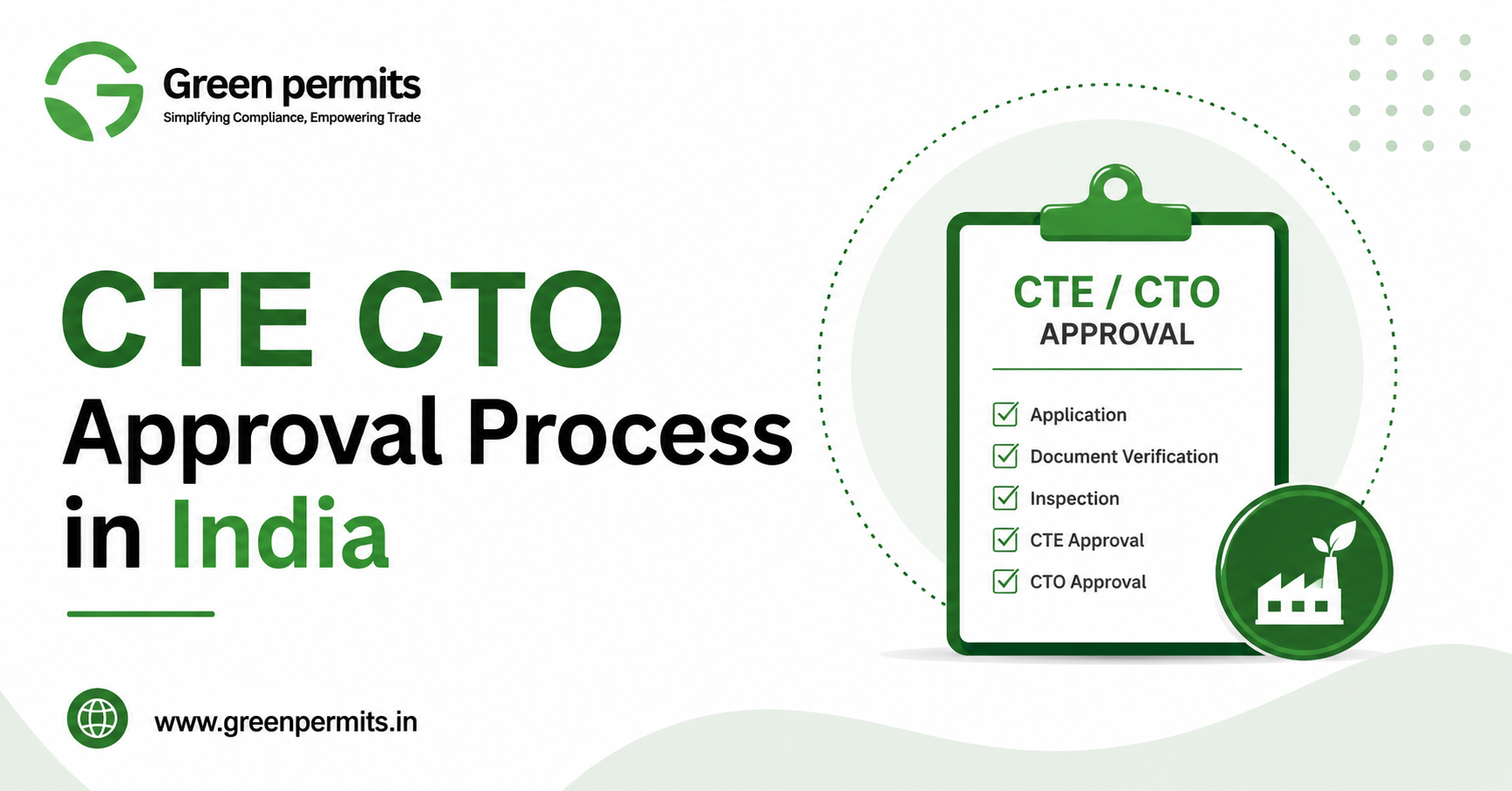
Every manufacturing unit, recycling plant, industrial project, warehouse, processing facility, healthcare establishment, and many commercial businesses in India must comply with environmental regulations before commencing operations. One of the most important environmental approvals is obtaining Consent to Establish (CTE) and Consent to Operate (CTO) from the State Pollution Control Board (SPCB) or Pollution Control Committee (PCC).
These approvals are issued under the Water (Prevention and Control of Pollution) Act, 1974 and the Air (Prevention and Control of Pollution) Act, 1981 to ensure industries adopt proper pollution control measures before construction and during operation.
Whether you are setting up an e-waste recycling plant, plastic recycling unit, battery recycling plant, manufacturing factory, warehouse, pharmaceutical unit, chemical plant, or food processing industry, obtaining CTE and CTO approvals is mandatory before starting business operations.
Understanding the CTE and CTO approval process helps businesses avoid legal issues, environmental penalties, and delays in project execution.
What is Consent to Establish (CTE)
Consent to Establish (CTE) is the first environmental approval issued by the State Pollution Control Board before the construction of an industrial project or installation of machinery.
The purpose of CTE is to verify that the proposed project has adequate pollution control measures and complies with environmental regulations before development begins.
Without obtaining CTE, industries should not start plant construction or machinery installation where such approval is applicable.
What is Consent to Operate (CTO)
Consent to Operate (CTO) is the approval granted after construction is completed and before commercial production or operations begin.
The Pollution Control Board verifies whether the industry has installed the required pollution control systems and complied with all conditions specified in the Consent to Establish.
After obtaining CTO, the business can legally commence operations.
Why CTE and CTO Approvals are Important
Environmental approvals play a crucial role in industrial compliance.
CTE and CTO help businesses:
- Comply with environmental laws
- Obtain legal permission to establish industries
- Start commercial operations legally
- Protect air and water quality
- Avoid environmental penalties
- Secure financing for industrial projects
- Improve environmental performance
Failure to obtain required approvals may result in closure notices, environmental compensation, penalties, or legal action.
Who Needs CTE and CTO Approval
CTE and CTO approvals are generally required for:
- Manufacturing industries
- E-Waste recycling plants
- Plastic recycling plants
- Battery recycling units
- Vehicle scrapping facilities
- Chemical industries
- Pharmaceutical industries
- Textile units
- Engineering industries
- Food processing units
- Packaging industries
- Warehouses
- Hospitals
- Hotels
- Infrastructure projects
The requirement depends on the nature of business, pollution potential, investment, and applicable state regulations.
Industry Categories Under Pollution Control Board
Industries are classified according to their pollution potential.
The common categories include:
- White Category
- Green Category
- Orange Category
- Red Category
The industry category determines:
- Approval requirements
- Documentation
- Inspection procedures
- Consent validity
- Compliance obligations
Industries with higher pollution potential generally require more detailed environmental assessments.
Documents Required for CTE and CTO Approval
The required documents vary depending on the project and state.
Common documents generally include:
- Company Incorporation Certificate
- PAN Card
- GST Registration Certificate
- Land Ownership Documents
- Lease Agreement, if applicable
- Site Layout Plan
- Building Layout
- Manufacturing Process Flow Diagram
- Machinery List
- Detailed Project Report (DPR), where applicable
- Water Balance Report
- Air Pollution Details
- Wastewater Treatment Plan
- Solid Waste Management Plan
- Hazardous Waste Details, if applicable
- Authorized Signatory Documents
Additional documents may be required depending on the industry category.
CTE Approval Process
The Consent to Establish process begins before project construction.
The applicant prepares technical documents, project details, pollution control proposals, and environmental information.
The application is then submitted to the respective State Pollution Control Board.
The authority reviews:
- Project details
- Site location
- Manufacturing process
- Pollution potential
- Water requirement
- Air emissions
- Waste management system
- Proposed pollution control measures
After successful review and verification, Consent to Establish is issued.
CTO Approval Process
Once construction and machinery installation are completed, the business applies for Consent to Operate.
The Pollution Control Board verifies whether the industry complies with the conditions mentioned in the CTE approval.
The authority may inspect:
- Pollution control equipment
- Machinery installation
- Wastewater treatment systems
- Air pollution control systems
- Hazardous waste storage
- Plant operations
After satisfactory verification, CTO is granted.
Step-by-Step CTE and CTO Approval Process
Step 1: Industry Classification
The first step is identifying the industry category based on pollution potential.
Proper classification determines the applicable documentation and approval process.
Step 2: Document Preparation
The applicant prepares all technical and environmental documents required for the application.
Complete documentation reduces approval delays.
Step 3: Apply for Consent to Establish
The CTE application is filed before starting construction or installing machinery.
The application includes project details, pollution control proposals, process flow, and supporting documents.
Step 4: Pollution Control Board Review
The authority evaluates the application and may request additional information or clarification if required.
Proper response to queries helps improve approval timelines.
Step 5: Construction and Installation
After receiving CTE, the business constructs the facility and installs machinery and pollution control systems according to approved plans.
Step 6: Apply for Consent to Operate
Once the plant is ready for commercial operation, the CTO application is submitted.
The applicant provides compliance details and supporting documents.
Step 7: Site Inspection
The Pollution Control Board may inspect the facility to verify environmental compliance.
The inspection generally covers:
- Pollution control equipment
- Waste management arrangements
- Water treatment facilities
- Air emission control systems
- Hazardous waste storage
- Operational readiness
Step 8: Grant of Consent to Operate
After successful inspection and compliance verification, the Pollution Control Board issues the Consent to Operate.
The industry can then legally commence commercial operations.
Pollution Control Systems Required
Industries may be required to install pollution control infrastructure depending on their operations.
Common systems include:
- Effluent Treatment Plant (ETP)
- Sewage Treatment Plant (STP)
- Air Pollution Control Equipment (APC)
- Dust Collection Systems
- Scrubbers
- Bag Filters
- Hazardous Waste Storage Area
- Rainwater Drainage System
- Noise Control Measures
The required systems depend on the manufacturing process and pollution potential.
Cost of CTE and CTO Approval
The cost of obtaining CTE and CTO approvals depends on several factors.
These include:
- Industry category
- Capital investment
- Plant capacity
- Pollution potential
- Government application fees
- Documentation requirements
- Consultancy charges
The overall cost varies from state to state and according to the nature of the project.
Timeline for CTE and CTO Approval
The approval timeline depends on project readiness, document quality, inspection requirements, and state-specific procedures.
The process generally includes:
- Industry classification
- Documentation preparation
- Online application
- Technical review
- Site inspection
- Approval issuance
Proper planning and complete documentation help reduce approval time.
Common Challenges During Approval
Many businesses experience delays because of avoidable mistakes.
Common challenges include:
- Incorrect industry classification
- Incomplete project documentation
- Poor plant layout planning
- Inadequate pollution control systems
- Delayed inspection readiness
- Missing environmental reports
- Improper waste management planning
Professional consultants help businesses overcome these challenges efficiently.
Importance of Ongoing Environmental Compliance
Receiving CTE and CTO approvals is not the end of environmental compliance.
Industries must continue complying with:
- Consent conditions
- Air emission standards
- Water discharge standards
- Hazardous waste rules
- Waste management regulations
- Consent renewal requirements
- Environmental monitoring obligations
Maintaining compliance helps businesses avoid notices, penalties, and operational interruptions.
Benefits of Hiring a CTE and CTO Consultant
A professional consultant helps businesses complete the environmental approval process efficiently.
Consulting support generally includes:
- Industry applicability assessment
- Documentation preparation
- CTE application filing
- CTO application filing
- Pollution control planning
- Site inspection support
- Compliance advisory
- Consent renewal assistance
Professional guidance helps reduce approval delays and ensures smooth regulatory compliance.
Learn the Complete CTE and CTO Approval Process
Planning to establish an industrial unit or recycling plant in India? Understanding Consent to Establish, Consent to Operate, Pollution Control Board approvals, documentation, environmental compliance, and pollution control systems is essential before starting your project.
Read the complete guide here:
👉 https://www.greenpermits.in/06/cte-cto-approval-for-recycling-plant-india/
📞 Get Expert Assistance for CTE and CTO Approval
Need assistance with Consent to Establish (CTE), Consent to Operate (CTO), Pollution Control Board approvals, environmental documentation, pollution control planning, project compliance, or complete regulatory support? The experts at Green Permits Consulting can guide you throughout the complete process.
🌐 Website: https://www.greenpermits.in/
📞 Phone: +91 78350 06182
📧 Email: wecare@greenpermits.in

 Czech
Czech
 English
 Arabic
 French
 Spanish
 Portuguese
 Turkish
 Dutch
Dutch
 Italiano
 Russian
 Romaian
 Portuguese (Brazil)
 Greek
Greek