


 About SPORTIVO Network
CPCB ELV EPR Portal Registration Process
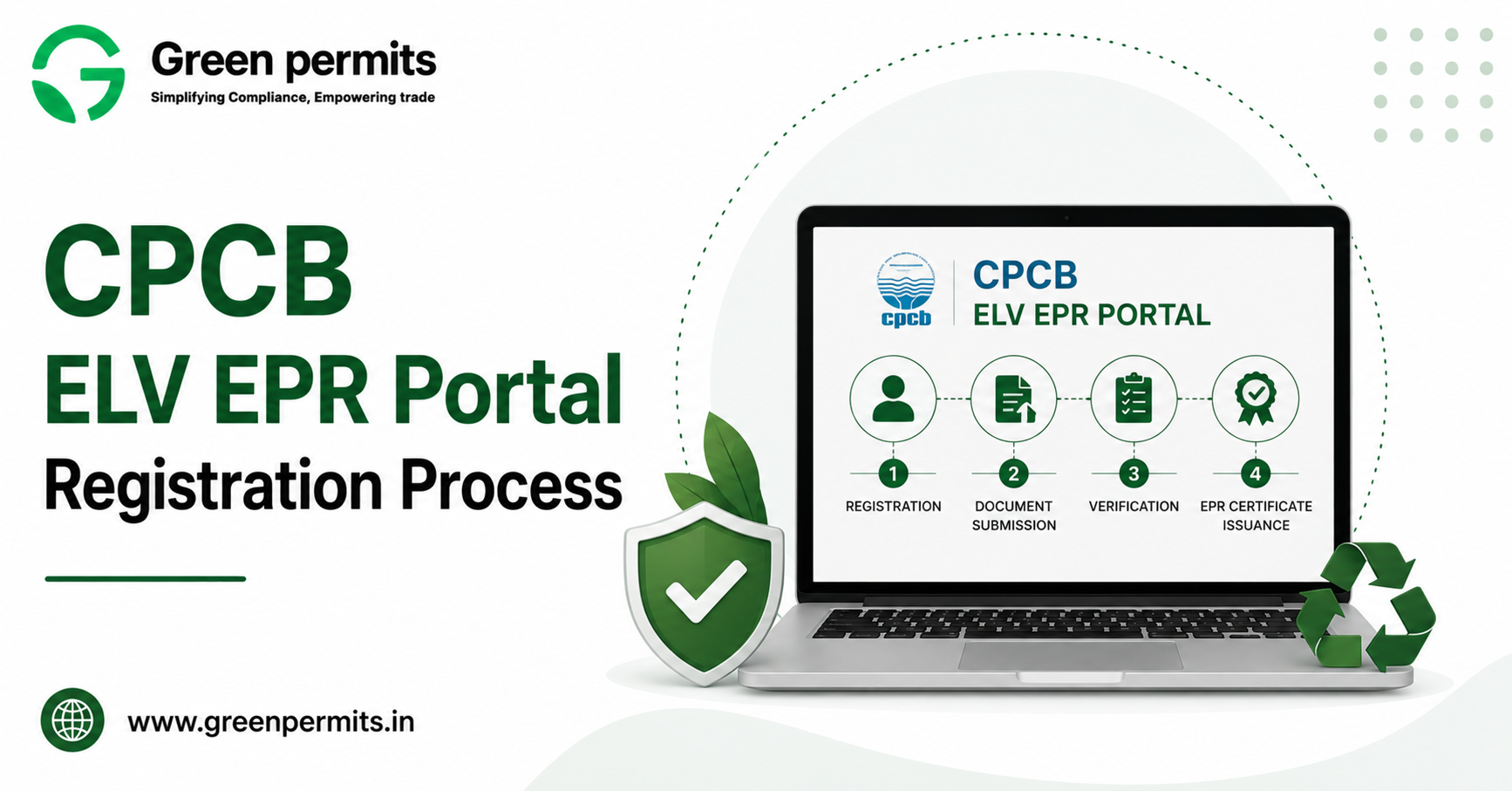
CPCB ELV EPR Portal Registration has become an important compliance requirement for businesses involved in vehicle manufacturing, vehicle import, vehicle branding, and vehicle scrapping in India. The Central Pollution Control Board has introduced a digital portal for managing Extended Producer Responsibility compliance under the End-of-Life Vehicles framework.
End-of-Life Vehicles, also known as ELVs, are vehicles that have reached the end of their useful life due to age, accident damage, fitness failure, technical condition, or economic non-viability. If such vehicles are dismantled through informal channels, they can create serious environmental risks because of used oil, batteries, tyres, plastics, metals, rubber, glass, fluids, and other hazardous components.
The CPCB ELV EPR Portal helps create a transparent system for registration, EPR obligation tracking, certificate generation, certificate transfer, annual filing, and compliance monitoring. Producers use the portal to register and manage their EPR obligations, while Registered Vehicle Scrapping Facilities use the portal to generate EPR certificates after scrapping eligible vehicles.
Understanding the CPCB ELV EPR Portal Registration Process is important for vehicle producers, importers, brand owners, electric vehicle companies, automobile businesses, and registered vehicle scrapping facilities operating in India.
What is CPCB ELV EPR Portal?
The CPCB ELV EPR Portal is an online platform developed for managing compliance under the End-of-Life Vehicles EPR framework.
The portal works as a centralized digital system for:
- Registration of producers
- Registration of importers
- Registration of Registered Vehicle Scrapping Facilities
- Registration of bulk consumers, where applicable
- EPR obligation management
- EPR certificate generation
- EPR certificate transfer
- Filing of returns
- Record maintenance
- Compliance monitoring
- Query management
- Environmental compensation tracking
The main objective of the portal is to ensure that end-of-life vehicles are scrapped through authorized facilities and that producers fulfill their EPR obligations properly.
What is ELV EPR Registration?
ELV EPR Registration is the process of registering covered entities on the CPCB portal under the End-of-Life Vehicles compliance framework.
EPR stands for Extended Producer Responsibility. It means that producers placing vehicles in the Indian market are responsible for ensuring proper management of vehicles after they reach the end of life.
ELV EPR Registration helps businesses:
- Create a verified account on the CPCB portal
- Submit business and vehicle details
- Track annual EPR obligations
- Procure or transfer EPR certificates
- Maintain digital compliance records
- File returns and reports
- Respond to CPCB queries
- Avoid environmental compensation
Registration is the first step for managing ELV EPR compliance through the official portal.
Who Needs CPCB ELV EPR Portal Registration?
CPCB ELV EPR Portal Registration may be required for different entities involved in the vehicle supply chain and vehicle scrapping process.
The following entities may need registration:
- Vehicle manufacturers
- Vehicle importers
- Automobile brand owners
- Electric vehicle manufacturers
- Two-wheeler manufacturers
- Three-wheeler manufacturers
- Passenger vehicle manufacturers
- Commercial vehicle manufacturers
- Transport vehicle importers
- Non-transport vehicle importers
- Companies selling vehicles under their own brand
- Registered Vehicle Scrapping Facilities
- Bulk consumers, where applicable
- Businesses involved in vehicle dismantling or scrapping
The exact registration category depends on the role of the business under the ELV framework.
Why CPCB ELV EPR Portal Registration is Important
CPCB ELV EPR Portal Registration is important because it allows businesses to manage their ELV compliance digitally and transparently.
It helps businesses:
- Meet legal compliance requirements
- Track EPR obligations
- Procure valid EPR certificates
- Work with registered scrapping facilities
- Maintain proper compliance records
- Avoid environmental compensation
- Improve ESG and sustainability performance
- Support authorized vehicle scrapping
- Reduce informal dismantling
- Improve material recovery from old vehicles
Without proper portal registration, covered businesses may face compliance delays, portal restrictions, regulatory notices, or penalties.
Role of Producers on CPCB ELV EPR Portal
Producers have a major role under the ELV EPR framework. A producer may include a manufacturer, importer, or brand owner placing vehicles in the Indian market.
On the CPCB ELV EPR Portal, producers may be required to:
- Register under the producer category
- Submit company details
- Submit vehicle category details
- Provide sales or import data
- Track EPR obligations
- Procure EPR certificates
- File returns or reports
- Maintain compliance records
- Respond to portal queries
- Meet annual EPR targets
Producers should maintain accurate vehicle data because EPR obligations are linked to vehicle categories and quantities placed in the Indian market.
Role of Registered Vehicle Scrapping Facilities
Registered Vehicle Scrapping Facilities, commonly known as RVSFs, are authorized facilities that scrap vehicles in an environmentally responsible manner.
On the CPCB ELV EPR Portal, RVSFs may be responsible for:
- Registering on the portal
- Providing facility details
- Uploading compliance documents
- Recording scrapped vehicle details
- Generating EPR certificates
- Transferring certificates to producers
- Maintaining scrapping records
- Filing required information
- Following environmental and safety conditions
- Keeping documents ready for verification
Only certificates generated through the official portal by eligible facilities are valid for ELV EPR compliance.
How EPR Certificates Work on CPCB ELV Portal
EPR certificates are digital certificates generated after eligible end-of-life vehicles are scrapped by registered vehicle scrapping facilities.
The certificate process generally works as follows:
- Producer registers on CPCB ELV EPR Portal
- Producer receives or calculates annual EPR obligation
- Registered Vehicle Scrapping Facility scraps eligible vehicles
- RVSF generates EPR certificates on the portal
- Producer procures or receives certificates digitally
- Certificates are adjusted against annual EPR targets
- Records are maintained for compliance verification
This system helps ensure transparency, traceability, and proper end-of-life vehicle management.
Documents Required for CPCB ELV EPR Portal Registration
Proper documentation is important for smooth portal registration.
Common documents may include:
- Company Incorporation Certificate
- PAN Card
- GST Registration Certificate
- Import Export Code, if applicable
- Authorized signatory details
- Aadhaar or ID proof of authorized person
- Business address proof
- Vehicle category details
- Vehicle model details
- Manufacturing data
- Import data, if applicable
- Sales data
- Brand details
- Product details
- RVSF registration details, where applicable
- Consent documents, where applicable
- Undertaking or declaration
- Previous compliance records, if any
Additional documents may be required depending on whether the applicant is a producer, importer, brand owner, RVSF, or bulk consumer.
CPCB ELV EPR Portal Registration Process
The CPCB ELV EPR Portal Registration Process is completed online. The process includes applicability assessment, document preparation, account creation, application filing, CPCB review, query response, and approval.
Step 1: Check Applicability
The first step is to check whether the business is covered under the ELV EPR framework.
Applicability is generally assessed based on:
- Type of business activity
- Vehicle category
- Manufacturing activity
- Import activity
- Brand ownership
- Vehicle sales in India
- Scrapping facility operations
- Bulk consumer status, where applicable
- Role in the vehicle supply chain
Correct applicability assessment helps avoid wrong category selection and registration delays.
Step 2: Select Correct Registration Category
After confirming applicability, the applicant must select the correct category on the CPCB portal.
Common registration categories may include:
- Producer
- Importer
- Registered Vehicle Scrapping Facility
- Bulk consumer, where applicable
Selecting the wrong category can lead to portal queries, rejection, or compliance mismatch.
Step 3: Prepare Required Documents
Before filing the application, the applicant should collect all required documents.
Document preparation generally includes:
- Business registration documents
- GST and PAN details
- IEC details, if applicable
- Vehicle product details
- Vehicle sales or import data
- Authorized signatory documents
- Business address proof
- Facility documents, where applicable
- Undertaking or declaration
All documents should be clear, valid, and consistent with official business records.
Step 4: Create Login on CPCB ELV EPR Portal
The applicant must create an account on the CPCB ELV EPR Portal.
During account creation, the applicant may provide:
- Company name
- Applicant category
- Email ID
- Mobile number
- Authorized person details
- Registered business address
- Login credentials
After account creation, the applicant can access the portal dashboard and begin registration filing.
Step 5: Fill Online Registration Application
The applicant must fill the online registration form carefully.
The application generally includes:
- Company details
- Applicant type
- Contact details
- Vehicle category information
- Manufacturing details
- Import details, where applicable
- Sales data
- Facility details, where applicable
- Supporting documents
- Declaration and undertaking
All details should match the documents uploaded on the portal.
Step 6: Upload Supporting Documents
The applicant must upload the required documents in the prescribed format.
Before uploading, the business should check:
- Correct file format
- Clear scanned copies
- Valid GST and PAN details
- Correct IEC details, if applicable
- Correct authorized signatory details
- Accurate vehicle category details
- Proper facility documents, where applicable
Incomplete or unclear documents may result in CPCB queries.
Step 7: Submit Application on Portal
After completing the form and uploading documents, the applicant submits the application online.
Before final submission, the applicant should verify:
- Business name
- Registered address
- Applicant category
- Vehicle details
- Sales or import data
- Uploaded documents
- Contact details
- Declaration information
A properly reviewed application helps reduce errors and processing delays.
Step 8: CPCB Review and Query Response
After submission, CPCB reviews the application and documents.
CPCB may raise queries related to:
- Missing documents
- Incorrect applicant category
- Mismatch in PAN, GST, or IEC details
- Incomplete vehicle data
- Incorrect address information
- Missing authorization details
- Incomplete facility information
- Incorrect sales or import data
The applicant must respond to queries within the portal with proper clarification and supporting documents.
Step 9: Grant of Registration
After successful review and verification, CPCB grants registration under the applicable category.
Once registration is approved, the applicant can manage compliance activities through the portal.
For producers, this includes EPR obligation tracking and certificate procurement. For RVSFs, this includes certificate generation and transfer after eligible scrapping activities.
Cost of CPCB ELV EPR Portal Registration
The cost of CPCB ELV EPR Portal Registration depends on several factors.
These include:
- Applicant category
- Type of vehicle business
- Number of vehicle categories
- Number of vehicle models
- Manufacturing quantity
- Import quantity
- Documentation readiness
- CPCB query status
- Consultant professional charges
- Annual compliance support requirement
The total cost may also include certificate procurement, annual return filing support, and ongoing compliance management.
Timeline for CPCB ELV EPR Portal Registration
The timeline depends on document readiness, portal filing accuracy, CPCB review, and query response.
The general timeline may include:
- Applicability assessment: 1 to 3 working days
- Document preparation: 3 to 7 working days
- Portal filing: 1 to 2 working days
- CPCB review: depends on authority processing
- Query response: depends on the query type
- Final approval: after successful verification
Businesses should prepare documents in advance to avoid last-minute delays.
Common Mistakes During CPCB ELV EPR Portal Registration
Many businesses face delays because of incorrect filing or incomplete documentation.
Common mistakes include:
- Selecting the wrong applicant category
- Providing incorrect vehicle data
- Uploading mismatched documents
- Missing IEC details for importers
- Entering wrong sales or import data
- Not maintaining vehicle category records
- Ignoring CPCB portal queries
- Working with unauthorized scrapping facilities
- Not tracking EPR obligations
- Missing annual filing requirements
Proper planning helps businesses avoid registration and compliance issues.
Benefits of CPCB ELV EPR Portal Registration
CPCB ELV EPR Portal Registration provides several compliance and business benefits.
It helps businesses:
- Meet legal requirements
- Avoid environmental compensation
- Maintain CPCB portal compliance
- Improve ELV management traceability
- Work with authorized RVSFs
- Support sustainable vehicle recycling
- Improve ESG performance
- Promote circular economy
- Improve material recovery
- Build customer and regulator confidence
Proper registration helps businesses stay ready for future compliance checks and reporting requirements.
Why Work with an ELV EPR Consultant?
CPCB ELV EPR Portal Registration involves applicability assessment, document preparation, portal filing, query response, certificate management, and annual compliance tracking.
An experienced consultant can assist with:
- Registration category selection
- Document checklist preparation
- CPCB portal filing
- Query response support
- EPR obligation calculation
- EPR certificate procurement support
- RVSF coordination
- Annual compliance filing
- Compliance record management
- Regulatory advisory
Professional support helps reduce errors, save time, and maintain complete ELV compliance.
Learn More About CPCB ELV EPR Portal Registration
If your business manufactures, imports, sells, or scraps vehicles in India, understanding the CPCB ELV EPR Portal Registration Process is essential for meeting legal obligations under the End-of-Life Vehicles framework.
Read the complete guide here:
👉 https://www.greenpermits.in/04/cpcb-epr-portal-guide-for-e-waste-registration-india/
📞 Get Expert Assistance for CPCB ELV EPR Portal Registration
If you need assistance with CPCB ELV EPR Portal Registration, producer registration, importer registration, RVSF registration, document preparation, EPR obligation calculation, EPR certificate procurement, portal query response, annual filing, or complete ELV compliance management, the experts at Green Permits Consulting can guide you throughout the entire process.
🌐 Website: https://www.greenpermits.in/
📞 Phone: +91 78350 06182
📧 Email: wecare@greenpermits.in

 Czech
Czech
 Arabic
 French
 Spanish
 Portuguese
 Deutsch
 Turkish
 Dutch
Dutch
 Italiano
 Russian
 Romaian
 Portuguese (Brazil)
 Greek
Greek