


 About SPORTIVO Network
Beyond Irrigation: How Premium Agriculture Pipes And Fittings Improve Farm Efficiency and Water Management
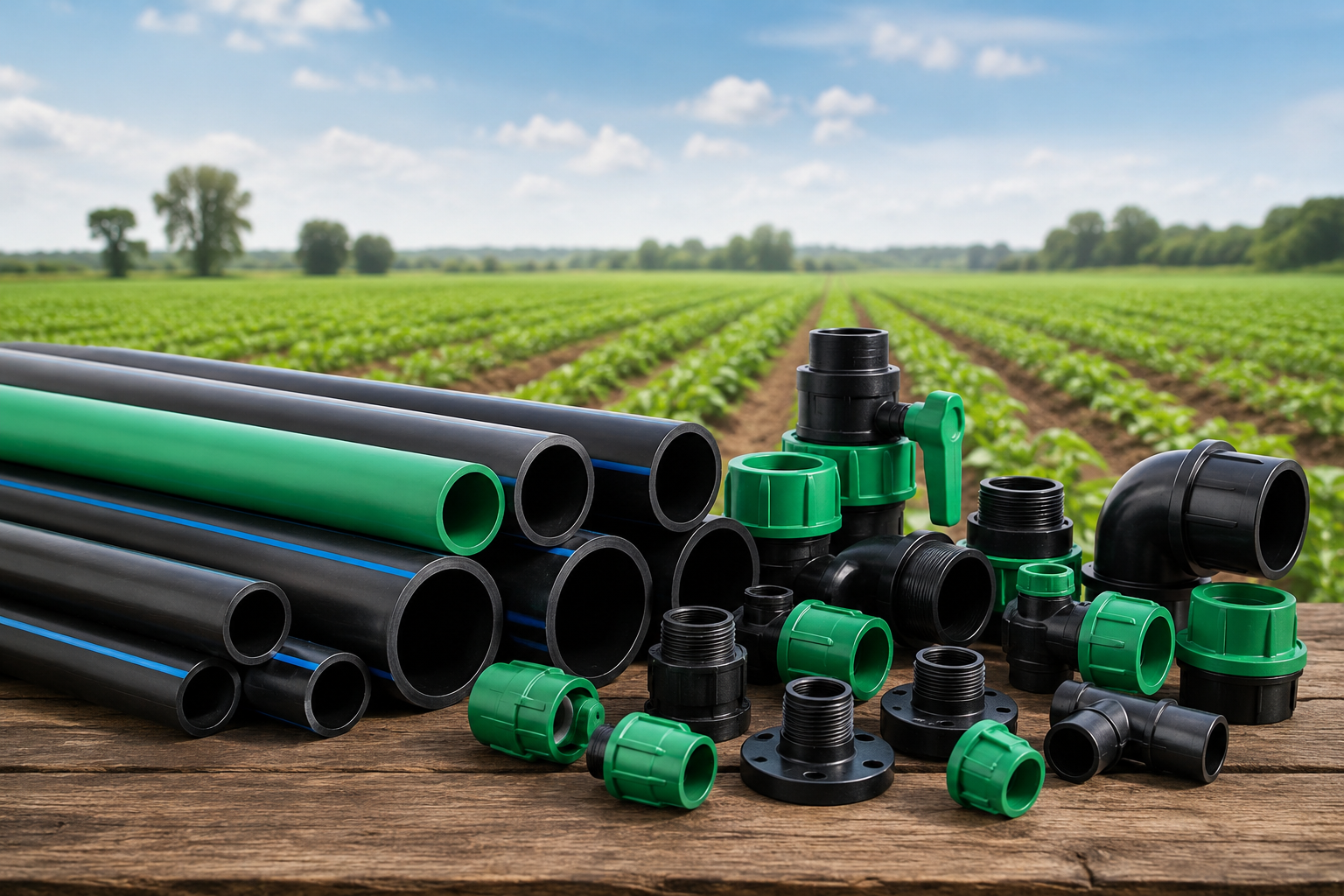
Often, it fails because the water reaches late, leaks through weak joints, loses pressure before the last line, or damages the soil because the pipe network was selected only by price. Agriculture Pipes And Fittings are not just irrigation items anymore. They are part of farm efficiency, water control, labour planning, and long-term operating cost.
Here’s the real pressure on buyers: agriculture uses roughly 70% of global freshwater withdrawals. That means every leakage point, loose fitting, wrong pressure class, and poor pipe selection directly affects water management.
The Details That Decide Field Performance
The Pressure Rating Buyers Notice Too Late
Most buyers ask for pipe size first. Fair enough. But size alone does not protect performance.
For agriculture use, the buyer should confirm pipe diameter, wall thickness, working pressure, material type, fitting compatibility, and jointing method before approving a purchase order. If the pipe is being used for borewell discharge, sprinkler movement, open field irrigation, or farm water transfer, the pressure condition will not remain the same everywhere.
That’s where weak procurement creates loss.
A supplier who only says “standard agriculture pipe” has not answered the question. Ask for the actual pressure class, batch details, and whether the fittings match the same application load. One overlooked specification is joint tolerance. A pipe may look fine, but if the elbow, tee, coupling, or adaptor does not sit correctly, leakage begins after installation, not during dispatch.
And by then, the farmer blames the dealer.
Why Fittings Need the Same Attention as Pipes
Agriculture fittings are small items, but they carry large failure risk.
A poor tee or loose coupling can disturb flow across an entire field line. During QC inspection, buyers should check fitting edges, socket depth, surface finish, size consistency, and packing condition. For bulk orders, sampling approval should happen before full dispatch, especially when multiple sizes are involved.
Nobody tells you this early enough: mixed-size fittings in one shipment create more site-level confusion than pipe damage itself.
Objective: How Buyers Should Evaluate Agriculture Pipe Suppliers
Procurement managers should judge Agriculture Pipes And Fittings Manufacturers on more than price.
Use these 5 checks before placing the order:
-
Specification clarity – The supplier should confirm size, material, pressure rating, application, and fitting type. A bad answer sounds like: “Sir, this will work everywhere.”
-
Certificate validity – Ask for current ISO documents and any required compliance papers. A lapsed certificate can delay institutional or dealer approvals.
-
Sampling approval – For repeat buying, samples should match the production batch. If the sample is better than the dispatch lot, that is not a mistake. That is poor control.
-
MOQ flexibility – A serious Agriculture Pipe Manufacturer should clearly explain MOQ by size and product type instead of changing the rule after negotiation.
-
Dispatch planning – Ask how the order will be packed, loaded, and checked before freight booking.
Most delays do not begin on the production floor. They begin when the buyer sends half specifications and expects the supplier to “understand the requirement.”
How Better Pipe Selection Protects Margin
Lower Leakage Means Lower Water Loss
Good pipe and fitting compatibility reduces leakage at joints. Which means less water waste, fewer repair visits, and better field coverage. For dealers, fewer complaints also protect repeat orders.
Better Flow Control Reduces Labour Dependency
If the internal surface, diameter, and pressure class suit the farm application, water movement becomes more predictable. Workers spend less time shifting temporary fixes and more time managing irrigation.
Stronger Packaging Reduces Transit Claims
Transit damage is not always dramatic. Sometimes it is scratched pipe ends, crushed fittings, or mixed cartons. Proper packaging standards reduce disputes between wholesaler, transporter, and buyer.
Correct Specification Prevents Dead Stock
Wrong-size agriculture pipes become dead inventory fast.
For wholesalers, this is where margin gets trapped. A low-price order may look profitable until the material sits in the warehouse because the pressure class or fitting combination does not match local demand.
Consistent Production Batch Builds Dealer Confidence
Dealers need repeat consistency. If one batch fits well and the next batch creates complaints, the dealer loses trust in front of farmers and contractors. Batch-wise checking helps control that risk.
Better Water Management Supports Long-Term Farming
Agriculture pipes are now part of water planning. In regions where groundwater quality and availability are already under pressure, controlled water movement matters more each season.
Why Kundli, Sonipat Matters for Supply
For buyers searching for Agriculture Pipes And Fittings Suppliers in India, location is not just an address. It affects freight planning, lead time, and replacement speed.
Flowtekpipes is based in Kundli, Sonipat, Haryana - 131028, which gives buyers access to a practical supply point near Delhi NCR and North Indian distribution routes. For wholesalers and Agriculture Pipes Dealer networks, this matters when mixed-size orders, urgent refill quantities, or replacement cartons need quicker movement.
A buyer from Haryana, Delhi, Punjab, Rajasthan, or UP should not only ask, “What is the rate?” Ask, “How soon can the production batch be packed, checked, loaded, and dispatched?”
That answer tells you more.
For local search, buyers often look for Agriculture Pipes And Fittings Manufacturers in India, Agriculture Pipes Suppliers in India, Agriculture Pipes Dealer in India, and Agriculture Pipes Manufacturers in India. The real decision should still come back to specification compliance, order handling, and after-dispatch support.
About Us
At Flowtekpipes, we work with buyers who need Agriculture pipes, fittings, and related piping products for practical field use, dealer supply, and project-based requirements.
We are based in Kundli, Sonipat, Haryana - 131028, and our ISO-certified positioning is important because B2B buyers need documentation, not verbal assurance. In pipe supply, one operational detail matters a lot: the dispatch team must know whether the order is going to a dealer warehouse, a project site, or a farming belt, because packing and loading priorities change with the delivery route.
We understand that a purchase order is not complete when material leaves the factory.
It is complete when the buyer receives the right sizes, usable fittings, correct documents, and material that can actually move in the market.
Send the Right Details Before Asking for Rate
Send us your agriculture pipe requirement with pipe size, fitting type, quantity, application, delivery location, preferred material, and expected purchase timeline.
Also mention your MOQ expectation clearly. We can guide you better when we know whether you are buying for dealer stock, project use, or repeat wholesale supply. For faster response time, share the complete specification in one message instead of sending size, quantity, and location separately.
If samples are needed, tell us before final pricing.
That avoids one common problem: rate finalization before sampling approval.
Final Word Before the Purchase Order
Agriculture Pipes now affect more than irrigation layout. They influence water usage, labour cost, dealer complaints, and farm reliability. Buyers who check pressure class, fitting compatibility, certificate validity, MOQ, and dispatch planning usually make cleaner sourcing decisions. The next stage of farm water management will reward suppliers and buyers who treat pipe selection as an operating decision, not only a rate comparison.
FAQs
1. What should I check before buying Agriculture Pipes And Fittings?
Check size, material, pressure rating, fitting compatibility, jointing method, MOQ, dispatch packing. Do NOT accept on rate alone. A cheaper pipe can prove costly if the fittings do not marry up at the site.
2. How do I compare Agriculture Pipes And Fittings Manufacturers?
Request sample approval, consistency for each production batch, and copies of certificates, packing method, lead time. A weak supplier will never give exact answer and keep saying ” same material, no issue”. That is not enough for bulk purchasing.
3. Are Agriculture Pipes And Fittings Suppliers able to handle mixed-size orders?
Most of suppliers can (but...). However there is a warning attached. Mixed size order require improved sorting, labelling and carton control. If packing is inefficient a buyer can get accepted quantities in wrong sizes.
4. What should I ask an Agriculture Pipes And Fittings Dealer before purchase?
Inquire in relation to the stocklist, batch info, replacement policy and fitting. Pipes without matching fittings could bring about delay in field assembly.
5. Can an Agriculture Pipe Manufacturer provide custom requirements?
Sometimes, yes. The constraint is the MOQ and LEAD TIME. Custom pressure class, sizes or planning for special quantity may require production dispatch, so buyers could not demand instant dispatch for this issue.
6. How do Agriculture Pipes Suppliers help reduce farm water loss?
They assist by providing pipe and fittings which are suitable for the pressure and field plan and movement of water. The real advantage is correctly specifying the pipe not just buying a pipe that looks thicker.
7. Why do Agriculture Pipes Dealer in India networks prefer consistent supply?
Repeatable stock movement is essential. For instance, if one batch has differing fitting comfort levels, colour varients or packing damage then customers report more complaints. Consistency of quality is essential for the reputation of the dealer and continued orders of farmers.

 Czech
Czech
 Arabic
 French
 Spanish
 Portuguese
 Deutsch
 Turkish
 Dutch
Dutch
 Italiano
 Russian
 Romaian
 Portuguese (Brazil)
 Greek
Greek