


 About SPORTIVO Network
Are Lab Grown Diamond Earrings Real Diamonds? The Truth About Every Lab Grown Diamond Earring
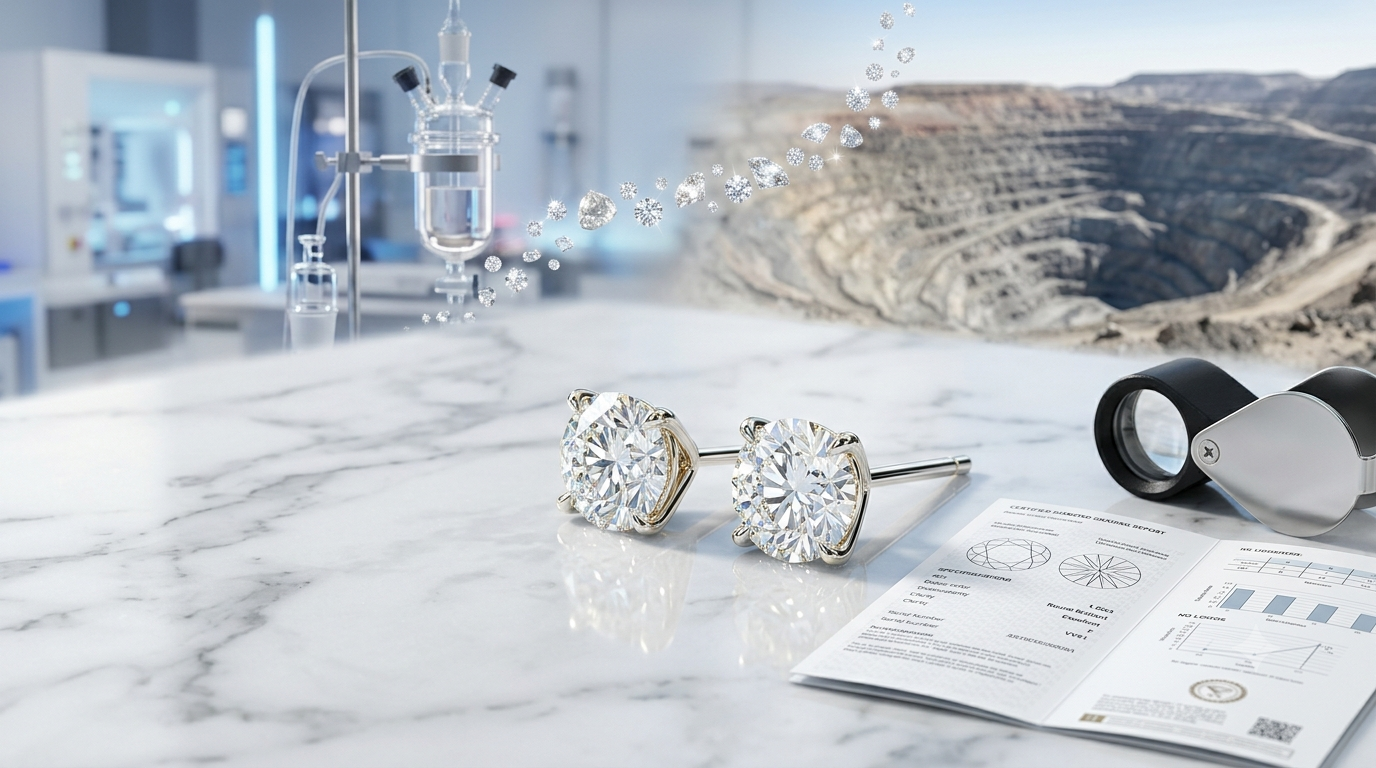
Many people wonder if a lab grown diamond earring is a real diamond or just a fake stone. This question is common because lab-grown diamonds are becoming more popular every year. Some people think they are artificial, while others believe they are exactly the same as natural diamonds.
The truth is simple: yes, lab grown diamond earrings are real diamonds. They have the same chemical, physical, and optical properties as mined diamonds. The only difference is where they are created. Natural diamonds form deep inside the earth over billions of years, while lab-grown diamonds are created in advanced laboratories using modern technology.
According to leading gem grading organizations such as GIA (Gemological Institute of America) and IGI (International Gemological Institute), lab-grown diamonds are genuine diamonds. They are graded using the same quality standards as mined diamonds.
In this guide, you'll learn how lab-grown diamonds are made, how they compare with natural diamonds, and how to choose the right earrings for your budget.
The Truth About Lab Created Stones
For many years, people used the words "lab-grown" and "fake" together. This created confusion among buyers. However, these are completely different things.
A fake diamond may be made from glass or cubic zirconia. A lab-grown diamond is made from pure carbon, just like a natural diamond.
Both types share the same:
- Chemical composition
- Crystal structure
- Hardness
- Sparkle
- Fire
- Brilliance
Even experienced jewelers cannot identify them with the naked eye.
Today's grading reports from GIA and IGI clearly identify whether a diamond is mined or lab-grown, but both are recognized as real diamonds.
Science Behind the Sparkle
How CVD and HPHT Work
Scientists create lab-grown diamonds using two advanced methods.
Chemical Vapor Deposition (CVD)
CVD starts with a tiny diamond seed placed inside a special chamber.
The chamber is filled with carbon-rich gases. High heat breaks down these gases, allowing pure carbon atoms to slowly attach to the seed layer by layer.
Over several weeks, a beautiful diamond crystal grows.
This process carefully recreates the natural growth of diamonds in a controlled environment.
High Pressure High Temperature (HPHT)
HPHT copies the natural conditions found deep inside the earth.
Carbon is exposed to extremely high pressure and temperatures above 1,400°C.
Under these conditions, carbon transforms into a diamond crystal.
Both methods produce genuine diamonds that are nearly impossible to distinguish from mined diamonds without specialized equipment.
Chemical Composition and Hardness
Whether a diamond comes from a laboratory or a mine, it is made from one element: carbon.
Carbon atoms form a strong crystal lattice that gives diamonds their famous strength.
Both lab-grown and mined diamonds score 10 on the Mohs Hardness Scale, making them the hardest natural material used in jewelry.
This means your earrings can resist scratches from everyday wear while maintaining their brilliance for many years.
Because their crystal structure is identical, a jeweler's loupe cannot reliably identify whether a diamond is lab-grown or mined.
Special laboratory equipment is needed for accurate identification.
Comparing Lab and Mined Earrings
Price Gaps and Value Retention
One of the biggest advantages of lab-grown diamonds is their affordability.
In 2026, a pair of 1-carat total weight lab-grown diamond stud earrings may cost 40% to 70% less than similar mined diamond studs.
This allows buyers to choose:
- Larger diamonds
- Better color grades
- Higher clarity
- Premium settings
—all without increasing their budget.
For example:
| Feature | Lab-Grown Diamond | Mined Diamond |
|---|---|---|
| Price | Lower | Higher |
| Appearance | Same | Same |
| Durability | Same | Same |
| Certification | Yes | Yes |
| Resale Value | Lower | Higher |
While mined diamonds may retain resale value better in some cases, many buyers prefer the significant savings offered by lab-grown diamonds, especially for jewelry they plan to wear rather than resell.
For the same budget, buyers often enjoy noticeably larger diamonds with lab-grown options.
Environmental and Ethical Impact
Many shoppers today care about sustainability.
Lab-grown diamonds generally require less land disruption than traditional open-pit diamond mining.
Modern production methods also continue to improve energy efficiency.
Another advantage is transparency.
Many lab-grown diamonds are marketed as conflict-free because they avoid many of the supply chain concerns sometimes associated with mined diamonds.
This has encouraged many modern jewelry brands to expand or even switch entirely to lab-grown diamond collections.
Consumers who value environmental responsibility often appreciate having this alternative.
Spotting the Difference in Real Life
Tools for Verification
Most people cannot tell the difference between lab-grown and mined diamonds by looking at them.
Even standard electronic diamond testers usually identify both as genuine diamonds.
This happens because both diamonds conduct heat in almost the same way.
Instead, laboratories use advanced instruments to determine the origin.
Many certified lab-grown diamonds also include a tiny laser inscription on the girdle.
This microscopic marking matches the certificate number and helps confirm authenticity.
Certified gemologists recommend always buying diamonds with trusted certification from organizations such as GIA or IGI.
Visual Quality and Grading
The famous 4Cs apply equally to both lab-grown and mined diamonds:
Cut
A well-cut diamond reflects more light and creates maximum sparkle.
Color
Diamonds are graded from colorless to light yellow or brown.
Higher color grades usually appear brighter.
Clarity
Clarity measures natural inclusions and blemishes inside the diamond.
Both mined and lab-grown diamonds can contain small inclusions.
Carat
Carat measures weight, not size.
A larger carat diamond appears bigger but should also have excellent cut quality for maximum brilliance.
Common Myth: Lab Diamonds Are "Too Perfect"
Many people believe every lab-grown diamond is flawless.
This is not true.
Lab-grown diamonds can contain natural growth features and inclusions, just like mined diamonds.
Each diamond is unique and receives an individual grading report.
Checking Color Under Different Lighting
When shopping, view earrings under:
- Daylight
- Indoor lighting
- Jewelry store lighting
This helps you see how color and sparkle appear in different environments.
Choosing the Right Earrings for Your Budget
When to Pick Lab Grown
Lab-grown diamond earrings are an excellent choice if you want:
- Bigger diamonds for less money
- Better color and clarity
- Everyday luxury
- Ethical sourcing
- Modern value
They are especially popular for:
- Daily office wear
- Anniversary gifts
- Birthday presents
- Wedding jewelry
- Self-purchase luxury
Certification Checklist
Before buying, always verify:
- ✔ GIA or IGI certificate
- ✔ Laser inscription
- ✔ 4Cs grading report
- ✔ Return policy
- ✔ Warranty
- ✔ Trusted jeweler
These simple checks help ensure you receive a genuine, certified diamond.
When to Choose Mined Stones
Natural diamonds still hold strong emotional appeal.
Some buyers appreciate their rarity and the fact that they formed naturally over billions of years.
Mined diamonds may also be preferred by collectors who value rarity and long-term collectability.
If choosing a mined diamond, focus on:
- Excellent cut quality
- High certification standards
- Trusted retailers
- Transparent sourcing
A well-selected mined diamond can become a treasured family heirloom.
Making Your Final Decision
So, are lab grown diamond earrings real diamonds?
The answer is yes.
They share the same chemical composition, hardness, sparkle, and beauty as mined diamonds. They are certified by respected gemological laboratories and graded using the same international standards.
The biggest differences are their origin, price, and resale value—not their appearance or durability.
If your goal is to maximize beauty while staying within budget, lab-grown diamond earrings offer outstanding value. If you value rarity and tradition, mined diamonds may be the better choice.
Before making your purchase, ask yourself:
- Do I want a larger diamond for my budget?
- Is sustainability important to me?
- Am I buying for everyday wear or as a long-term heirloom?
- Does the diamond come with GIA or IGI certification?
- Am I purchasing from a trusted jeweler?
By answering these questions, you'll find the perfect pair of diamond earrings that match your style, budget, and personal values.
Whether you choose lab-grown or mined, remember that the best diamond is the one that makes you feel confident every time you wear it.

 Czech
Czech
 Arabic
 French
 Spanish
 Portuguese
 Deutsch
 Turkish
 Dutch
Dutch
 Italiano
 Russian
 Romaian
 Portuguese (Brazil)
 Greek
Greek