


 About SPORTIVO Network
The Marketing Metric T Nagar Shop Owners Never Actually Check
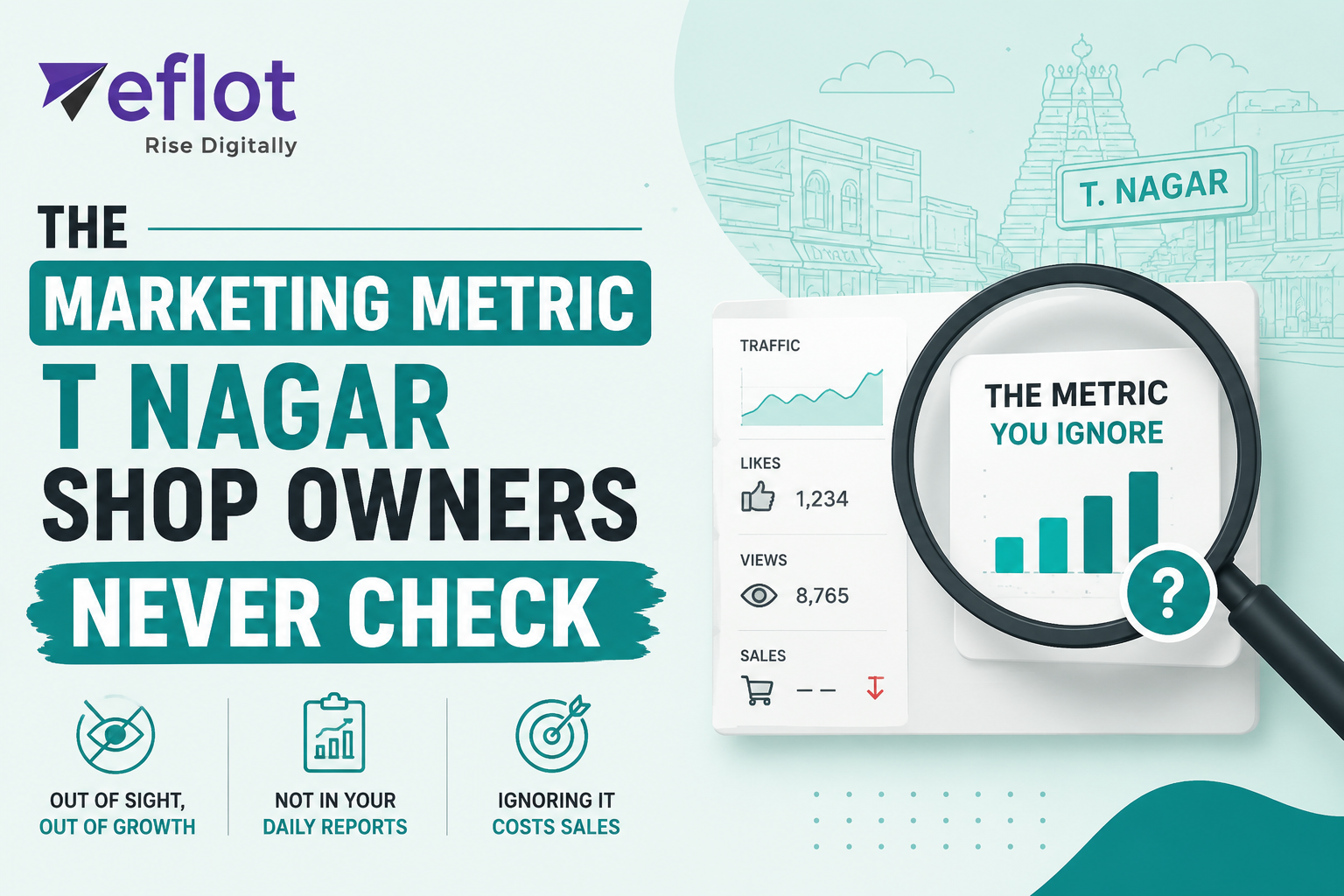
Two shops in T Nagar have nearly identical follower counts, similar posting frequency, and comparable engagement on Instagram. One is having its best year in a decade, expanding into a second counter and hiring more staff. The other is quietly wondering why all that social media effort isn't translating into actual sales, despite doing seemingly everything right online.
The difference isn't visible in either shop's Instagram analytics. It shows up in a number almost nobody tracks: how many online enquiries actually turn into a store visit. One shop knows that number. The other has never once calculated it.
This piece looks at why this specific metric matters more than any follower count or like tally, and what a genuinely useful digital marketing agency in T Nagar, Chennai actually does to help a shop start tracking it.
Follower Count vs Real Sales: What Gets Measured
Most shop owners can rattle off their follower count without checking. Fewer can say how many people liked last week's post. Almost none can say how many of this month's enquiries actually became sales.
|
What Gets Tracked Automatically |
What Almost Nobody Tracks |
|
Follower count |
Enquiry-to-visit conversion rate |
|
Post likes and comments |
Which specific posts led to actual sales |
|
Story views |
Average enquiries needed per sale |
|
Profile visits |
Which platform actually drives visits, not just interest |
Instagram and Facebook make the left column effortless, a single glance at the app shows all of it. The right column requires someone to actually connect an online enquiry to a real-world outcome, which almost never happens by default on any platform. No dashboard, however sophisticated, currently draws a straight line between "someone messaged asking about a saree" and "that person walked in and bought it three days later." That connection has to be made manually, by someone who's decided it's worth the effort.
Why Enquiry to Visit Rate Beats Follower Count
Follower count and engagement are proxies. They suggest interest exists, but they don't confirm that interest converts into anything. A shop with ten thousand followers and a poor enquiry-to-visit rate is, in practical terms, worse off than a shop with a thousand followers and a strong one.
The gap between these two shops usually comes down to something simple: one is systematically following up on enquiries, tracking outcomes, and adjusting based on what's actually converting. The other is treating a growing follower count as success on its own, without ever confirming whether it's producing real business. Neither shop owner would describe themselves as careless. The one falling behind simply never built a habit of asking the harder question.
Why Shops Never Track This Number
A few reasons explain why this tracking almost never happens naturally, even at shops doing everything else reasonably well:
-
It requires manual effort. No platform automatically calculates this for a shop owner. It has to be tracked by hand or with a simple system.
-
It's less immediately satisfying. A rising follower count feels like progress instantly. Calculating a conversion rate requires waiting and calculating, which is less rewarding in the moment.
-
Nobody's specifically responsible for it. Posting content has an obvious owner. Tracking whether that content actually produces sales usually doesn't, so it falls through the cracks.
-
It can reveal uncomfortable truths. A weak conversion rate means the marketing effort, however consistent, isn't actually working, which is harder to face than simply watching follower counts climb.
There's also a subtler reason worth naming. Follower counts and likes are public, visible to competitors, customers, and the shop owner's own sense of pride. A conversion rate is private, known only to whoever bothers to calculate it. That asymmetry quietly shapes where attention naturally flows, toward the number everyone can see, away from the one that actually determines whether the business is thriving.
How to Track Your Enquiry to Visit Rate
Getting this number doesn't require expensive software. It requires a simple, consistent habit.
-
Log every online enquiry, even in a basic notebook or spreadsheet, noting the date and which platform it came from
-
Mark whether it led to a visit, following up if needed to confirm, rather than assuming silence means no
-
Calculate the rate monthly, dividing visits by total enquiries to get a real percentage
-
Compare month to month, watching whether the rate improves, worsens, or stays flat as marketing efforts change
Within two or three months, this simple habit reveals more about what's actually working than a year of watching follower counts alone. This is exactly the kind of practical, unglamorous work a genuinely useful digital marketing agency in T Nagar, Chennai should already be doing on a shop's behalf, rather than something a busy owner has to figure out entirely on their own.
Does This Change Outside T Nagar?
To some degree, yes. A digital marketing agency in Chennai working with a broader mix of clients often tracks conversion differently depending on industry, a service business might track consultation bookings rather than store visits, for instance. The underlying discipline stays the same regardless.
A digital marketing agency in OMR, Chennai working with B2B tech clients tracks an equivalent metric, but the funnel is longer and the conversion point is usually a qualified sales conversation rather than a same-day visit. T Nagar's retail environment, by contrast, often sees enquiry and visit happen within days, sometimes hours, which makes this specific metric especially fast and useful to track here.
How to Keep Tracking It Every Month
Getting this number once is useful. Tracking it consistently is where it actually pays off. A properly run digital marketing service in T Nagar, Chennai typically builds this tracking into its regular reporting, rather than treating it as a one time audit.
That usually means monthly reviews specifically comparing conversion rate against the previous month, flagging which content types or platforms are actually driving visits versus which are just generating likes. Shops working with this kind of structured, ongoing digital marketing service in T Nagar, Chennai tend to make sharper decisions about where to focus limited time and budget, since they're no longer guessing based on vanity numbers alone.
How Eflot Handles This With New Clients
Eflot builds a simple enquiry log directly into the first month of any retail engagement, well before any broader strategy discussion, specifically because this single number tends to reshape what the rest of the strategy should actually focus on.
Frequently Asked Questions
Q: Is this metric more important than follower count for a small shop?
Significantly, yes. Follower count measures reach, while conversion rate measures whether that reach is actually translating into real business outcomes.
Q: Would a broader digital marketing agency in Chennai track this the same way as a T Nagar specialist?
The core discipline is the same, but a citywide agency serving many different industries may not weigh this specific metric as heavily as a team focused consistently on retail in one dense corridor.
Q: Does a digital marketing agency in OMR, Chennai track a similar metric for its B2B clients? Yes, though the equivalent there is usually a qualified sales conversation rather than a same-day store visit, reflecting OMR's longer, more considered B2B buying process.
Q: Should a digital marketing agency in T Nagar, Chennai be tracking this automatically, or does the shop need to do it manually?
Ideally, this should be built into the ongoing service from the start. If it isn't happening already, it's worth asking directly why not.
Q: How long does it take to see useful patterns once tracking begins?
Most shops start seeing genuinely useful patterns within two to three months, once there's enough data to compare across different content types and platforms.
The shop having its best year isn't succeeding because of a bigger following or flashier content. It's succeeding because someone is actually watching the one number that connects marketing effort to real sales, and adjusting based on what that number actually shows. The other shop isn't doing anything wrong exactly, it's simply optimizing for the numbers that are easiest to see, rather than the one that actually matters.
Follower counts feel good to watch, and there's nothing wrong with enjoying that growth. But they were never designed to answer the one question that actually keeps a shop running: are these people buying anything. Conversion rates answer that question directly, which is exactly why they're worth the small, unglamorous effort it takes to track them, month after month, long after the novelty of watching follower counts climb has worn off.

 Czech
Czech
 Arabic
 French
 Spanish
 Portuguese
 Deutsch
 Turkish
 Dutch
Dutch
 Italiano
 Russian
 Romaian
 Portuguese (Brazil)
 Greek
Greek