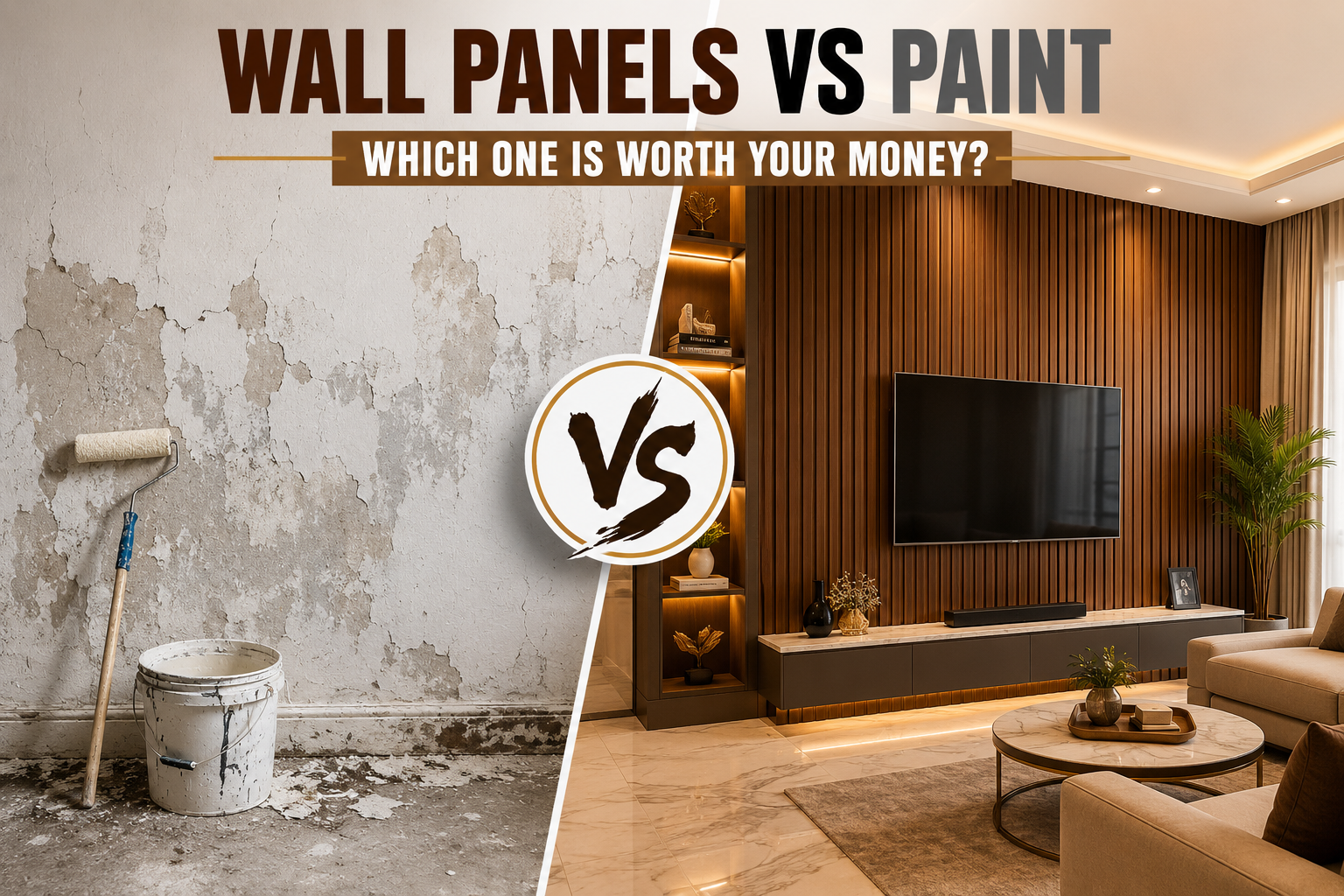
When planning a new home or renovating an existing space, your walls play a major role in defining the overall look and feel of the interiors. While paint and wallpaper have been the go-to choices for decades, wall panelsare rapidly becoming a preferred alternative for homeowners, architects, and interior designers.
But are wall panels actually worth the investment, or are traditional wall finishes still the better choice?
The answer depends on several factors, including your budget, maintenance expectations, design preferences, and long-term value. Understanding the differences between wall panels and traditional wall finishes can help you make a smarter investment instead of choosing based only on appearance.
This guide compares both options in detail so you can confidently decide which one offers the best value for your money.
What Are Wall Panels?
Wall panels are decorative and protective sheets installed directly onto interior walls. They are available in various materials, textures, patterns, and finishes, making them suitable for both residential and commercial spaces.
Some of the most popular types include:
PVC Wall Panels
WPC Wall Panels
Wooden Wall Panels
MDF Wall Panels
Charcoal Panels
Stone Finish Panels
3D Decorative Panels
Wall panels not only enhance aesthetics but also protect walls from moisture, scratches, and everyday wear.
What Are Traditional Wall Finishes?
Traditional wall finishes refer to methods like:
Interior Paint
Wallpaper
Cement Plaster
Textured Paint
Wall Putty Finishes
These options have been widely used for years because they are easily available and relatively affordable.
However, their performance largely depends on surface preparation, environmental conditions, and regular maintenance.
Wall Panels vs Traditional Wall Finishes
1. Appearance and Design Flexibility
Traditional wall finishes offer numerous paint shades and wallpaper designs. While they provide flexibility, they often lack texture and depth.
Wall panels create a premium appearance with realistic wood grains, marble effects, stone textures, slatted designs, and modern 3D patterns.
If your goal is to create luxurious and eye-catching interiors, wall panels offer significantly more visual impact.
2. Installation Process
Painting involves multiple stages:
Surface preparation
Putty application
Primer
Multiple coats of paint
Drying time
Wallpaper installation also requires perfectly smooth walls.
Wall panels, on the other hand, can often be installed directly over existing surfaces using adhesives or mechanical fixing systems.
Wall panels usually require less time and create minimal mess during installation.
3. Durability
Durability is one of the biggest differences between these two options.
Traditional finishes may experience:
Cracks
Peeling
Fading
Moisture damage
Stains
Wall panels are manufactured to withstand daily wear and tear much more effectively.
Many premium wall panels are resistant to:
Moisture
Termites
Scratches
Impact
UV exposure
This makes wall panels a long-term investment rather than a short-term decorative solution.
4. Maintenance Requirements
Painted walls require repainting every few years.
Wallpaper may start peeling in humid environments.
Textured finishes can collect dust and become difficult to clean.
Wall panels require very little maintenance.
Usually, a soft cloth and mild cleaning solution are enough to maintain their appearance.
Lower maintenance translates into lower long-term ownership costs.
5. Moisture Resistance
Bathrooms, kitchens, basements, and humid regions demand materials that can tolerate moisture.
Traditional paint may develop:
Damp patches
Bubbling
Mold growth
Peeling
Modern PVC and WPC wall panels perform much better in such environments.
For moisture-prone spaces, wall panels clearly offer better protection.
6. Cost Comparison
At first glance, traditional wall finishes appear more affordable.
However, the actual cost should include:
Repainting
Repairs
Moisture treatment
Surface restoration
Wallpaper replacement
Wall panels generally require a higher initial investment but lower maintenance over time.
When evaluated over several years, wall panels often provide better overall value.
7. Lifespan
The average lifespan varies significantly.
Traditional wall finishes:
Paint: 4–7 years
Wallpaper: 5–10 years
Quality wall panels can last well over 15–20 years with proper care.
Their longer lifespan makes them more economical over time despite the higher initial cost.
8. Customization Options
Traditional finishes mainly rely on color selection.
Wall panels offer much broader customization, including:
Natural wood textures
Marble effects
Concrete finishes
Metallic designs
Fluted panels
Acoustic panels
Geometric patterns
This makes them suitable for homes, offices, hotels, retail stores, restaurants, and commercial interiors.
9. Acoustic and Thermal Benefits
Paint and wallpaper provide almost no insulation.
Many wall panels improve:
Sound absorption
Indoor comfort
Thermal insulation
These additional functional benefits make wall panels particularly valuable in modern buildings.
10. Return on Investment
Interior upgrades influence property value.
Premium-looking interiors often leave stronger impressions on buyers and tenants.
Well-installed wall panels can contribute to:
Better visual appeal
Lower maintenance costs
Increased durability
Modern interior styling
For homeowners planning long-term use or future resale, wall panels can offer a better return on investment.
Quick Comparison Table
Feature
Wall Panels
Traditional Wall Finishes
Appearance
Premium textured finish
Flat surface
Installation
Faster
Time-consuming
Durability
Excellent
Moderate
Maintenance
Low
Medium to High
Moisture Resistance
High
Limited
Lifespan
15–20+ Years
4–10 Years
Customization
Extensive
Limited
Cleaning
Easy
Moderate
Long-Term Cost
Lower
Higher due to maintenance
Who Should Choose Wall Panels?
Wall panels are ideal for:
Modern homes
Luxury apartments
Commercial interiors
Hotels
Offices
Retail stores
Restaurants
Renovation projects
Moisture-prone areas
They are especially suitable for homeowners looking for a premium finish with minimal maintenance.
Who Should Choose Traditional Wall Finishes?
Traditional finishes remain a practical choice when:
Budget is the primary concern.
You frequently change interior colors.
Temporary decoration is required.
Large wall areas need economical finishing.
For short-term projects, paint can still be a reasonable option.
Final Verdict
If you're comparing only the initial installation cost, traditional wall finishes may seem like the more economical option. However, when durability, maintenance, aesthetics, and long-term value are taken into account, wall panels prove to be a smarter investment for most modern interiors.
They offer superior durability, elegant designs, moisture resistance, easy maintenance, and a significantly longer lifespan than conventional wall finishes. While the upfront cost may be higher, the reduced need for repairs and replacements makes them more cost-effective over time.
If you're planning to upgrade your interiors with premium-quality wall solutions, you can explore a wide range of options on the to find products that match your design preferences and functional requirements.
FAQs
Are wall panels better than paint?
Yes, wall panels are generally more durable, require less maintenance, and offer better aesthetics than paint, making them a better long-term investment.
Do wall panels last longer than traditional wall finishes?
Yes. Quality wall panels can last 15 to 20 years or more, while painted walls typically require repainting every few years.
Are wall panels waterproof?
Many PVC and WPC wall panels are moisture-resistant, making them suitable for bathrooms, kitchens, and other humid areas.
Are wall panels expensive?
The initial cost is usually higher than paint, but their durability and low maintenance often make them more cost-effective over time.
Can wall panels be installed over existing walls?
Yes. In many cases, wall panels can be installed over existing painted walls, tiles, or other smooth surfaces, reducing renovation time and mess.



 About SPORTIVO Network

 Czech
Czech
 Arabic
 French
 Spanish
 Portuguese
 Deutsch
 Turkish
 Dutch
Dutch
 Italiano
 Russian
 Romaian
 Portuguese (Brazil)
 Greek
Greek