


 About SPORTIVO Network
The First Step Many AI Projects Skip Before They Begin
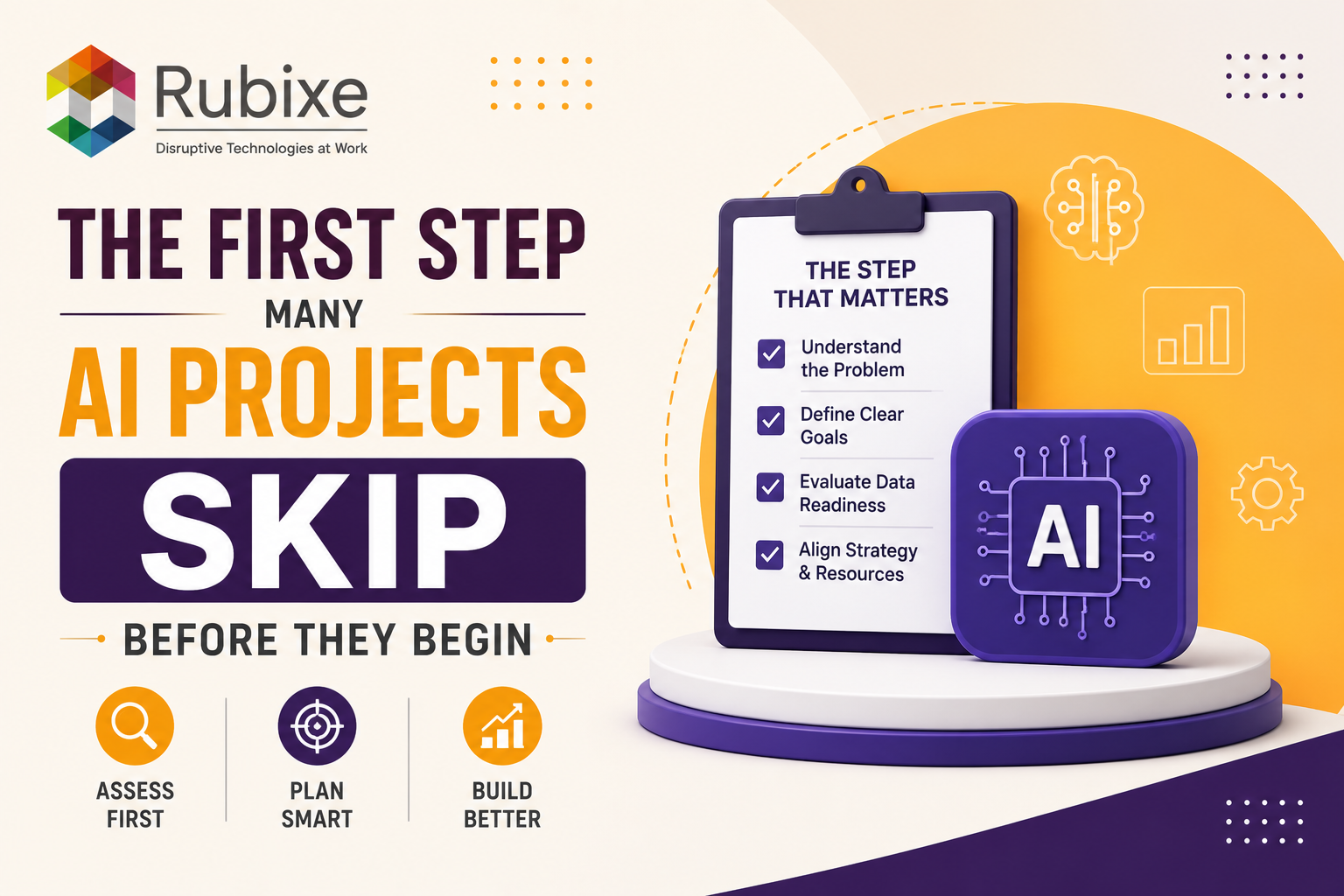
Most failed AI projects don't fail because the model was bad. They fail because nobody stopped to properly define the problem before jumping straight into building something. A team gets excited about a use case, picks a tool or vendor, and starts development — only to discover months later that the underlying data wasn't ready, the use case wasn't actually well-suited to AI, or the business problem was never clearly defined in the first place. This is exactly the gap that proper AI consulting is meant to close, by forcing a structured evaluation before any technical work begins rather than after money and time have already been spent.
The irony is that this first step is usually the cheapest, fastest part of the entire process, and yet it's the one most commonly skipped. Teams under pressure to show progress tend to treat problem definition and feasibility checks as a delay rather than as the thing that actually determines whether the rest of the project succeeds. By the time the gap becomes obvious, the team has often already committed budget to a specific vendor, model, or architecture, which makes correcting course far more expensive and disruptive than it would have been at the very start.
The Step Everyone Skips: Feasibility, Not Just Enthusiasm
Before writing a single line of code or evaluating a single vendor, a proper engagement starts with a feasibility question that's easy to overlook: is this actually the right problem for AI to solve? A few things this step should establish:
-
Whether the problem has a clear, measurable outcome, since vague goals like "improve customer experience" don't translate into anything a model can actually be built or evaluated against
-
Whether sufficient, quality data already exists, or would need to be collected first, which changes the entire project timeline
-
Whether a simpler, non-AI solution would solve the problem just as well, since not every business problem genuinely benefits from machine learning or generative AI
-
Whether the organization has the internal capacity to maintain the system once it's built, not just to launch it
Skipping this step is the single most common reason AI initiatives stall somewhere between an exciting kickoff meeting and an actual working product.
What Proper Problem Definition Actually Looks Like
A structured approach to this first step typically involves:
-
Interviewing the actual stakeholders who will use or be affected by the system, not just the executive sponsor who approved the budget
-
Mapping the current process the AI system is meant to improve, to understand exactly where the bottleneck really sits
-
Setting specific, measurable success criteria before development starts, rather than deciding what "success" means after the fact
-
Identifying constraints early, including budget, timeline, compliance requirements, and existing technical infrastructure
Projects that skip straight to model selection without this groundwork often end up solving the wrong problem efficiently, which is arguably worse than solving no problem at all.
Rushed Projects vs. Properly Scoped Projects
|
Factor |
Rushed, Skipped-Step Projects |
Properly Scoped Projects |
|
Problem definition |
Vague, assumed rather than confirmed |
Specific, agreed upon by stakeholders upfront |
|
Data readiness |
Discovered mid-project, often too late |
Assessed and addressed before development begins |
|
Success metrics |
Defined after launch, if at all |
Defined and agreed upon before any building starts |
|
Stakeholder alignment |
Executive sponsor only |
Includes end users and technical teams |
|
Likelihood of stalling |
High |
Significantly lower |
The pattern holds consistently across industries: the projects that stall midway almost always skipped meaningful groundwork at the very start. This is precisely the kind of groundwork genuine AI consulting is meant to provide before any code is written or any vendor is chosen.
Gen AI Consulting: Where This Step Matters Even More
For projects specifically involving generative AI — chatbots, content automation, conversational interfaces — this initial step matters even more than it does for traditional predictive AI work. Gen AI consulting engagements need to account for additional variables early on: how much hallucination risk is acceptable for the specific use case, whether the content being generated requires human review before publishing, and how the system will be evaluated for quality beyond simple accuracy metrics.
Skipping this step for generative projects specifically tends to produce systems that work impressively in a demo but fall apart once exposed to the messiness of real user input, since the edge cases were never mapped out ahead of time.
Why This Step Gets Skipped So Often
A few recurring organizational pressures explain why this foundational step is so commonly rushed or skipped entirely:
-
Pressure to show visible progress quickly, since a working prototype feels like more tangible progress than a feasibility document
-
Underestimating how much a wrong initial direction costs later, since the cost of rework is invisible until it actually happens
-
Lack of internal expertise to properly scope AI-specific feasibility, leading teams to default to a standard software project process that doesn't account for data and model-specific risks
-
Vendor incentives that favor moving straight to a sale, since some providers benefit more from starting a build quickly than from a longer, more careful scoping phase
-
A general discomfort with saying "we're not ready yet" internally, even when that's the most accurate and useful thing a team could tell leadership at that stage
Choosing Firms Offering Genuine AI Consulting Services
Not every firm offering AI consulting services actually prioritizes this foundational step. Some skip straight to a vendor recommendation or technical build, treating problem definition as a formality rather than genuine diagnostic work. A few signs a firm takes this seriously:
-
They ask detailed questions about your specific data and business context before proposing any solution
-
They're willing to tell you AI isn't the right fit for a particular problem, even if that means a smaller engagement
-
They involve actual technical practitioners in the early scoping conversations, not just strategists
-
They propose a defined feasibility phase with clear deliverables before committing to a full build
Rubixe is one example of a firm that structures engagements around this kind of upfront feasibility work, treating it as a distinct, billable phase rather than folding it informally into the start of a larger build, which tends to surface problems early rather than months into development.
Working With AI Consultants on This First Step
Engaging AI consultants specifically for this early phase, separate from a full build commitment, is becoming more common as businesses learn from past project failures. This approach allows a company to:
-
Validate the business case before committing significant budget to a full build
-
Get an outside, less biased perspective on whether internal assumptions about the problem actually hold up
-
Identify data gaps early enough to address them without derailing the broader project timeline
-
Build internal alignment among stakeholders before development work creates pressure to move forward regardless of readiness
Frequently Asked Questions
Q: How long should this initial feasibility step typically take?
For most mid-sized projects, a proper feasibility and problem-definition phase takes two to four weeks, though this can extend for more complex, cross-departmental initiatives.
Q: Is this step necessary for smaller AI projects, or only large enterprise initiatives?
It matters at any scale. Smaller projects often skip it entirely due to limited budget, but a lightweight version of this step — even a few focused conversations — still meaningfully reduces the risk of building the wrong thing.
Q: What happens if this step reveals that AI isn't actually the right solution?
A properly conducted feasibility phase should surface this early, allowing the business to pursue a simpler, non-AI solution instead, saving significant time and budget compared to discovering this after development has begun.
Q: Can internal teams handle this step themselves, or does it require outside expertise? Internal teams with strong data and product expertise can sometimes handle this well, but many benefit from outside perspective specifically because internal assumptions about the problem can be harder to challenge from within.
Q: How does this step differ for generative AI projects compared to traditional machine learning projects?
Generative AI projects need additional early consideration of content quality, hallucination risk, and human review requirements, which don't apply in the same way to traditional predictive or classification-based projects.
The step most AI projects skip isn't a technical one — it's the discipline of properly defining the problem, validating the data, and confirming AI is genuinely the right approach before any building starts. Proper AI consulting treats this as the foundation the entire project rests on, not an optional formality before the real work begins. Businesses that invest the time here consistently avoid the mid-project stalls and costly rework that come from rushing straight into development, and the modest upfront time cost is almost always smaller than the cost of discovering a fundamental problem months into a build.

 Czech
Czech
 Arabic
 French
 Spanish
 Portuguese
 Deutsch
 Turkish
 Dutch
Dutch
 Italiano
 Russian
 Romaian
 Portuguese (Brazil)
 Greek
Greek