


 About SPORTIVO Network
Is Your Home Ready for a Blast?
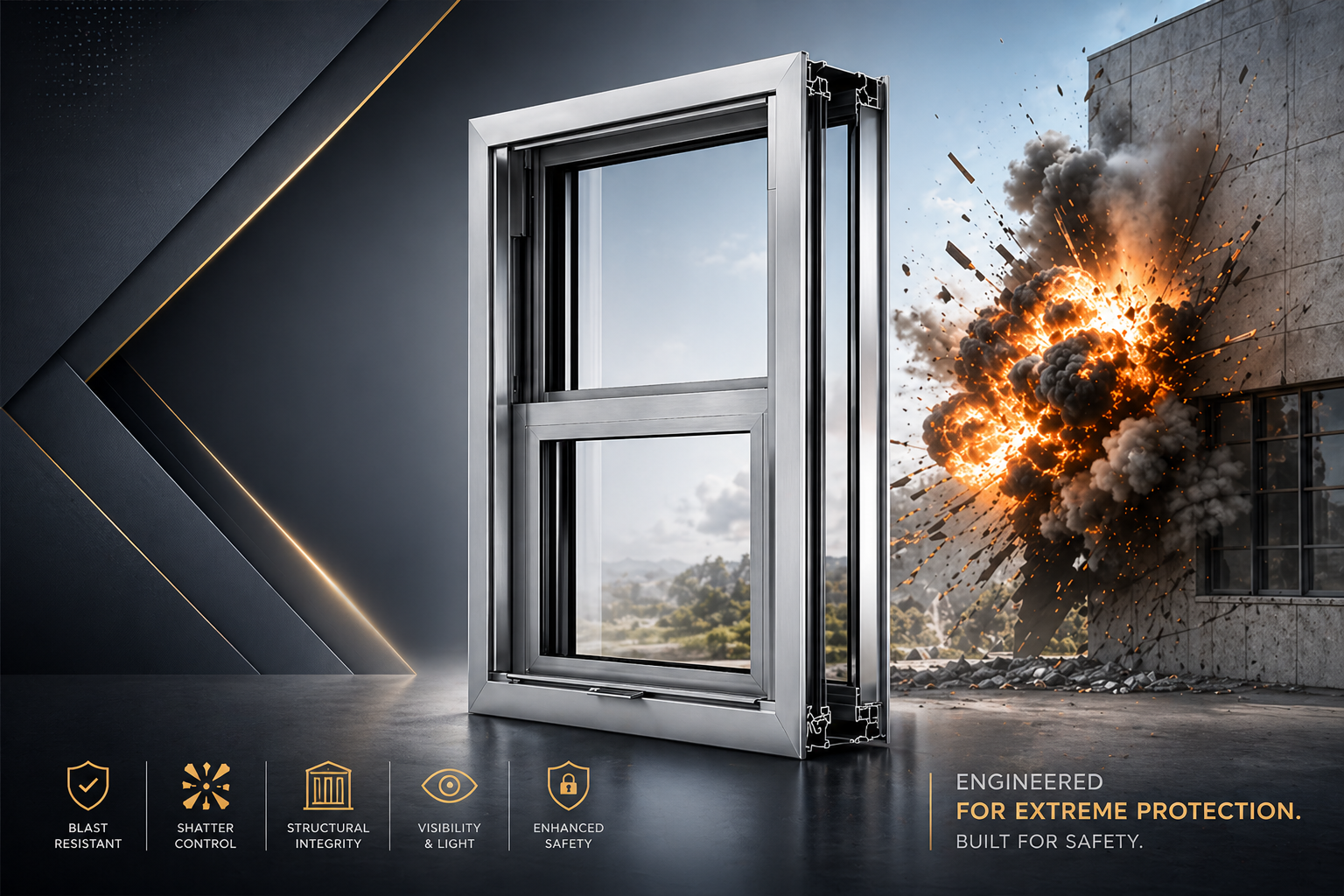
A residential block adjoining an industrial corridor in Gujarat reported a gas-line explosion at a nearby processing unit last year. The blast itself stayed contained within the plant boundary — but windows across three neighbouring apartment buildings shattered from the pressure wave alone.
No one inside the plant compound was hurt. Several residents were, from flying glass that travelled well beyond where anyone expected damage.
That's the uncomfortable truth about explosions: the danger radius for glazing failure is almost always larger than the radius people plan for. This is exactly why a blast window for home installation has moved from a niche defence-sector product to a genuine residential safety consideration for homes near industrial zones, fuel depots, or high-risk commercial corridors.
What Actually Happens to a Window During a Blast
Ordinary glass fails almost immediately under blast overpressure, and it fails into sharp, high-velocity fragments. In residential settings, glass fragmentation — not the blast wave itself — causes most injuries.
Blast resistant glass changes this failure mode entirely. It's built from laminated glass plies bonded with a flexible interlayer that stretches under pressure instead of shattering outward. The glass may crack, but the interlayer holds the pieces together and keeps them in the frame.
This is the mechanical principle behind every credible blast proof windows product on the market — the goal was never to make glass indestructible, it's to make failure predictable and contained.
Blast Window Design for Residential Use
Good blast window design for a home differs from an industrial specification in one key way: it has to work invisibly. Homeowners don't want a window that looks like a bunker slit.
Modern laminated systems achieve blast ratings while keeping standard sightlines, frame profiles, and even double-glazed thermal performance. The engineering happens inside the glass build-up and frame anchoring — not in the window's visible bulk.
Frame anchoring is non-negotiable here too. A blast-rated pane bolted into an ordinary domestic frame will still fail at the edges when the wall around it wasn't designed to hold the load.
Where Residential Blast Protection Matters Most
Homes and residential complexes near oil and gas plants, petrochemical facilities, ammunition depots, power generation sites, and defence installations carry measurably higher glazing risk. Government housing near critical infrastructure and data centre campuses increasingly specifies this level of protection as standard, not optional.
Even outside these zones, high-net-worth residences sometimes specify blast-rated glazing purely as a security enhancement against forced entry and impact — the same laminated construction resists both threats.
Features Worth Checking Before You Buy
- Verified blast resistance tested against a stated charge weight and standoff distance
- Fragment retention performance of the interlayer, not just glass thickness
- Structural reinforcement at the frame-to-wall junction
- Weather and corrosion resistance suited to long-term outdoor exposure
- Energy efficiency maintained despite the added glazing mass
- Low maintenance hardware and seals
What Drives Blast Window Price
Blast window price for a home depends on the blast rating required, glazing thickness, interlayer specification, and frame complexity. A property closer to a higher-risk facility needs a different specification than one further away — this is set by a risk assessment, not a fixed price list.
Installation complexity and the quality of frame-to-wall integration also affect cost meaningfully. Cutting corners here undermines the entire system, regardless of how good the glass itself is.
Choosing the Right Supplier
Not all blast resistant window manufacturers design for residential integration — many focus purely on industrial or government contracts. When evaluating blast window manufacturers in India for a home project, check for documented testing specific to the rating you need, willingness to customise for domestic window profiles, and clear installation and maintenance support.
Sigmapowertech's guidance on Blast window for home applications is a useful reference point for understanding how residential specifications differ from industrial blast-rated glazing before approaching any supplier.
Mistakes Homeowners Commonly Make
- Choosing the best blast window based on price alone, without a proper site risk assessment, is the most frequent error.
- Installing rated glass in an unrated frame.
- Skipping compliance verification altogether.
- Assuming standard toughened glass offers meaningful blast protection — it doesn't.
Facility upgrades over time also change the risk picture. A home considered low-risk today may not stay that way if nearby industrial activity expands.
Conclusion
A blast window for home installation isn't about preparing for a catastrophic event you hope never happens — it's about closing the single biggest source of injury risk in any explosion: flying glass. Getting the glazing, interlayer, and frame specified as one integrated system is what actually determines whether a home stays safe when the unexpected occurs.
Homes near industrial corridors, fuel infrastructure, or high-risk zones deserve the same engineering discipline applied to critical facilities. Investing in proper blast-rated glazing today is a straightforward way to reduce risk and protect the people inside for years to come.

 Czech
Czech
 Arabic
 French
 Spanish
 Portuguese
 Deutsch
 Turkish
 Dutch
Dutch
 Italiano
 Russian
 Romaian
 Portuguese (Brazil)
 Greek
Greek