


 About SPORTIVO Network
Custom DTF Transfers: The Complete Guide for Beginners and Businesses
Whether you’re a small business owner, exploring custom apparel for the first time or a team manager, trying to sort out the best printing technique for your next order, Custom DTF Transfers have probably crossed your path in your research. It’s one of the fastest-growing printing methods out there, and yeah, for good reason. This guide goes through the basics then drifts into the finer details, so you end up knowing how it functions, not just copying the idea, and also figuring out whether it’s the right match for you.
What Exactly Is a DTF Transfer?
DTF stands for Direct-to-Film. Basically it means, instead of printing right onto the garment, the artwork gets put on a special film first. After that the film gets covered with adhesive powder, it’s cured under heat, and then it gets pressed onto the fabric with a heat press. When you peel the film away, you’re left with a vibrant, long-lasting design that’s fused directly into the surface of the garment.
Think of it like a very advanced, long-lasting sticker that becomes part of the fabric rather than something that easily peels or cracks after a few washes.
Why Beginners Gravitate Toward DTF
If you’re new to custom apparel, DTF is one of the more forgiving options to start with. Unlike screen printing, which needs separate screens for each color and can get complicated real quick, DTF takes on full color, super detailed artwork without all that extra setup steps for every extra shade. So it’s easier for someone with no printing experience to get pretty close to what they have in mind, without needing to dumb down the design just to keep costs and all that operational complexity manageable.
It also works on a pretty wide array of fabrics, like cotton, polyester, and mixed blends, even on some more tricky materials where other methods tend to stumble a bit. Because of that versatility, people who are just getting started don’t have to fret so much about matching their printing approach to some very specific fabric type.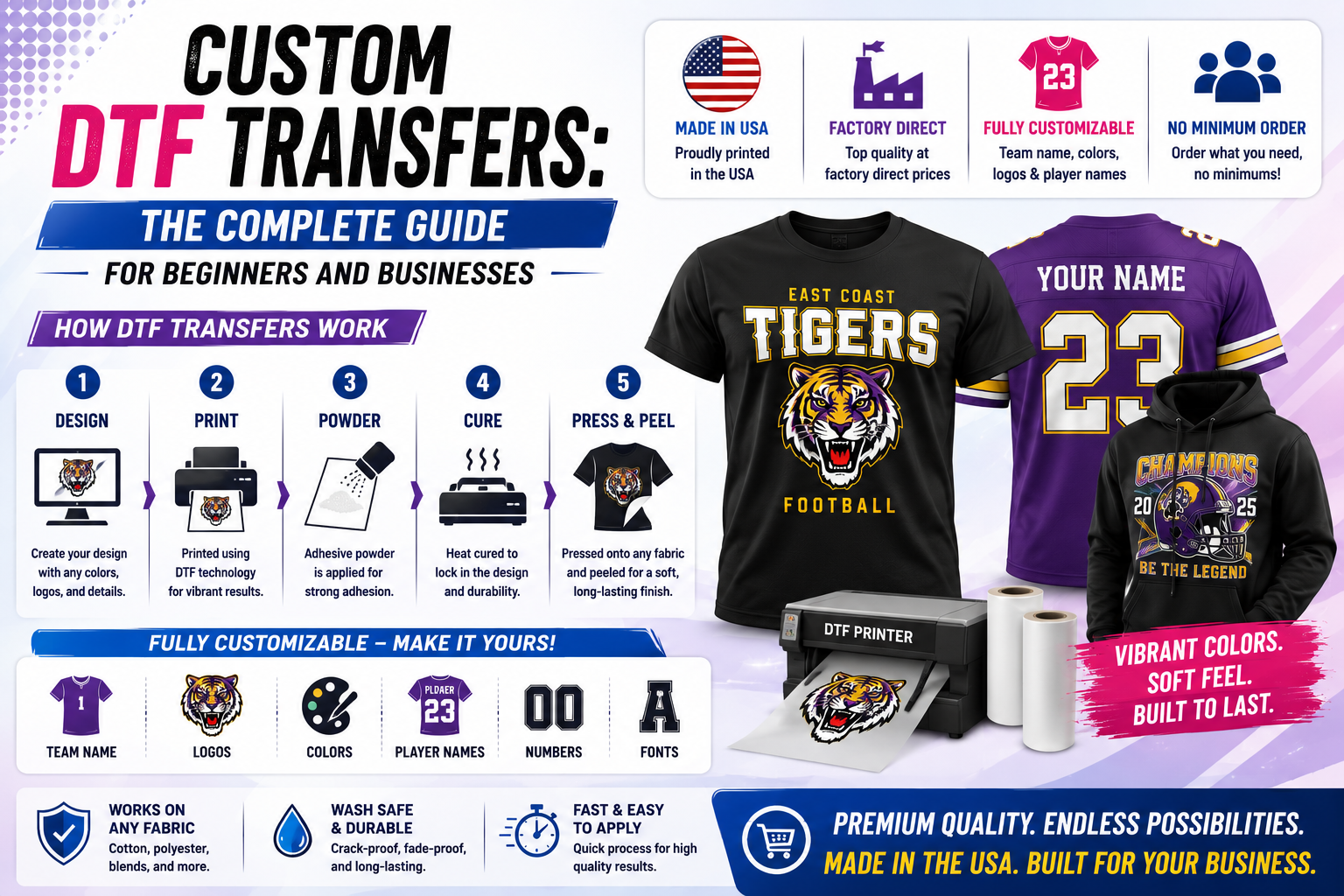
Why Businesses Are Increasingly Choosing DTF
For businesses that order apparel a lot, say branded merchandise, uniforms, or those promotional pieces, DTF kind of gives you a consistent feel and sturdy durability, it really holds up when repeat orders come through. Once the design file is actually set up the right way, it can be reused for later batches, without having to basically recreate the screens, or tweak much else.
Great pricing usually gets better when orders get bigger too, because production becomes a bit more efficient at scale, like it smooths out the whole process. Businesses also value that predictability, knowing that a reorder in six months will turn out with the same quality and color accuracy as the original run.
The Full Process, Step by Step.
Getting the real production steps in place helps clear up this whole process, mostly because it can feel a bit foggy at first, especially if you're thinking about whether DTF works for your specific project.
It begins with design preparation, and honestly it feels a bit like lining everything up beforehand. A print-ready file gets checked for resolution and color fidelity, because a low-quality file ends up giving a low-quality result, no matter how advanced the printing setup is. After that, the design is printed onto film with specialized ink, including a white foundation layer that helps the colors stay vivid even when the fabric is dark.
While the ink is still wet, the adhesive powder gets added, and the sheet moves through a curing stage, kind of like it has to “lock in” a bit. After it heals, it’s ready to go under the press. With a heat press dialed in at the right temperature and pressure—usually around 300 to 320 degrees Fahrenheit for roughly 10 to 15 seconds—the design migrates onto the garment. Then you peel away the film, and what stays behind is a clean, durable print.
How DTF Compares to Sublimation
It might be worth figuring out how DTF stacks up compared to sublimation, because even though both are popular custom printing ways they kind of behave differently. With sublimation the ink sort of turns into a gas that then bonds straight into polyester fibers, so it works really well when you need full-coverage designs but it doesn’t shine as much outside polyester-based fabric. This is also why sublimation football uniforms have become so popular in the first place, since football gear often uses polyester blends that really take advantage of sublimation’s all-over color approach and it holds up long-term even with heavy, physical wear.
DTF, on the other hand, kind of sits on the top of the fabric as a sturdy, bonded layer not really becoming part of the fibers itself. So it tends to stay more elastic across different fabric types, but at the same time, it can be a bit less ideal for huge, all in one garment style work compared with sublimation. In practice, picking between them usually comes down to what fabric you're using and what you want your design to do, not because one method is always “better” than the other.
Custom Options Worth Knowing About
DTF supports a pretty wide range of customization, and honestly it just works well. The fine detail, the small text, even photorealistic images and gradients, all of these translate well through the process. That kind of flexibility is why it ends up being a strong choice for businesses that want intricate logos, or teams who need player names placed exactly where they should be, without fully covering the whole garment in a design.
There also really is no need for any minimum color count, because DTF won’t charge extra for each extra shade like the older screen printing methods would. This kind of thing gives you more creative room without making your budget suddenly inflate or anything, so it feels a lot more flexible.
Understanding Pricing for DTF Transfers
Pricing usually relies on the dimension of the printed artwork plus your overall order count . If you go bigger with the transfers, you use more ink and film so the price tends to be a little higher per item. When you order in bulk, the per unit cost often drops quite a lot, which is pretty important for organizations or teams that are placing larger repeat orders.
A transparent USA uniform factory will walk you through pricing in a clear way, break down cost per transfer and also any bulk discounts that are available, instead of leaving you to guess with a kind of vague quote. You should always ask what’s included, like design file prep, the pressing service, and shipping , before you finalize the order.
Why Made in USA Production Matters Here Too
Choosing a domestic supplier for DTF transfers isn't only a nice extra, it really does hit your turnaround time, and honestly it changes how easily problems get sorted out too. When you order overseas, you can get those unpredictable shipping windows, plus communication delays, and that mix just doesn’t play well if you’re under a tight schedule. A Made in USA facility keeps the whole workflow closer to home, so if a design needs tweaking there are quicker fixes, and once production wraps.
Genre Sports and Full-Service Custom Printing
Some manufacturers make it easy to wander through a bunch of printing options under the same roof, instead of forcing you to shop around on your own. Genre Sports, a Las Vegas based USA uniform factory, runs both DTF transfer work and sublimation printing inside the building. That way, businesses and teams have the freedom to pick whichever method best matches what they need, for this particular project.
Whether you need small-batch DTF transfers for a local business or the full sublimation football uniforms for a whole roster, working with one direct manufacturer kind of simplifies the whole back and forth, and keeps your production process more consistent across different kinds of orders.
Common Beginner Mistakes to Avoid
A few missteps come up often when people place first-time DTF orders. Sending low-resolution artwork seems to happen the most, because blurry source files end up with blurry finished transfers, like it just follows along. Also, overlooking fabric compatibility questions is another common thing, since certain heat sensitive materials need adjusted pressing settings, and a beginner might not even think to ask about that.
Rushing through design approval without checking every last detail carefully is one more trap to avoid, because once a transfer gets moved into production, changes become way harder to implement, so it really pays to slow it down a bit during that review phase.
Tips for Getting the Best Results
Always send high resolution artwork, ideally 300 DPI or higher, so the delicate details stay put once it’s printed. Double check your fabric type with your manufacturer before you finalize the order, because pressing settings can shift a bit depending on what material you’re using. Also don’t hesitate to ask questions along the way, a solid supplier should be able to walk you through each step clearly, without making you feel like you need prior printing experience just to place what is, a pretty simple order.
Final Thoughts
Custom DTF transfers are, honestly, a pretty beginner-friendly way to get into custom apparel, yet they still line up with the consistency and durability standards that most businesses need for repeat orders. If you take a beat to understand the basic process, how it stacks up against other options like sublimation, and what really shapes the pricing, you can order with confidence instead of just guessing your way through it.
Working with an experienced, Made in USA supplier like Genre Sports, means you can tap into quality fabric and custom design support, plus fair pricing through a real USA uniform factory. Whether your project is all about detailed DTF transfers or full sublimation football uniforms for your whole team.

 Czech
Czech
 Arabic
 French
 Spanish
 Portuguese
 Deutsch
 Turkish
 Dutch
Dutch
 Italiano
 Russian
 Romaian
 Portuguese (Brazil)
 Greek
Greek