


 About SPORTIVO Network
Managed SOC as a Service for BFSI: Avoid Costly RBI Compliance Failures
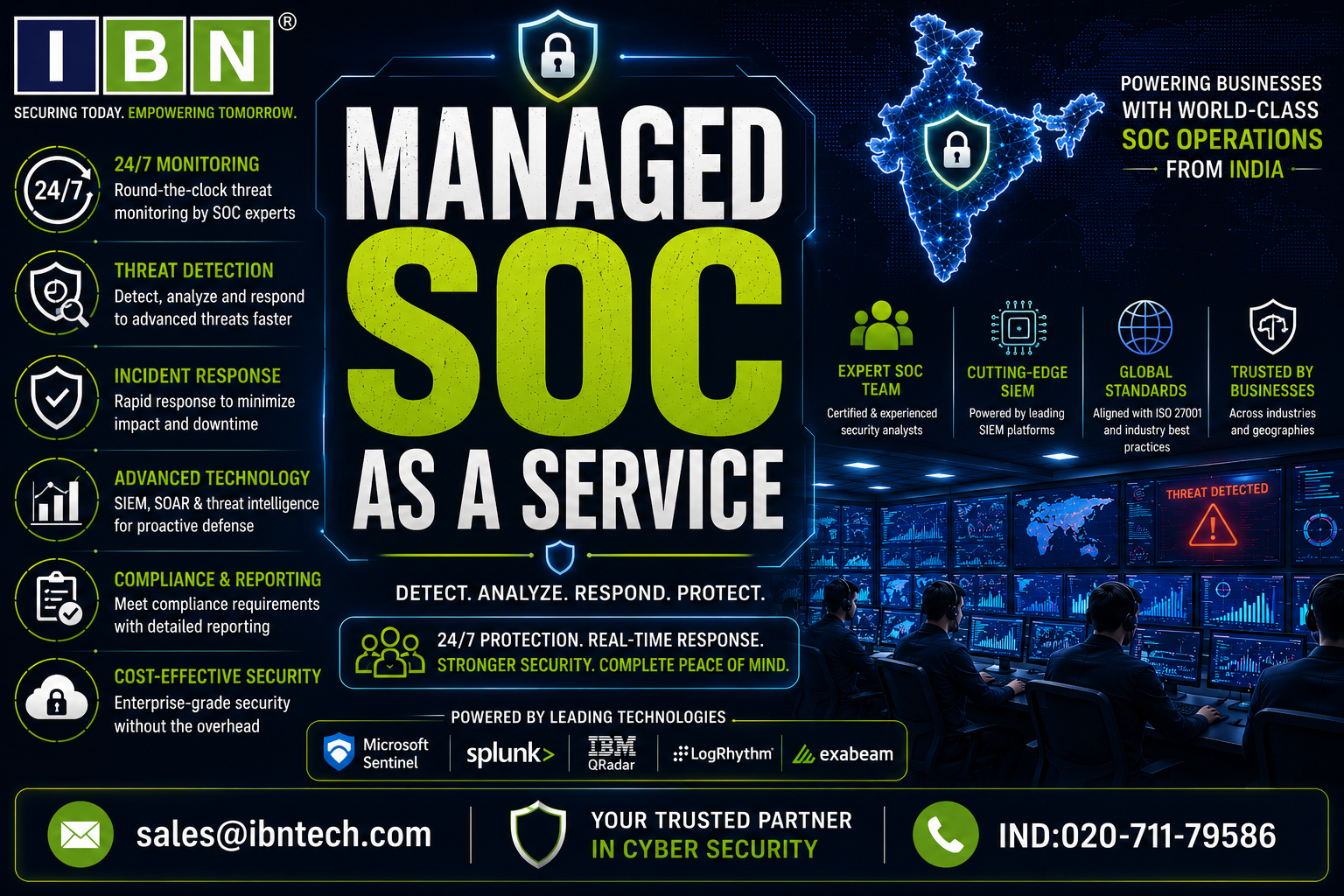
Managed SOC as a Service for BFSI Compliance in India
Regulators do not forgive silence. When a financial institution cannot show exactly how a security incident was detected and handled, the damage extends far beyond the breach itself into penalties, audit failures, and lost customer confidence. This is why managed SOC as a service has moved from optional to essential for BFSI organizations operating under India's tightening compliance environment.
Why Compliance Pressure Is Rising for BFSI in India
Banks, NBFCs, insurers, and fintech platforms operate under continuous regulatory scrutiny. Data protection expectations, cybersecurity reporting frameworks, and audit requirements are becoming more detailed and less forgiving of gaps. A single unmonitored system or a delayed incident response can turn a routine audit into a compliance failure with financial and reputational consequences.
The Business Driver Behind BFSI Security Investment
Financial institutions hold some of the most sensitive data in the economy: account details, transaction histories, and identity records. Attackers know this, which is why BFSI remains one of the most targeted sectors for phishing, credential theft, and fraud-driven intrusions. Beyond the direct financial risk, customers expect their institutions to demonstrate that their money and data are protected by more than a firewall and good intentions.
Where Traditional Security Approaches Break Down
Many BFSI organizations, particularly mid-sized NBFCs and regional players, rely on periodic security reviews or a small internal team stretched across IT and security duties. This creates predictable weaknesses:
- Compliance reporting becomes a scramble before audits rather than a continuous process
- Security logs exist but are rarely reviewed in real time
- Incident response plans exist on paper but are not tested under real conditions
- Limited internal bandwidth means low-severity alerts are ignored until they escalate
Regulators increasingly expect continuous evidence of monitoring, not a once-a-year checklist exercise.
How Managed SOC Supports Compliance in Practice
A managed SOC changes the compliance conversation from reactive to continuous. IBN Technologies' Managed SIEM & SOC service monitors financial environments around the clock, correlating events across systems to detect fraud indicators, unauthorized access, and anomalous transaction patterns as they happen, not weeks later during a review.
SOC Compliance for BFSI India: What It Should Include
Effective SOC compliance for BFSI India goes beyond basic alerting. It should provide documented evidence of continuous monitoring, clear incident timelines, and reporting that maps to the standards examiners expect to see, giving compliance officers material they can present with confidence rather than reconstructing after the fact.
Compliance-Readiness Checklist for BFSI Decision-Makers
- Continuous, 24/7 monitoring across core banking and transaction systems
- Documented incident response timelines for every flagged event
- Audit-ready reporting aligned with regulatory expectations
- Clear data handling and retention practices for security logs
- Defined escalation paths involving compliance and risk teams, not just IT
Industry Use Case: NBFC Lending Platforms
Consider an NBFC managing digital lending through multiple partner integrations and APIs. Each integration point is a potential vulnerability, and any anomaly in transaction volume or access pattern needs to be investigated immediately, not discovered during a monthly report. A managed SOC provides the continuous visibility needed to catch these anomalies early, while maintaining the documentation trail that compliance officers need for regulatory reporting.
Benefits for BFSI Beyond Compliance
While compliance is often the trigger for adopting a managed SOC, the benefits extend further. Faster detection reduces the window attackers have to cause damage. Documented response processes build trust with auditors and boards. And continuous monitoring reduces the burden on internal IT staff who would otherwise be pulled into security duties on top of their regular responsibilities.
Comparison: Periodic Review vs Continuous SOC Monitoring
|
Factor |
Periodic Security Review |
Managed SOC Monitoring |
|
Detection speed |
Delayed, review-cycle dependent |
Real-time |
|
Audit preparation |
Reactive, time-consuming |
Continuous, documentation-ready |
|
Coverage window |
Business hours or scheduled checks |
24/7 |
|
Incident response |
Ad hoc |
Structured and expert-led |
|
Regulatory confidence |
Inconsistent |
Consistently demonstrable |
Best Practices for BFSI Organizations Evaluating a SOC Partner
- Confirm the provider understands financial sector reporting expectations
- Ask for sample reporting formats before signing an agreement
- Ensure the SOC can integrate with core banking and transaction monitoring systems
- Involve compliance officers early in vendor evaluation, not only IT teams
For CISOs, compliance officers, and BFSI leadership navigating an increasingly demanding regulatory landscape, managed SOC as a service offers a practical way to turn continuous monitoring into continuous compliance, reducing both cyber risk and audit anxiety in a sector that cannot afford to get either wrong.

 Czech
Czech
 Arabic
 French
 Spanish
 Portuguese
 Deutsch
 Turkish
 Dutch
Dutch
 Italiano
 Russian
 Romaian
 Portuguese (Brazil)
 Greek
Greek