


 About SPORTIVO Network
New Roof Installation in Surrey: Complete 2026 Homeowner's Guide
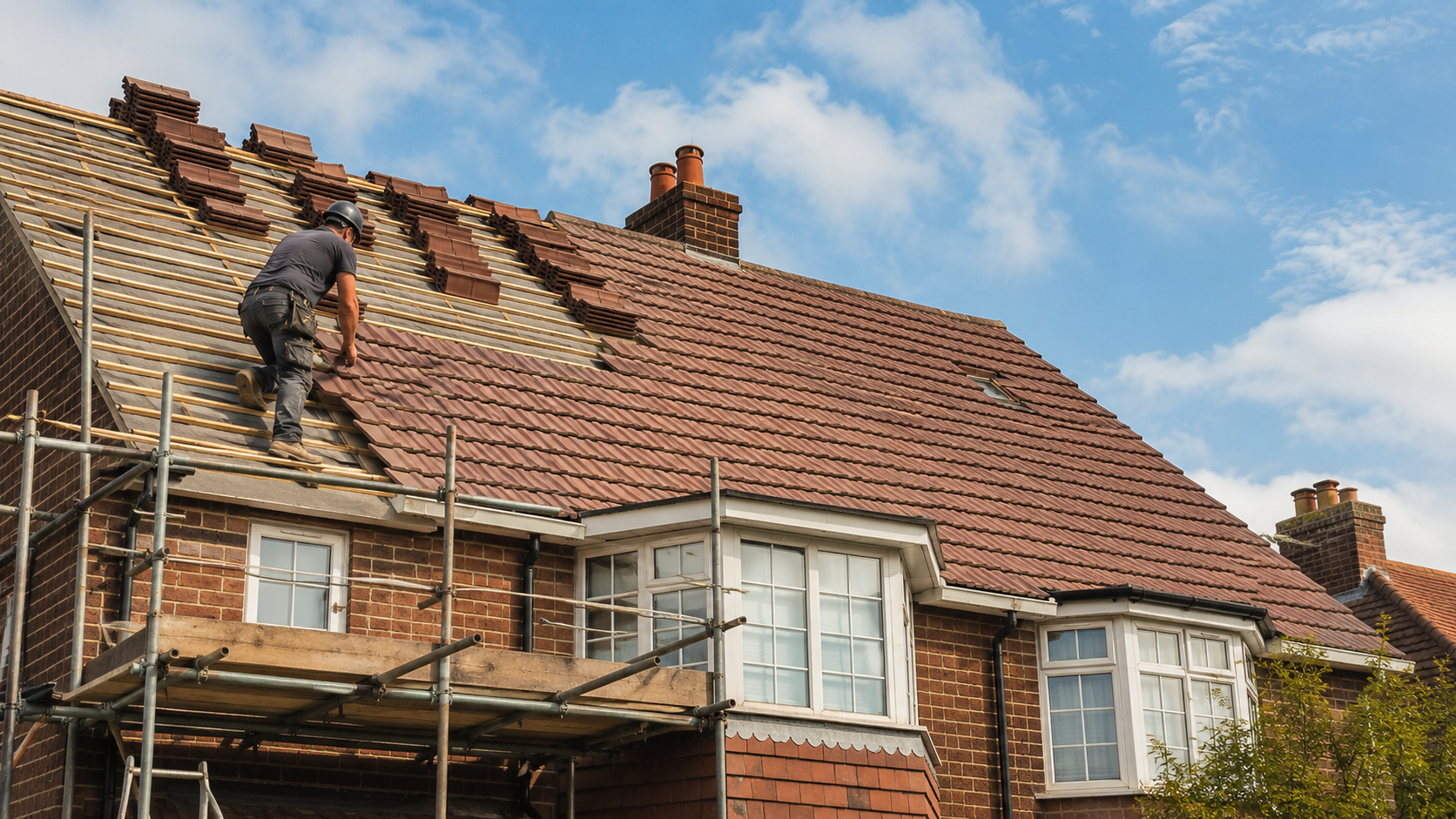
Quick Summary
-
A full new roof installation in Surrey typically costs between £7,000 and £18,500 for a standard three-bed semi, depending on material and roof complexity
-
Concrete tiles are the most affordable mainstream option; natural slate and clay tiles cost more but last considerably longer
-
Most re-roofs in Surrey do not need planning permission if they are like-for-like, but conservation areas (common across Kingston, Surbiton, Richmond and Elmbridge) often have extra restrictions
-
Scaffolding, timber repairs and chimney flashing are the three "hidden extras" that most affect a final invoice
-
A standard pitched roof replacement on a semi-detached house usually takes 5 to 10 working days, weather permitting
-
Re-roofing an existing home usually qualifies for the 5% reduced VAT rate rather than the standard 20%
-
Always get an itemised quote, not a single lump-sum figure, so you can see exactly what scaffolding, materials and labour cost separately
If you have spent the last few months shoving a bucket under a damp patch every time it rains, you already know the difference between a roof repair and a roof that has simply had enough. A new roof installation in Surrey is one of the biggest jobs you will ever commission on a home, and it is also one of the easiest to get wrong if you do not know what a proper job looks like versus a rushed one.
This guide walks through everything a Surrey homeowner actually needs before signing off on a re-roof: realistic 2026 pricing, materials that suit local housing stock, planning permission rules for conservation areas, how long the work really takes, and the questions worth asking any roofer before they touch your ladder.
Signs Your Roof Needs Full Replacement, Not Another Repair
Every roofer has stood on a roof that has been patched five times over and knows the sixth patch is not going to hold. Here is how to tell the difference between something a repair can fix and something that genuinely needs a full new roof installation.
-
Slipped or cracked tiles across multiple areas, not just one or two isolated spots
-
Sagging roofline when viewed from the street, which usually points to failing timbers underneath
-
Daylight visible through the loft at the ridge, valleys or around chimney stacks
-
Recurring leaks in the same general area despite previous repairs
-
Roof age over 25 to 30 years for concrete tiles, or a felt flat roof over 15 years old
-
Damp patches or mould on ceilings that reappear after redecorating
-
Moss and lichen build-up that has lifted the tiles rather than just sitting on the surface
A single cracked tile is a repair. A roof with several of the signs above, especially timber sag or repeated leaks, is usually cheaper to replace properly than to keep patching year after year.
What a New Roof Installation in Surrey Actually Costs in 2026
Surrey pricing sits above the UK national average because labour and access costs across South West London and the Home Counties run higher than most of the country. Based on current UK market data for 2026, here is a realistic breakdown by roof covering.
|
Roof Material |
Cost Per m² (Supplied & Fitted) |
Typical 3-Bed Semi Total |
Expected Lifespan |
|---|---|---|---|
|
Concrete tiles |
£85 to £170 |
£7,000 to £11,500 |
40 to 60 years |
|
Clay tiles |
£110 to £210 |
£9,500 to £15,500 |
50 to 70 years |
|
Natural slate |
£140 to £280 |
£11,000 to £18,500 |
80 to 100+ years |
|
EPDM rubber (flat roof) |
£70 to £130 |
£2,500 to £6,000 (garage/extension) |
20 to 25 years |
|
GRP fibreglass (flat roof) |
£75 to £140 |
£2,800 to £6,500 (garage/extension) |
20 to 30 years |
Surrey and South West London figures typically sit 15 to 25 percent above these national averages once you factor in scaffolding access in denser residential streets and disposal costs for green waste and old tile pallets.
A few line items regularly catch homeowners out because they are not always included in a headline price:
-
Scaffolding: usually £600 to £1,200 for a standard two-storey property over the project duration
-
Chimney repointing or re-flashing: £300 to £800 per chimney if the stack needs attention
-
Timber repairs: £500 to £2,000 if rotten rafters or battens are found once the old covering comes off
-
Velux or roof window installation: priced separately, particularly common in loft conversion projects
-
Insulation upgrades: worth asking about if your loft has old or thin insulation, since it is far easier to add while the roof is already open
The safest way to compare two quotes is to check they cover the same scope. A quote that looks £2,000 cheaper is not a bargain if it quietly excludes scaffolding or disposal.
Do You Need Planning Permission for a New Roof in Surrey?
This is one of the most searched questions among Surrey homeowners, and the honest answer is: it depends on where you live and what you are changing.
You generally do not need planning permission if:
-
You are replacing like-for-like materials in a similar colour and style
-
The new roof does not extend beyond the existing roof slope facing the road
-
The ridge height stays the same or lower
-
Your property is not in a conservation area, Area of Outstanding Natural Beauty, or subject to an Article 4 direction
You are more likely to need planning permission if:
-
You are changing the roof shape, pitch, or profile, including converting a hip roof to a gable
-
You are adding dormer windows or raising the ridge line
-
You are converting a pitched roof to flat, or vice versa
-
Your home is a listed building, which requires Listed Building Consent even for like-for-like work in some cases
Large parts of Kingston upon Thames, Twickenham, Richmond upon Thames, Elmbridge and other Surrey boroughs include conservation areas where permitted development rights are restricted, so it is always worth a quick check with your local planning authority before work starts, even for what looks like a routine like-for-like job. A reputable local roofer who has worked across these boroughs for years will usually know straight away whether your street falls under any extra restriction.
How the Installation Process Actually Works
A properly run new roof installation follows a fairly consistent sequence, and knowing the stages helps you understand what is happening on site and why it takes the time it does.
-
Free survey and inspection — a roofer assesses the existing structure, timbers, chimney condition and access before quoting
-
Scaffolding erected — safe access is a legal requirement for any work at height, not an optional extra
-
Strip-off — old tiles, felt or slates are removed and disposed of responsibly
-
Timber inspection and repair — rafters, battens and decking are checked and replaced where needed
-
New breathable membrane and battens fitted
-
New tiles, slates or flat roof covering installed, along with ridge, hip and verge detailing
-
Flashing and chimney work completed where applicable
-
Guttering, fascias and soffits checked or replaced if part of the scope
-
Final inspection and site clean-up, including scaffolding removal
For a standard semi-detached property, expect the full process to take 5 to 10 working days in reasonable weather. Larger properties, complex rooflines with multiple hips and valleys, or jobs involving significant timber replacement can extend this to two to three weeks.
Choosing the Right Roofing Material for Your Property
Surrey's housing stock is genuinely varied, from Victorian terraces and Edwardian semis to 1930s builds and newer riverside apartments, and the right material depends partly on what suits the period of your home and partly on budget.
-
Concrete tiles suit most 1930s onward properties and offer the best value for straightforward replacements
-
Clay tiles are a common match for older Victorian and Edwardian properties where the original roofline used clay
-
Natural slate is often required or strongly preferred in conservation areas and on period properties where planning officers expect historically accurate materials
-
EPDM rubber or GRP fibreglass are the standard choices for flat roofs on extensions, garages and dormers, replacing older felt systems that tend to fail after 10 to 20 years
Common Mistakes Homeowners Make
-
Accepting a single lump-sum quote instead of an itemised breakdown showing materials, labour, scaffolding and waste separately
-
Skipping the Building Control notification on a major re-roof, which can cause problems later when selling the property
-
Assuming a conservation area rule does not apply without checking, only to be asked to redo work in the correct material
-
Choosing the cheapest quote without checking insurance, guarantees or NFRC accreditation
-
Not asking what happens if rotten timbers are found, which is one of the most common sources of unexpected cost mid-project
Based on two decades of re-roofing projects across Kingston, Surbiton and the wider Surrey area, the jobs that go smoothly are almost always the ones where the homeowner had a fully itemised quote from day one and asked directly about scaffolding, timber contingencies and planning status before a single tile came off.
Questions to Ask Before Hiring a Roofer
-
Are you NFRC-approved or a member of a recognised trade body?
-
Is the quote itemised, including scaffolding, materials, labour and waste disposal separately?
-
What happens to the price if you find rotten timbers underneath the old covering?
-
Do you provide a written workmanship guarantee, and for how long?
-
Are you fully insured, and can you provide proof?
-
How many similar properties in my area have you worked on?
Final Thoughts
A new roof is not a purchase you make often, which is exactly why it is worth getting right the first time. Between material choice, planning rules that vary street by street across Surrey, and the genuine cost of scaffolding and timber repairs, there is a lot more to a proper installation than the number on the final invoice.
Working with a roofer who gives you an itemised quote, explains the planning position for your specific property, and has real experience across Surrey's mix of Victorian terraces, Edwardian semis and newer builds makes the whole process considerably less stressful. That is the approach Maple Roofing takes with every re-roof across Kingston, Surbiton and the surrounding Surrey area, with free inspections, no-obligation quotes, and a written workmanship guarantee behind every job.
If your roof is showing any of the warning signs above, it is worth booking a free inspection before the next heavy rainfall finds the weak spot for you.
FAQs About New Roof Installation in Surrey
1. How much does a new roof cost in Surrey? Most Surrey homeowners pay between £7,000 and £18,500 for a full pitched roof replacement on a typical three-bed semi, depending on the covering material chosen and the complexity of the roofline.
2. How long does it take to install a new roof? A standard semi-detached property usually takes 5 to 10 working days from scaffold going up to scaffold coming down, assuming reasonable weather and no major structural surprises.
3. Do I need planning permission for a new roof in Surrey? Most like-for-like replacements do not need planning permission under permitted development rights, but conservation areas, listed buildings and any change to roof shape or pitch usually do require formal approval.
4. What is the cheapest roofing material for a new roof? Concrete tiles are generally the most affordable mainstream covering, priced around £85 to £170 per square metre supplied and fitted, and they last 40 to 60 years with proper maintenance.
5. How do I know if I need a new roof or just a repair? Widespread slipped tiles, a sagging roofline, recurring leaks in different spots, or a roof over 25 to 30 years old are strong signs that replacement is more cost-effective than continued patch repairs.
6. Is scaffolding always needed for a roof replacement? Yes. Scaffolding is a legal requirement for safe working at height on almost every re-roof, typically adding £600 to £1,200 to the total cost of a two-storey property.
7. What VAT rate applies to a new roof installation? Re-roofing an existing residential property usually qualifies for the reduced 5% VAT rate rather than the standard 20%, though this should always be confirmed in writing with your roofer.
8. How long does a new roof actually last? Concrete tiles typically last 40 to 60 years, clay tiles 50 to 70 years, natural slate can exceed 100 years, and EPDM flat roofing generally carries warranties around 20 to 25 years.
9. What is included in a proper roof installation quote? A genuine quote should itemise strip-off and disposal, new membrane, battens, tiles or slates, ridge and verge work, scaffolding, and any chimney or timber repairs separately, rather than one vague total figure.
10. Can I replace my roof if my house is in a conservation area? Yes, but conservation area status often restricts permitted development rights, meaning even a like-for-like replacement may need planning permission or must match specific approved materials, so it is always worth checking with your local planning authority first.

 Czech
Czech
 English
 Arabic
 French
 Spanish
 Portuguese
 Deutsch
 Turkish
 Dutch
Dutch
 Russian
 Romaian
 Portuguese (Brazil)
 Greek
Greek