


 About SPORTIVO Network
Acid Storage Tank for Reliable Chemical Storage Applications
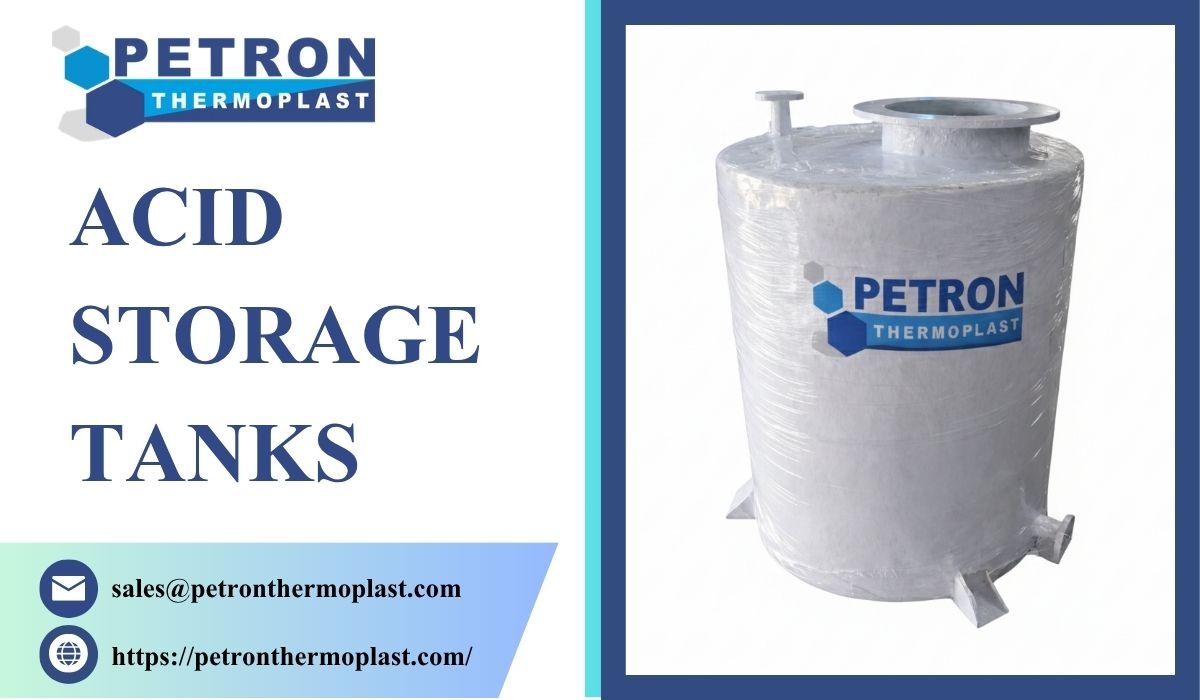
An Acid Storage Tank is an essential industrial storage solution designed for the safe containment and handling of acids and other corrosive chemicals. Chemical manufacturing plants, water treatment facilities, metal processing industries, pharmaceutical units, fertilizer plants, and various process industries require specialized storage tanks to handle aggressive chemical media.
Unlike conventional storage vessels, acid storage tanks must be manufactured from materials that can withstand the chemical characteristics of the stored acid. Corrosion resistance, structural integrity, tank capacity, operating temperature, chemical concentration, and installation conditions are important factors that influence the selection of an appropriate tank.
Depending on the application, acid storage tanks can be manufactured using materials such as HDPE, PP, PPH, PVDF, FRP, or suitable composite constructions. The material of construction should be selected according to the specific acid, concentration, temperature, and storage conditions.
A properly designed acid storage tank can help industries maintain controlled chemical storage while supporting efficient transfer, dosing, and process operations.
What Is an Acid Storage Tank?
An acid storage tank is an industrial vessel designed to store acidic chemicals for short-term or long-term use. These tanks are commonly used as part of chemical storage and transfer systems.
Depending on the plant requirements, an acid storage tank may be used to store:
- Hydrochloric acid
- Sulfuric acid
- Nitric acid
- Phosphoric acid
- Acetic acid
- Other compatible acidic chemicals
Applications of Acid Storage Tanks
Acid storage tanks are used across a wide range of industrial sectors.
Chemical Manufacturing
Chemical manufacturing plants require reliable storage systems for raw materials, intermediates, and process chemicals. Acid storage tanks can be integrated into chemical transfer and production systems.
Water and Wastewater Treatment
Water treatment facilities often use acids for pH adjustment and other process requirements. Storage tanks provide a controlled supply of chemicals for dosing and treatment operations.
Metal Finishing
Metal pickling, surface treatment, and finishing operations may require acids for cleaning and processing. Acid storage tanks can supply chemicals to process tanks through dedicated transfer systems.
Pharmaceutical Industry
Pharmaceutical manufacturing processes may involve acids and other chemical solutions. Properly selected storage tanks can support controlled chemical handling.
Fertilizer Industry
Fertilizer manufacturing involves various acidic raw materials and process chemicals. Industrial storage tanks can be used for chemical storage and transfer applications.
Electroplating
Electroplating facilities may use acids for surface preparation and treatment processes. Corrosion-resistant tanks are important for maintaining safe and reliable chemical storage.
Material Options for Acid Storage Tanks
Selecting the right material is one of the most important aspects of acid storage tank design.
HDPE
High-density polyethylene is widely used for many chemical storage applications. It offers good chemical resistance and is available in various tank configurations and capacities.
PP and PPH
Polypropylene and polypropylene homopolymer are used in selected chemical storage applications where resistance to specific acids and chemicals is required.
PVDF
PVDF is a high-performance thermoplastic that offers excellent resistance to many aggressive chemicals. It can be considered for specialized applications where the chemical environment demands a higher-performance material.
FRP
Fiber-reinforced plastic tanks combine a resin system with structural reinforcement. FRP can be suitable for large industrial storage applications where structural strength and corrosion resistance are required.
Composite Construction
Some industrial applications may use composite tank designs that combine different materials to achieve the required chemical resistance and structural performance.
The final material selection should be based on chemical compatibility, temperature, tank size, mechanical requirements, and installation conditions.
Acid Storage Tank Design Considerations
An acid storage tank should be designed according to the specific requirements of the application.
Key design factors include:
- Chemical type
- Chemical concentration
- Storage capacity
- Specific gravity
- Operating temperature
- Tank dimensions
- Filling method
- Discharge arrangement
- Vent requirements
- Level measurement
- Overflow protection
- Drain arrangement
- Tank support structure
Vertical and Horizontal Acid Storage Tanks
Acid storage tanks can be designed in different configurations depending on the available installation space and process requirements.
Vertical Acid Storage Tanks
Vertical tanks are commonly used where floor space is limited and larger storage capacities are required. They can be installed on suitable foundations or support structures.
Horizontal Acid Storage Tanks
Horizontal tanks may be selected where site height restrictions or specific installation conditions make vertical storage impractical.
The tank configuration should be selected based on capacity, site conditions, access requirements, chemical handling procedures, and structural considerations.
Secondary Containment
Secondary containment is an important consideration when storing corrosive chemicals. A containment system can help manage accidental leakage or spills from the primary storage tank.
Depending on the project design, secondary containment may include:
- Bund walls
- Containment tanks
- Lined concrete areas
- Double-wall tank systems
- Dedicated spill containment structures
Acid Storage Tank Installation
Proper installation is essential for long-term tank performance.
Before installation, the foundation or support structure should be inspected to ensure it can accommodate the tank and its operating load.
Installation considerations may include:
- Foundation levelness
- Tank positioning
- Nozzle alignment
- Piping support
- Vent connection
- Overflow routing
- Access for inspection
- Secondary containment
- Protection from external impact
Maintenance and Inspection
Regular inspection and maintenance can help identify potential problems before they become serious.
Typical maintenance activities include:
- Visual inspection of tank surfaces
- Checking for cracks or deformation
- Inspecting nozzles and connections
- Checking for leakage
- Inspecting level instruments
- Reviewing tank supports
- Checking containment systems
- Inspecting connected piping
Acid Storage Tank for Industrial Chemical Handling
An Acid Storage Tank for Safe and Reliable Chemical Storage Applications is an important part of modern chemical handling infrastructure. By providing dedicated containment for corrosive chemicals, these tanks help industries maintain an organized and controlled chemical supply for manufacturing, water treatment, metal finishing, pharmaceutical production, and other process operations.
The selection of tank material is critical. HDPE, PP, PPH, PVDF, FRP, and composite materials may be considered for different acid storage applications, but the correct choice depends on the specific chemical, concentration, temperature, specific gravity, and storage conditions.
Petron Thermoplast provides customized chemical storage tank solutions for industrial applications, including acid storage requirements. Depending on the project, tanks can be designed with suitable capacities, dimensions, nozzles, level indicators, vents, drains, and other accessories required for integration with chemical transfer and process systems.
For a reliable acid storage installation, the complete system should be evaluated rather than selecting the tank alone. The storage vessel, connected piping, valves, pumps, instruments, containment arrangements, and transfer equipment should be compatible with the chemical and operating environment.
With appropriate engineering, corrosion-resistant materials, proper installation, and regular inspection, an acid storage tank can provide dependable chemical containment and support efficient chemical storage and transfer operations across demanding industrial facilities.

 Czech
Czech
 Arabic
 French
 Spanish
 Portuguese
 Deutsch
 Turkish
 Dutch
Dutch
 Italiano
 Russian
 Romaian
 Portuguese (Brazil)
 Greek
Greek