


 About SPORTIVO Network
LMPC Registration Consultant in India for Importers and Manufacturers
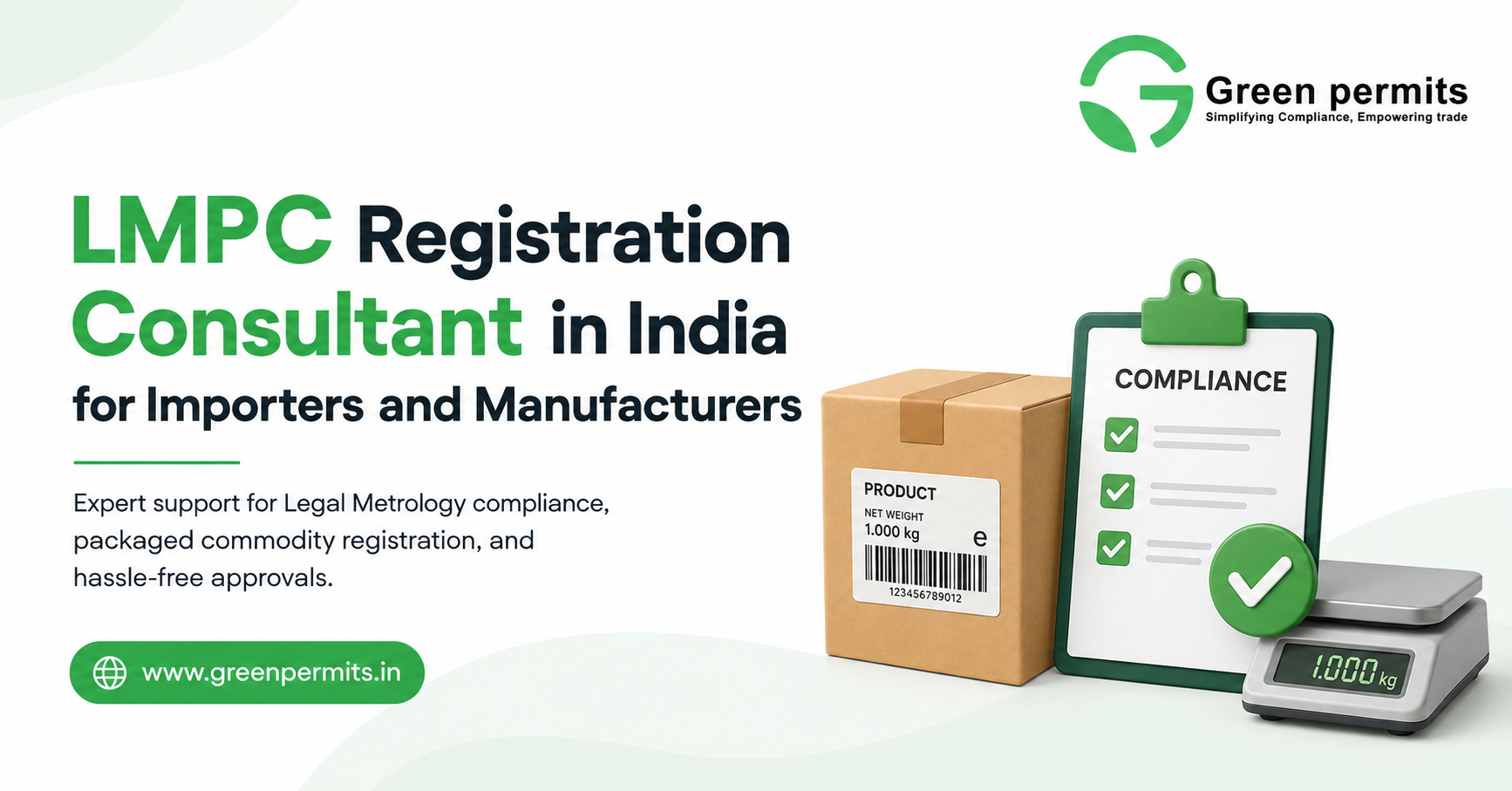
Importing or manufacturing pre-packaged products in India involves more than arranging production, logistics, customs clearance, and distribution. Before these products are sold in the Indian market, businesses must also ensure that their packages comply with the Legal Metrology Act, 2009 and the Legal Metrology (Packaged Commodities) Rules, 2011.
These regulations govern the declarations that must appear on pre-packaged commodities. They help consumers understand the product’s quantity, price, manufacturer or importer details, country of origin, and other important information before making a purchase.
Manufacturers, packers, and importers dealing with applicable pre-packaged commodities may need LMPC registration under Rule 27. Importers must also ensure that imported packages carry the prescribed declarations before they are offered for sale in India.
The process may appear straightforward, but businesses frequently face difficulties due to incorrect labels, incomplete applications, inconsistencies in company details, improper unit declarations, or misunderstanding the exemptions available under the rules.
Working with an experienced LMPC Registration Consultant in India can help importers and manufacturers assess applicability, prepare documents, review product labels, complete registration, and maintain ongoing compliance.
What is LMPC Registration?
LMPC stands for Legal Metrology Packaged Commodities. LMPC registration refers to the registration of manufacturers, packers, and importers under the Legal Metrology (Packaged Commodities) Rules, 2011.
A pre-packaged commodity is generally a product placed in a package without the purchaser being present, where the quantity contained in the package has been predetermined.
Common examples include:
- Packaged food products
- Cosmetics and personal-care products
- Household appliances
- Electronic products
- Hardware and tools
- Cleaning products
- Consumer accessories
- Kitchen products
- Toys and stationery
- Automotive accessories
- Packaged chemicals
- Home-improvement products
The exact applicability depends on the nature of the product, package quantity, intended buyer, method of sale, and any exemption available under the applicable rules.
Why is LMPC Registration Important?
LMPC regulations are intended to protect consumers from misleading information regarding the quantity, price, identity, and origin of packaged products.
For importers and manufacturers, LMPC registration is important because it helps establish that the business responsible for manufacturing, packing, or importing the commodity is registered with the Legal Metrology authorities.
Proper LMPC compliance helps businesses:
- Legally manufacture, pack, import, and sell applicable packaged commodities
- Provide transparent product information to consumers
- Avoid incorrect or misleading package declarations
- Reduce the risk of detention, inspection, or regulatory objections
- Maintain consistency across product labels and packaging
- Support smoother customs and market-entry processes
- Avoid penalties and prosecution under Legal Metrology laws
- Build consumer confidence in packaged products
LMPC registration alone does not make a product fully compliant. Every applicable package must also carry the prescribed declarations in the required format.
Who Needs LMPC Registration in India?
LMPC registration may apply to businesses that manufacture, pack, or import pre-packaged commodities for sale, distribution, or delivery in India.
This generally includes:
- Indian manufacturers of packaged commodities
- Product packers and repackers
- Importers of pre-packaged goods
- Private-label product manufacturers
- Contract packers
- Brand owners involved in packaging operations
- E-commerce sellers importing packaged products
- Distributors importing products under their own name
- Foreign brands operating through an Indian importer
- Businesses importing products for retail sale in India
A company may own a brand without physically manufacturing or packing the product. In such cases, the contractual arrangement, label declarations, invoicing structure, and actual role of each entity must be reviewed before determining who requires registration.
LMPC Registration for Importers
Importers bringing pre-packaged commodities into India must ensure that applicable products comply with Legal Metrology requirements.
The importer is generally responsible for ensuring that the package carries accurate declarations before the product is offered for retail sale in India.
Imported packages may require details such as:
- Name and address of the importer
- Name and address of the manufacturer or packer, as applicable
- Country of origin
- Common or generic name of the commodity
- Net quantity in the prescribed unit
- Month and year of manufacture, packing, or import, as applicable
- Maximum Retail Price inclusive of all taxes
- Consumer complaint contact details
- Other product-specific declarations, where applicable
Importers should complete the applicability assessment and label review before the shipment is dispatched. Identifying a packaging error after goods reach India may lead to delays, relabelling expenses, storage charges, or compliance objections.
LMPC Registration for Manufacturers and Packers
Manufacturers and packers producing pre-packaged commodities in India may also need registration under Rule 27 of the Legal Metrology (Packaged Commodities) Rules, 2011.
The registration identifies the business responsible for manufacturing or packing the product.
Manufacturers and packers must ensure that:
- The correct entity name and address appear on the package
- The net quantity is declared using the prescribed unit
- MRP is displayed correctly
- Product identity is clear and not misleading
- Consumer complaint details are provided
- Manufacturing or packing information is accurate
- The package does not contain contradictory declarations
- Registration details remain updated after material business changes
Contract manufacturing arrangements require particular attention. The brand owner, manufacturer, marketer, and packer may be separate entities, but their respective roles should be correctly represented on the package.
Mandatory Declarations on Packaged Commodities
Every applicable retail package must carry the declarations prescribed under the Legal Metrology framework.
The commonly required declarations include:
Name and Address
The package should display the name and complete address of the manufacturer, packer, or importer, depending on the business arrangement and origin of the product.
For imported commodities, the importer’s name and address must be properly declared.
Country of Origin
Imported products must display the country where the product was manufactured or produced.
The declaration should be clear, visible, and consistent with the supporting import documents.
Common or Generic Name
The package should clearly identify the product. A brand name alone may not be sufficient when it does not explain the nature of the commodity.
For example, a creative product name should be accompanied by a common or generic description that allows the consumer to understand what is being purchased.
Net Quantity
The quantity contained in the package must be declared using the prescribed unit of weight, measure, or number.
Depending on the product, this may include:
- Gram
- Kilogram
- Millilitre
- Litre
- Metre
- Centimetre
- Number of units
The quantity declaration must match the actual contents of the package.
Maximum Retail Price
The package must display the Maximum Retail Price, commonly known as MRP, inclusive of all taxes.
The format, legibility, placement, and accuracy of the MRP declaration are important for compliance.
Month and Year
The package may need to mention the month and year in which the commodity was manufactured, packed, or imported, as applicable under the rules.
Consumer Complaint Details
The package should include the name, address, telephone number, and email address of the person or office that consumers can contact in case of a complaint.
Additional Declarations
Certain products may require additional declarations under Legal Metrology or other applicable regulations.
These may depend on:
- Nature of the product
- Number of units inside the package
- E-commerce sale
- Product-specific standards
- Food or cosmetic regulations
- BIS requirements
- Other sectoral laws
LMPC label compliance should therefore be reviewed together with other product-specific regulations.
E-Commerce LMPC Compliance
Packaged commodities sold through e-commerce platforms are also subject to applicable Legal Metrology requirements.
The required declarations should generally be made available to the consumer before purchase, except information that can only be determined after manufacturing or packing.
Importers, manufacturers, brand owners, and online sellers should coordinate to ensure that the information displayed online matches the physical product package.
Common inconsistencies include:
- Different MRP on the website and product package
- Missing country-of-origin information
- Incomplete importer details
- Incorrect net quantity
- Different product names online and offline
- Missing customer-care details
A coordinated review of the physical label and e-commerce listing can help prevent consumer complaints and regulatory concerns.
Role of an LMPC Registration Consultant
An LMPC Registration Consultant assists businesses in understanding and completing their Legal Metrology obligations.
The consultant generally provides support with:
- LMPC applicability assessment
- Product and package classification
- Registration documentation
- Application preparation and filing
- Coordination with Legal Metrology authorities
- Product label review
- Mandatory declaration verification
- Query and clarification responses
- Amendment support
- Renewal or ongoing compliance guidance, where applicable
- Multi-product and multi-brand compliance planning
Professional support is particularly useful for importers managing multiple suppliers, countries of origin, brands, models, and packaging formats.
Documents Required for LMPC Registration
The exact documentation may vary depending on whether the applicant is a manufacturer, packer, or importer and the requirements of the relevant authority.
Common documents generally include:
- Certificate of Incorporation or business registration proof
- PAN Card of the business
- GST Registration Certificate
- Import Export Code for importers
- Registered office address proof
- Warehouse or business premises proof
- Identity proof of the authorised signatory
- Authorisation letter or board resolution
- Partnership deed, where applicable
- Memorandum and Articles of Association
- Details of directors, partners, or proprietors
- Product list
- Brand details
- Sample product labels
- Manufacturing or packing premises details
- Import documents, where applicable
- Details of the foreign manufacturer
- Undertaking or declaration in the prescribed format
- Applicable government fee receipt
Additional documents or clarifications may be requested by the registration authority depending on the application.
LMPC Registration Process
The LMPC registration process begins with an assessment of the products, packaging, business model, and applicant’s role.
Step 1: Applicability Assessment
The first step is determining whether the products fall within the scope of the Legal Metrology (Packaged Commodities) Rules.
The assessment generally considers:
- Whether the product is pre-packaged
- Whether it is intended for retail sale
- Quantity contained in the package
- Intended consumer
- Importing, manufacturing, or packing activity
- Institutional or industrial use
- Applicable exemptions
This assessment helps prevent unnecessary applications and incorrect compliance decisions.
Step 2: Identify the Correct Applicant
The responsible applicant may be the manufacturer, packer, importer, or another entity depending on the business model.
The review considers:
- Who manufactures the product
- Who packs or repacks it
- Who imports it
- Whose name appears on the package
- Who owns the brand
- Who sells the product in India
Correctly identifying the applicant is essential because the application details must match the product packaging and business records.
Step 3: Document Preparation
The required corporate, product, import, and premises-related documents are collected and reviewed.
Differences in the company name, address, authorised signatory, or business activity should be corrected before filing.
Step 4: Label Compliance Review
The product label is reviewed against the mandatory declarations prescribed under the rules.
The review generally covers:
- Importer or manufacturer details
- Country of origin
- Product name
- Net quantity
- MRP
- Date-related declarations
- Consumer-care information
- Legibility and placement
- Unit of measurement
It is advisable to complete the label review before printing packaging in bulk.
Step 5: Application Filing
The LMPC registration application is submitted to the appropriate Legal Metrology authority with the prescribed documents and government fee.
The competent authority may vary based on the applicant’s operations, location, and applicable administrative procedure.
Step 6: Departmental Review
The authority reviews the application and supporting documents.
Clarifications may be requested regarding:
- Business activity
- Product category
- Premises details
- Importer information
- Manufacturer details
- Labels
- Supporting documents
Prompt and accurate responses can help avoid unnecessary delays.
Step 7: Grant of Registration
After successful verification, the registration certificate is issued to the applicant.
The certificate details should be reviewed to ensure that the business name, address, and activity are correctly recorded.
Registration Timeline Under Rule 27
Rule 27 provides for registration of manufacturers, packers, and importers of packaged commodities. An eligible business is generally required to apply within 90 days from the date it begins pre-packing or importing applicable commodities.
Businesses should not treat this period as permission to ignore packaging compliance. Mandatory declarations and other applicable requirements should be addressed before the packaged goods are placed on the Indian market.
The practical approval timeline depends on:
- Document readiness
- Accuracy of the application
- Jurisdiction
- Departmental review
- Clarification requirements
- Consistency of business and product information
Applying early is particularly important for importers planning a commercial shipment.
LMPC Exemptions and Special Cases
Not every package is governed in the same manner. Certain exemptions or modified requirements may apply depending on package size, product type, and intended consumer.
Examples may include:
- Packages containing quantities above the prescribed threshold
- Packages meant for industrial consumers
- Packages meant for institutional consumers
- Certain products covered by specific exemptions
- Packages used only for transportation or wholesale purposes
- Commodities subject to separate sector-specific provisions
An exemption should not be assumed merely because the product is sold in bulk or supplied to another business. The buyer, packaging, transaction, and intended use should be examined carefully.
LMPC Compliance After Registration
LMPC compliance does not end after receiving the registration certificate.
Importers, manufacturers, and packers must continue monitoring their packaging and business information.
Ongoing responsibilities may include:
- Maintaining compliant product labels
- Updating address or entity details
- Reviewing new product packages
- Checking revised MRP declarations
- Maintaining consumer complaint information
- Ensuring correct net quantity declarations
- Monitoring changes in Legal Metrology rules
- Amending registration details when required
- Coordinating compliance across online and offline sales
- Maintaining consistency with import and manufacturing documents
Businesses introducing new product categories should conduct a fresh applicability and label review.
Cost of LMPC Registration
The total cost of LMPC registration depends on the nature and complexity of the application.
The cost may include:
- Government application fee
- Documentation expenses
- Professional consultancy charges
- Label review charges
- Amendment expenses
- Product-wise compliance review
- Coordination expenses
- Relabelling costs, if packaging is non-compliant
The prescribed registration fee under Rule 27 should be distinguished from professional charges and costs arising from packaging corrections.
A clear quotation should identify the registration scope, number of products, label reviews, application filing, and post-filing support.
Timeline for LMPC Registration
There is no single practical approval period applicable to every application. The time required depends on the authority, jurisdiction, document quality, and number of clarifications raised.
The process generally includes:
- Applicability assessment
- Document collection
- Label review
- Application preparation
- Government fee payment
- Application submission
- Departmental verification
- Clarification response
- Registration approval
Complete and consistent documentation generally supports a smoother registration process.
Common Challenges During LMPC Registration
Businesses often face delays because of preventable documentation and labelling errors.
Common challenges include:
- Applying under the wrong business category
- Incorrect applicant name or address
- Difference between IEC, GST, and incorporation records
- Missing importer declaration
- Incorrect country-of-origin declaration
- Use of non-prescribed units
- Incomplete net quantity information
- MRP not declared in the required format
- Missing consumer complaint details
- Unclear generic product name
- Filing with the wrong authority
- Importing products before completing label review
- Assuming that LMPC registration automatically covers every packaging issue
A pre-filing document and label review can identify many of these problems before they affect the application or shipment.
Benefits of Hiring an LMPC Registration Consultant
Working with an experienced LMPC consultant can help importers and manufacturers manage the registration process more efficiently.
Consulting support generally includes:
- Legal Metrology applicability assessment
- Identification of the correct applicant
- Documentation checklist
- Application preparation
- Registration filing
- Product label assessment
- Mandatory declaration review
- Departmental query support
- Amendment assistance
- Import packaging compliance guidance
- Ongoing Legal Metrology advisory
For importers, early consultation can prevent packaging mistakes from being repeated across thousands of units. For manufacturers, it can help standardise declarations across multiple products, sizes, and brands.
Why Choose Green Permits for LMPC Registration?
Green Permits Consulting provides regulatory support to manufacturers, importers, brand owners, and businesses introducing packaged commodities into the Indian market.
Our LMPC consulting support includes:
- Product-wise applicability assessment
- LMPC registration assistance
- Documentation preparation
- Importer and manufacturer registration support
- Product label compliance review
- Mandatory declaration verification
- Application filing and coordination
- Query response assistance
- Amendment and ongoing compliance support
Our objective is to help businesses address registration and packaging requirements before they result in shipment delays, relabelling costs, or regulatory action.
Learn the Complete LMPC Registration Process
Planning to obtain LMPC Registration in India? Understanding Legal Metrology applicability, Rule 27 registration, documentation, mandatory package declarations, MRP requirements, net quantity, country-of-origin labelling, and ongoing compliance is essential before importing or manufacturing pre-packaged commodities.
Read the complete guide here:
👉 https://www.greenpermits.in/07/lmpc-registration-for-packaged-commodity-importers/
📞 Get Expert Assistance for LMPC Registration
Need help with LMPC registration, Rule 27 filing, or product label compliance? Green Permits Consulting supports importers and manufacturers throughout the process.
🌐 Website: https://www.greenpermits.in/
📞 Phone: +91 78350 06182
📧 Email: wecare@greenpermits.in

 Czech
Czech
 English
 Arabic
 French
 Spanish
 Portuguese
 Deutsch
 Turkish
 Dutch
Dutch
 Italiano
 Romaian
 Portuguese (Brazil)
 Greek
Greek