


 About SPORTIVO Network
Medical Device Import Licence in India
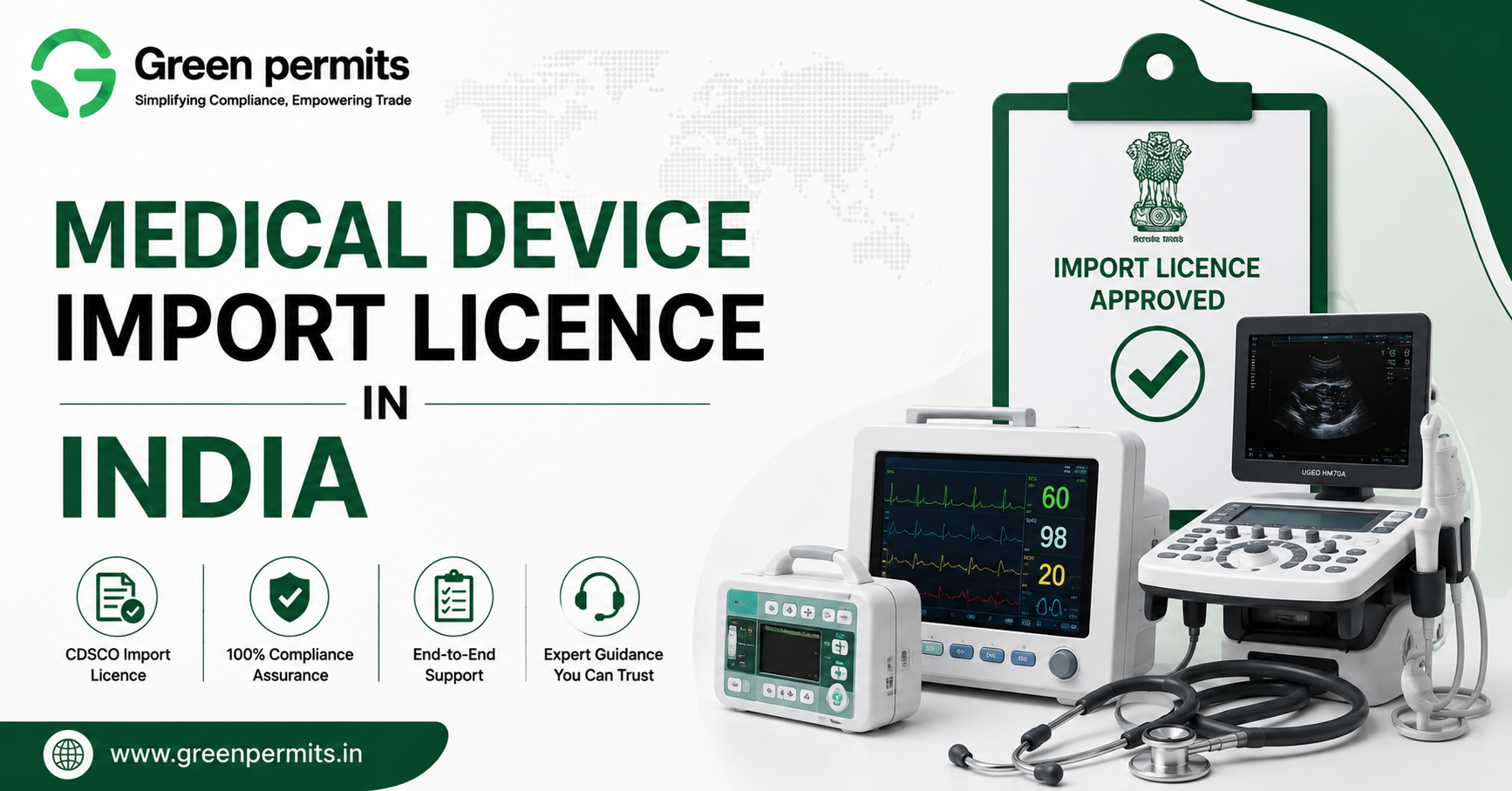
Medical Device Import Licence in India is an important regulatory approval for businesses planning to import medical devices, diagnostic devices, surgical equipment, hospital equipment, patient monitoring devices, implants, dental devices, imaging equipment, laboratory devices, and in-vitro diagnostic products into the Indian market.
Medical devices are used for diagnosis, prevention, monitoring, treatment, investigation, replacement, support, or medical care. Because these products directly impact patient safety and public health, they are regulated by CDSCO under the Medical Devices Rules, 2017.
CDSCO stands for Central Drugs Standard Control Organisation. It is India’s national regulatory authority for drugs, medical devices, cosmetics, diagnostics, vaccines, biologicals, and related healthcare products. If a medical device is regulated in India, the importer must obtain the required import licence before importing and selling the product.
Many importers face shipment delays because they start import planning without checking product classification, risk class, foreign manufacturer documents, authorised agent requirement, product label requirements, and CDSCO licence route. This can lead to customs hold, regulatory queries, port delay, rejected application, or commercial loss.
A Medical Device Import Licence Consultant helps businesses identify the correct product category, classify the device, prepare documents, coordinate with the foreign manufacturer, file Form MD-14, respond to CDSCO queries, obtain Form MD-15, and maintain post-approval compliance.
What is Medical Device Import Licence?
Medical Device Import Licence is an approval required for importing regulated medical devices into India. It allows an authorised Indian agent or importer to import approved medical devices from a foreign manufacturer for sale, distribution, or marketing in India.
The import licence is generally linked with:
- Product name
- Device category
- Risk class
- Foreign manufacturer
- Manufacturing site
- Indian authorised agent
- Intended use
- Model or variant
- Product technical documents
- Approved licence scope
For many medical devices, the application is filed in Form MD-14 and the import licence is granted in Form MD-15.
Why Medical Device Import Licence is Important
Medical Device Import Licence is important because imported medical devices must meet Indian regulatory requirements before they are placed in the market.
This licence helps businesses:
- Import medical devices legally
- Avoid customs clearance problems
- Meet CDSCO requirements
- Build trust with hospitals and distributors
- Sell through authorized channels
- Reduce regulatory risk
- Avoid shipment detention
- Prevent product seizure or rejection
- Support institutional supply
- Maintain compliance records
- Work properly with foreign manufacturers
- Improve market entry planning
For importers, CDSCO approval should be planned before placing purchase orders, booking shipment, or launching the product in India.
Who Needs Medical Device Import Licence in India?
A Medical Device Import Licence may be required by any business importing regulated medical devices into India.
The following entities may need support:
- Medical device importers
- Authorized Indian agents
- Healthcare product distributors
- Hospital equipment suppliers
- Surgical device importers
- Diagnostic equipment importers
- IVD product importers
- Dental device importers
- Orthopaedic implant importers
- Cardiac device importers
- Critical care product suppliers
- Laboratory equipment suppliers
- Foreign manufacturers entering India
- Indian companies representing global brands
- E-commerce healthcare product sellers
- Businesses launching imported medical devices
The exact requirement depends on the product type, intended use, risk class, manufacturer location, and regulatory status.
Products That May Require Medical Device Import Licence
Medical device import licensing may apply to many product categories depending on notification and classification.
Common product categories include:
- Surgical instruments
- Patient monitors
- Blood pressure monitors
- Glucometers
- Thermometers
- X-ray machines
- Ultrasound machines
- MRI and CT equipment
- Dental devices
- Orthopaedic implants
- Cardiac stents
- Catheters
- Syringes and needles
- Infusion pumps
- Dialysis equipment
- Ventilators
- Oxygen concentrators
- Hospital beds with medical function
- Diagnostic kits
- IVD reagents
- Laboratory analyzers
- Blood collection devices
- Wound care devices
Before import, each product should be reviewed to confirm whether it falls under medical device regulation and which licence route applies.
Medical Device Classification in India
Medical devices are classified based on risk. Correct classification is one of the most important steps in the import licence process.
Risk classes generally include:
- Class A - Low risk
- Class B - Low moderate risk
- Class C - Moderate high risk
- Class D - High risk
Classification depends on factors such as:
- Intended use
- Duration of contact
- Invasiveness
- Whether device is implantable
- Whether device supports life
- Whether device is active or non-active
- Whether device delivers medicine or energy
- Risk to patient, user, or public health
Wrong classification can lead to wrong form selection, incomplete documentation, CDSCO query, or approval delay.
Medical Device Import Licence for IVD Products
IVD means In-Vitro Diagnostic. IVD devices and diagnostic kits are used to test specimens collected from the human body.
IVD products may include:
- Diagnostic kits
- Reagents
- Rapid test kits
- Test strips
- Clinical chemistry kits
- Immunoassay kits
- Molecular diagnostic kits
- Pathology lab products
- Blood testing products
- Laboratory diagnostic instruments
For IVD medical devices, import licence applications are also filed through the CDSCO online system. Product classification, intended use, performance data, labelling, and technical documents should be checked carefully before filing.
Role of Medical Device Import Licence Consultant
A Medical Device Import Licence Consultant helps businesses complete the licensing process correctly and efficiently.
Consulting support generally includes:
- Product applicability assessment
- Medical device classification
- Risk class identification
- Regulatory pathway selection
- Document checklist preparation
- Foreign manufacturer coordination
- Authorized Indian agent support
- Form MD-14 application filing
- Form MD-15 approval follow-up
- Device Master File review
- Plant Master File review
- Label and IFU review
- CDSCO query response
- Retention and amendment support
- Post-approval compliance advisory
Professional support is useful because medical device import licensing involves technical, regulatory, product, and manufacturer-level documentation.
Authorized Indian Agent for Medical Device Import
For imported medical devices, the foreign manufacturer generally needs an Authorized Indian Agent. The agent acts as the Indian representative for CDSCO filing and regulatory communication.
The authorized agent may be responsible for:
- Filing the import licence application
- Uploading documents on the portal
- Coordinating with CDSCO
- Responding to queries
- Maintaining licence records
- Coordinating with the foreign manufacturer
- Supporting import documentation
- Maintaining post-market compliance records
- Updating CDSCO for changes, where required
The authorized agent should be selected carefully because the responsibility continues after licence approval.
Documents Required for Medical Device Import Licence
Documents depend on device type, risk class, manufacturer location, and CDSCO query. However, some documents are commonly required.
Common documents may include:
- Covering letter
- Form MD-14 application details
- Company registration documents
- PAN Card
- GST Registration Certificate
- Import Export Code
- Wholesale licence, where applicable
- Authorized Indian Agent agreement
- Power of Attorney from foreign manufacturer
- Free Sale Certificate
- ISO 13485 certificate
- CE certificate or other quality certificate, where applicable
- Device Master File
- Plant Master File
- Product technical specification
- Product catalogue
- Instructions for Use
- User manual or package insert
- Product label artwork
- Product testing reports
- Safety and performance data
- Shelf-life data, where applicable
- Clinical data, where applicable
- Performance evaluation data, for IVD where applicable
- Undertaking and declarations
- Manufacturing licence from country of origin, where applicable
Additional documents may be required depending on product complexity and authority review.
Medical Device Import Licence Process in India
The import licence process should be handled step by step to avoid rejection, query, or shipment delay.
Step 1: Product Applicability Check
The first step is checking whether the product is regulated as a medical device in India.
Applicability is reviewed based on:
- Product name
- Intended use
- Product function
- Medical claims
- Product category
- Technology used
- Patient contact
- Diagnostic or treatment purpose
- Regulatory notification status
- Import and sale plan
This step helps confirm whether CDSCO import licence is required.
Step 2: Device Classification
After applicability is confirmed, the device must be classified correctly.
Classification includes checking:
- Risk class
- Device type
- Active or non-active status
- Invasive or non-invasive nature
- Implantable status
- Duration of use
- Patient risk level
- Intended medical purpose
Correct classification helps identify the right documents and approval route.
Step 3: Appoint Authorized Indian Agent
If the manufacturer is located outside India, an Indian authorised agent is generally appointed for filing and communication.
This stage may include:
- Agent selection
- Power of Attorney preparation
- Authorization agreement
- Importer details review
- Wholesale licence review, where applicable
- Business document verification
The agent must have proper authorization from the foreign manufacturer.
Step 4: Prepare Technical Documents
Technical documents are very important for CDSCO approval.
Technical preparation may include:
- Device Master File
- Plant Master File
- Product specification
- Manufacturing process summary
- Safety and performance data
- Quality management system documents
- Testing reports
- Clinical or performance data
- Labelling details
- IFU or user manual
- Packaging details
- Shelf-life data
Documents should be consistent with the product label, intended use, and manufacturer records.
Step 5: File Application in Form MD-14
The import licence application for medical devices is generally filed in Form MD-14 through the CDSCO online system.
The application generally includes:
- Applicant details
- Authorized agent details
- Foreign manufacturer details
- Manufacturing site details
- Product details
- Device class
- Intended use
- Model or variant details
- Supporting documents
- Government fee payment
- Declarations and undertakings
All information should match the technical documents and manufacturer authorization.
Step 6: CDSCO Review
After submission, CDSCO reviews the application and documents.
The authority may check:
- Product classification
- Risk class
- Manufacturer details
- Authorized agent details
- Free Sale Certificate
- ISO certificate
- Device Master File
- Plant Master File
- Label and IFU
- Testing and performance data
- Fee payment
- Completeness of documents
If clarification is required, CDSCO may raise a query.
Step 7: Query Response
The applicant must respond to CDSCO queries with proper clarification and supporting documents.
Common queries may relate to:
- Incorrect product classification
- Missing Power of Attorney
- Incomplete Free Sale Certificate
- ISO certificate mismatch
- Manufacturer address mismatch
- Missing Device Master File sections
- Incomplete Plant Master File
- Label mismatch
- Intended use mismatch
- Missing clinical or performance data
- Product variant clarification
- Fee or application detail mismatch
A clear and accurate response helps move the application toward approval.
Step 8: Grant of Import Licence in Form MD-15
After satisfactory review, CDSCO may grant import licence in Form MD-15.
The importer should check the licence carefully for:
- Licence number
- Product name
- Device category
- Risk class
- Manufacturer name
- Manufacturing site address
- Authorized agent details
- Approved models or variants
- Licence conditions
- Validity or retention requirements
- Labelling conditions
Only approved products covered under the licence should be imported and marketed in India.
Step 9: Import and Customs Clearance
After receiving the import licence, the business can plan shipment and customs clearance.
Common import documents may include:
- CDSCO import licence
- Commercial invoice
- Packing list
- Bill of lading or airway bill
- Import Export Code
- Product label
- Certificate of analysis, where applicable
- Batch or lot details, where applicable
- Manufacturer documents
- Other customs documents
The product details in shipment documents should match the approved import licence.
Step 10: Post-Approval Compliance
Medical device import compliance continues after licence approval.
Post-approval compliance may include:
- Importing only approved products
- Maintaining import records
- Maintaining distribution records
- Following label requirements
- Maintaining complaint records
- Supporting post-market surveillance
- Reporting serious adverse events, where applicable
- Updating CDSCO for changes
- Filing retention or renewal, where applicable
- Maintaining quality and traceability records
If product design, intended use, label, manufacturing site, model, or foreign manufacturer details change, regulatory review may be required.
Cost of Medical Device Import Licence in India
The cost of Medical Device Import Licence depends on product type, risk class, documentation, and application scope.
Major cost factors include:
- Medical device category
- Risk class
- Number of products
- Number of models or variants
- Number of manufacturing sites
- Foreign manufacturer documentation readiness
- Authorized agent requirement
- Technical document preparation
- Testing or performance data requirement
- Government fee
- Query response requirement
- Consultant professional charges
A low-risk documentation-ready device may need less effort, while a high-risk or complex device may require detailed technical review and stronger documentation.
Timeline for Medical Device Import Licence
The timeline depends on document readiness, product classification, foreign manufacturer response, CDSCO review, and query response.
The general timeline may include:
- Product applicability assessment: 1 to 3 working days
- Classification review: 1 to 3 working days
- Document checklist preparation: 2 to 5 working days
- Foreign document collection: depends on manufacturer
- Technical document review: 5 to 15 working days
- Online application filing: 1 to 2 working days
- CDSCO review: depends on authority processing
- Query response: depends on query type
- Final approval: after satisfactory review
Businesses should start the licence process before shipment planning because foreign documentation and technical file preparation can take time.
Common Mistakes in Medical Device Import Licence Application
Many importers face delays because the licence process is started without proper regulatory assessment.
Common mistakes include:
- Importing before checking CDSCO applicability
- Selecting wrong device category
- Misclassifying risk class
- Filing wrong form
- Missing authorized agent documents
- Incomplete Power of Attorney
- Missing Free Sale Certificate
- Incomplete Device Master File
- Incomplete Plant Master File
- Label and IFU mismatch
- Incorrect manufacturer address
- Inconsistent product name
- Missing performance data
- Poor query response
- Importing models not covered in licence
- Not tracking retention or amendment requirements
Professional guidance helps avoid these mistakes and improves approval efficiency.
Benefits of Hiring Medical Device Import Licence Consultant
Hiring a Medical Device Import Licence Consultant provides several practical benefits.
These include:
- Correct product applicability check
- Accurate medical device classification
- Proper risk class identification
- Better document preparation
- Foreign manufacturer coordination
- Authorized agent support
- Faster online application filing
- Stronger CDSCO query response
- Reduced rejection risk
- Reduced shipment delay risk
- Better customs readiness
- Post-approval compliance support
A consultant helps importers manage the CDSCO process smoothly and reduce regulatory risk.
Importance of Medical Device Import Compliance
Medical Device Import Licence is not only required for approval but also for long-term compliance. Importers must ensure that every imported product matches the approved licence scope.
Importers should verify:
- Product name
- Model number
- Manufacturer name
- Manufacturing site
- Intended use
- Device class
- Label details
- Licence validity
- Approved variants
- Import documents
This verification should be completed before every shipment to avoid customs and compliance issues.
Learn More About Medical Device Import Licence in India
If your business is planning to import medical devices, IVD products, diagnostic kits, hospital equipment, surgical products, implants, dental devices, patient monitors, or healthcare devices into India, understanding CDSCO import licence requirements is essential before shipment planning or product launch.
Read the complete guide here:
👉 https://www.greenpermits.in/08/cdsco-medical-device-import-licence-consultant-india/
📞 Get Expert Assistance for Medical Device Import Licence
If you need help with Medical Device Import Licence in India or CDSCO compliance, Green Permits Consulting can assist you.
🌐 Website: https://www.greenpermits.in/
📞 Phone: +91 78350 06182
📧 Email: wecare@greenpermits.in

 Czech
Czech
 English
 Arabic
 French
 Spanish
 Portuguese
 Deutsch
 Dutch
Dutch
 Italiano
 Russian
 Romaian
 Portuguese (Brazil)
 Greek
Greek