


 About SPORTIVO Network
Prism in Optical Systems for Precise Light Control & Image Accuracy
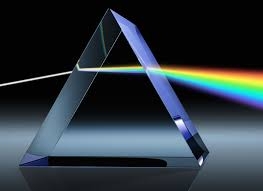
In precision optics, controlling light paths is one of the biggest challenges engineers face. Without the right components, systems can experience misalignment, dispersion, or reduced image quality. A common but critical solution is a prism. Used in cameras, microscopes, telescopes, and AR/VR devices, prisms help manipulate light for accurate imaging and better performance.
A prism is a transparent optical element that bends, reflects, or splits light beams depending on its geometry and material. By carefully selecting the prism type, engineers can control light paths, correct image orientation, or separate wavelengths in spectroscopy.
What Is a Prism and How Does It Work?
Prisms are typically made from optical glass or crystal with precise angles and smooth surfaces. Light entering a prism undergoes refraction—the bending of light due to the change in speed as it passes through materials of different densities.
Prisms can:
-
Reflect light internally for image orientation
-
Refract light to change its path
-
Split light into spectral colors for analysis
This makes them indispensable in applications where light must be manipulated without losing clarity or intensity.
Common Problems in Optical Systems Without a Prism
Image Misalignment
Without a prism, reflections and lenses may not direct light correctly, causing distorted images.
Light Dispersion
Color separation or spectrum leakage can affect camera, telescope, or spectrometer performance.
Reduced Brightness
Inefficient light paths lead to dim or unclear images in low-light conditions.
Complex Lens Design
Lenses alone often cannot achieve compact optical setups without prisms simplifying the light path.
By integrating a prism, optical engineers can solve these challenges efficiently.
Key Benefits of Using a Prism in Optical Devices
Precise Light Control
Prisms allow exact manipulation of light paths, enabling accurate alignment in cameras, microscopes, and binoculars.
Image Orientation Correction
Right-angle and Porro prisms rotate or invert images without adding extra lenses.
Spectrum Separation
Dispersive prisms split white light into constituent colors, which is vital in spectroscopy and laser applications.
Compact Optical Designs
Prisms reduce the need for multiple lenses, creating smaller, lighter, and more efficient optical systems.
Durable and Stable
Optical-grade prisms maintain performance in harsh environments and resist thermal or mechanical stress.
Applications Where Prisms Are Commonly Used
Prisms are widely applied across industries:
-
Camera viewfinders and binoculars for image correction
-
Microscopes and laboratory optical instruments
-
Spectroscopy and laser systems
-
AR/VR and head-mounted displays
-
Industrial inspection devices
-
Telescope and astronomy optics
Any system requiring precise light manipulation benefits from the integration of a high-quality prism.
Types of Prisms and Their Use
| Prism Type | Purpose | Key Feature |
|---|---|---|
| Right-Angle | Image reflection and rotation | Compact design, internal reflection |
| Porro | Binoculars | Rotates and inverts images |
| Dispersive | Spectroscopy | Splits light into spectrum |
| Beam-Splitting | Laser systems | Divides or redirects beams |
| Roof | Periscopes and AR | Corrects orientation in narrow setups |
Selecting the right type ensures the optical system performs efficiently without introducing aberrations.
Choosing the Right Prism
When selecting a prism, engineers should consider:
-
Material (BK7, fused silica, or specialty crystal)
-
Coating requirements (AR, reflective, or protective coatings)
-
Geometry and angles for light path optimization
-
Application wavelength for accurate performance
The right prism minimizes distortions, maximizes transmission, and supports compact, high-quality optical designs.
Conclusion
Although a prism is a small optical component, its impact on image quality, light control, and device efficiency is huge. Engineers and manufacturers rely on prisms to create clear, precise, and compact optical systems across cameras, AR/VR, scientific instruments, and industrial optics.
Integrating a quality prism into your design ensures accurate light manipulation, improved image clarity, and long-lasting performance.

 Czech
Czech
 Arabic
 French
 Spanish
 Portuguese
 Deutsch
 Turkish
 Dutch
Dutch
 Italiano
 Russian
 Romaian
 Portuguese (Brazil)
 Greek
Greek