


 About SPORTIVO Network
Nante Industrial surface mounted socket: Practical Strategies for Durable Installations
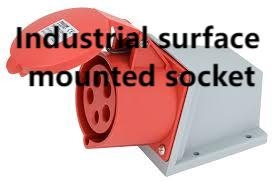
In industrial facilities where reliable power access is critical, teams commonly place a Industrial surface mounted socket in the middle of equipment runs to centralize feeding points, simplify disconnects during maintenance, and reduce cable clutter. This article explains how to specify the right product, prepare the site, perform correct wiring, apply environmental protections, and maintain installed units so they deliver safe, long-term service.
Scoping the application and defining requirements
Begin with a clear scope: identify the driven equipment, expected continuous current, likely peak or inrush currents, and whether single-phase or three-phase connections are required. Assess the environment — is the location indoors, outdoors, or subject to washdown? Will the socket be exposed to oil, dust, extreme temperatures, or mechanical impact? These factors drive selection of enclosure material, ingress protection rating, and mounting method. Also consider frequency of use; sockets that are mated and unmated often require more robust contact springs and replaceable inserts.
Mechanical and material considerations for longevity
Enclosure material affects durability and electrical safety. Reinforced thermoplastics offer excellent insulation and impact resistance with lower weight, while metal housings (stainless steel or coated steel) provide superior protection in abrasive or corrosive settings. For high-abuse locations choose designs with reinforced mounting bosses and captive fasteners to prevent lost hardware during service. Fastener choice matters — stainless steel fasteners resist corrosion and reduce galvanic interactions. If mounting to thin panels, provide backing plates to distribute loads and avoid cracking.
Electrical installation best practices
Correct wiring protects both equipment and personnel. Use conductors sized for continuous current and consider voltage drop for longer cable runs. Terminate conductors to the torque recommended by the manufacturer — under-torqued terminations can heat up, while over-torquing can damage threads and contacts. Implement strain relief so mechanical forces are absorbed by the enclosure rather than the terminations. Separate power runs from signal or control cables to reduce electromagnetic interference and include clear labeling of phases, ratings, and circuit protection devices for future technicians.
Environmental sealing, cable entry, and protection
Achieving real-world ingress protection requires more than a rated housing; it demands correct cable entry and sealing practice. Use factory-specified gland plates or modular entry systems instead of field-drilled holes that compromise coatings and gaskets. Select gasket materials appropriate for temperature ranges and chemical exposure — EPDM for UV and ozone resistance, silicone for flexibility across wide temperatures. For washdown areas favor rounded geometry and sloped tops to prevent water pooling; in coastal zones specify corrosion-resistant finishes and materials tested for salt spray.
Commissioning, inspection, and maintenance planning
Before energizing, perform commissioning tests: continuity checks, insulation resistance, correct phase sequencing, and earth bond verification. Run a thermal check under typical and peak load to detect high-contact resistance early. Schedule inspections according to environment and duty cycle — aggressive schedules for corrosive or wet locations, less frequent for sheltered indoor areas. During inspections look for seal degradation, discoloration, or loosening of fasteners. Keep a small spare kit of gaskets, cable glands, and common fasteners to reduce repair time when seals or entries need replacement.
Surface-mounted power outlets are deceptively simple components whose long-term reliability depends on correct selection, careful installation, and disciplined maintenance. By matching device ratings to real load profiles, choosing materials suited to the environment, and following proven wiring and sealing practices, facility teams can reduce outages and improve safety. For official practical guidance and manufacturer recommendations, see https://www.nante.com/news/industry-news/nante-announces-practical-guidance-for-industrial-surface-mounted-socket-installations.html

 Czech
Czech
 English
 Arabic
 French
 Spanish
 Portuguese
 Turkish
 Dutch
Dutch
 Italiano
 Russian
 Romaian
 Portuguese (Brazil)
 Greek
Greek