


 About SPORTIVO Network
Nut Welder: Precision Metal Joining for Modern Manufacturing
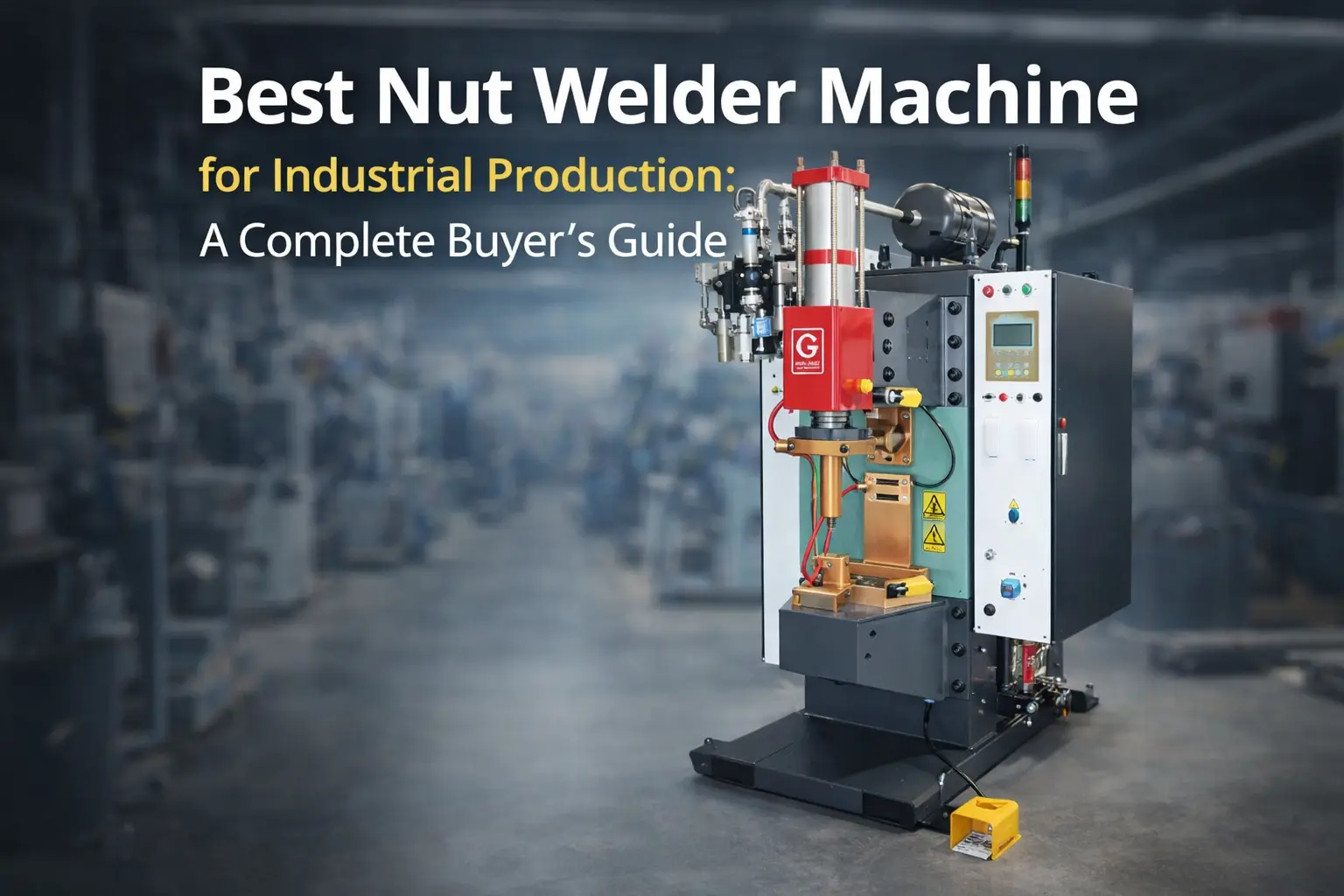
In today’s fast-paced manufacturing environment, efficiency, precision, and reliability in metal joining are more critical than ever. Among the range of advanced welding technologies, the nut welder stands out as a highly effective solution for attaching nuts directly to metal surfaces without pre-drilled holes. Designed for speed, accuracy, and repeatability, nut welders are essential in industries ranging from automotive and electronics to heavy machinery and consumer appliances.
Heron Welder, a global leader in industrial welding solutions, provides state-of-the-art nut welding machines and integrated automation systems tailored to OEMs, production engineers, and factory automation specialists. In this guide, we explore the working principles, applications, benefits, and best practices of nut welding, helping manufacturers make informed decisions for optimized production lines.
What is a Nut Welder?
A nut welder is a type of resistance welding machine specifically engineered to attach nuts to metal sheets or components. Unlike conventional mechanical fastening, nut welding fuses the nut directly onto the workpiece using controlled electrical resistance, producing a strong metallurgical bond.
Key features of nut welders include:
-
High-speed welding cycles for mass production
-
Minimal distortion of the base material
-
Precise control over current, pressure, and welding time
-
Compatibility with various nut sizes and metal thicknesses
Heron’s nut welders incorporate advanced controllers and optional robotic integration, ensuring seamless operation in fully automated production environments.
How Does Nut Welding Work?
Nut welding relies on resistance spot welding principles:
-
Positioning – The nut is aligned with the target metal surface, often using a mechanical arm or automation fixture.
-
Electrode Contact – Specialized electrodes contact the nut and sheet metal, creating a conductive path.
-
Current Application – A high-density electrical current passes through the interface, generating localized heat due to electrical resistance.
-
Fusion – The generated heat melts a small area of the base metal and nut, forming a strong metallurgical bond as it cools under pressure.
Heron’s nut welders are engineered with MFDC (Medium-Frequency Direct Current) and capacitor discharge options, enabling consistent weld quality even on thin sheets or complex alloys.
Applications of Nut Welders
Nut welding is widely used in industries that require durable, repeatable fastening without pre-drilling or additional hardware. Common applications include:
Automotive Manufacturing
Nut welders are indispensable for attaching threaded fasteners to car body panels, engine components, and chassis assemblies. The precision and speed reduce assembly time and eliminate secondary operations.
Electronics and Appliances
Compact nut welders allow manufacturers to attach small nuts to enclosures, panels, and brackets in consumer electronics, home appliances, and HVAC systems, ensuring reliable electrical and mechanical connections.
Heavy Machinery and Industrial Equipment
Large nut welders can handle thicker steel and complex geometries, making them suitable for construction equipment, agricultural machinery, and industrial fabrication.
Nut Welding vs. Traditional Fastening
| Feature | Nut Welding | Mechanical Fastening |
|---|---|---|
| Speed | Milliseconds per weld | Seconds to minutes per nut |
| Material Integrity | Minimal distortion | Potential stress points |
| Automation Ready | Fully automated options | Manual or semi-automated |
| Cost Efficiency | Reduces parts and labor | Higher hardware and labor cost |
Nut welding eliminates the need for extra screws, rivets, or adhesives, streamlining production and reducing inventory costs.
Best Practices for Efficient Nut Welding
-
Material Compatibility – Ensure the nut and base metal are suitable for resistance welding; different alloys may require adjustments in current and weld time.
-
Electrode Maintenance – Regularly inspect and replace electrodes to maintain weld consistency and prevent quality defects.
-
Process Monitoring – Use real-time monitoring systems to track weld parameters, ensuring repeatable results.
-
Automation Integration – Incorporate robotic arms or conveyors to achieve high-speed, consistent production, especially in high-volume operations.
Heron Welder’s integrated control systems allow engineers to program welding parameters, store recipes, and monitor performance remotely, enhancing reliability and reducing downtime.
Why Choose Heron for Nut Welding Solutions
As a global provider of industrial welding and metal-joining equipment, Heron Welder specializes in high-performance nut welders and fully automated production systems. Key advantages of partnering with Heron include:
-
Expertise in resistance welding, FSPR, clinching, and automated lines
-
Customizable solutions for OEMs, factories, and integrators
-
Advanced MFDC and capacitor discharge technology for consistent welds
-
On-site consultation, training, and support for efficient deployment
With Heron, manufacturers gain not only equipment but also the knowledge and technical support to optimize their welding processes.
Frequently Asked Questions (FAQs)
1. Can nut welders attach nuts to thin sheet metal?
Yes. Heron nut welders offer MFDC and capacitor discharge options that provide precise, low-heat welds suitable for thin materials.
2. Are nut welders compatible with robotic automation?
Absolutely. Heron designs nut welding systems for full integration with robotic arms, conveyors, and automated assembly lines.
3. How long does a typical nut weld take?
Weld times are typically a fraction of a second, allowing high-speed production with minimal material distortion.
4. What sizes of nuts can be welded?
Heron nut welders handle a wide range of standard and custom nut sizes, depending on machine configuration and electrode design.
5. Is training required for operators?
Yes. While nut welders are designed for intuitive operation, Heron provides comprehensive training to ensure proper use and optimal performance.
Conclusion: Optimize Your Production with Nut Welding
Nut welding is a game-changer for manufacturers seeking speed, precision, and cost-efficiency in metal joining. By reducing secondary operations, minimizing material stress, and enabling automation, nut welders elevate production capabilities across industries.
Heron Welder delivers advanced, reliable, and fully customizable nut welding solutions for OEMs, factory integrators, and production engineers worldwide. Request a quote or consult with Heron today to explore tailored welding and automation solutions that maximize efficiency and quality in your manufacturing process.

 Czech
Czech
 English
 Arabic
 French
 Spanish
 Portuguese
 Deutsch
 Dutch
Dutch
 Italiano
 Russian
 Romaian
 Portuguese (Brazil)
 Greek
Greek