


 Android App
 About SPORTIVO Network
Spot Welder for Aluminum: Advanced Solutions for Modern Manufacturing
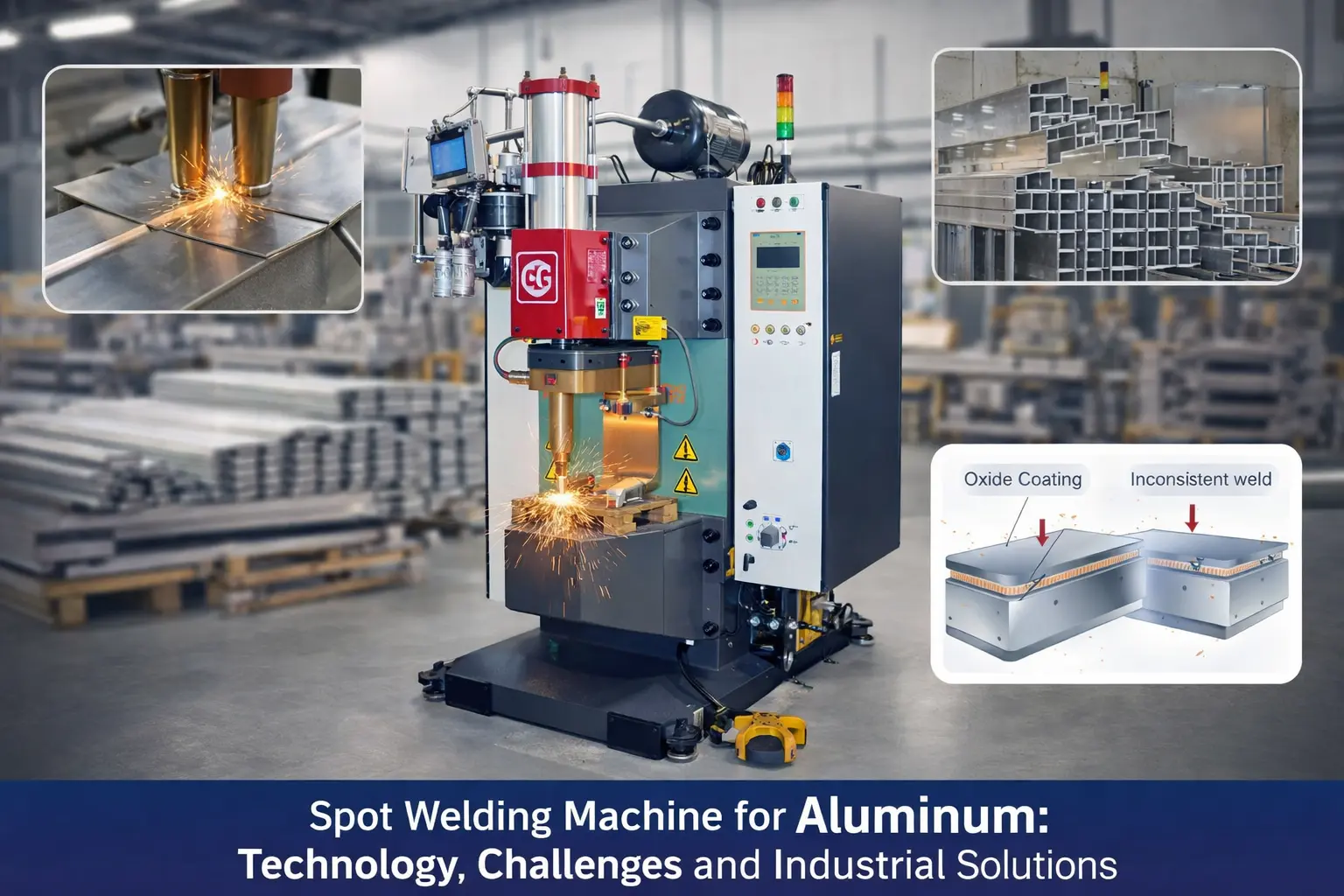
In today’s fast-paced manufacturing environment, joining aluminum efficiently and reliably is critical for OEMs, automotive suppliers, and industrial fabricators. Aluminum’s lightweight, high-strength properties make it an ideal material for industries ranging from automotive to aerospace, but welding it presents unique challenges. Choosing the right spot welder for aluminum is essential to achieve consistent, high-quality joints while maintaining productivity.
Heron Welder, a global leader in industrial welding and metal-joining solutions, offers advanced resistance welding machines and automation systems designed to optimize aluminum fabrication. In this guide, we explore the principles, applications, best practices, and considerations for selecting a spot welder for aluminum, helping manufacturing engineers and decision-makers make informed choices.
Understanding Aluminum Spot Welding
Spot welding is a form of resistance welding where two metal sheets are joined by applying heat generated from electrical resistance at the interface while clamping them with electrodes. When working with aluminum, several factors make the process distinct compared to traditional steel welding:
- High Thermal Conductivity: Aluminum conducts heat faster than steel, which can lead to insufficient weld nuggets if not controlled properly.
- Oxide Layer: Aluminum naturally forms an oxide layer that is resistant to electrical current, requiring precise current settings and electrode design.
- Soft Material Properties: Aluminum deforms more easily under pressure, demanding carefully controlled electrode force to prevent sheet distortion.
Heron’s spot welders incorporate precise control of current, pressure, and welding time, ensuring strong and repeatable welds even with complex aluminum assemblies.
Key Applications of Aluminum Spot Welding
Aluminum spot welding has become indispensable across industries that prioritize lightweight construction, including:
Automotive & EV Manufacturing
- Structural and body panels for passenger cars, commercial vehicles, and electric vehicles (EVs).
- Battery enclosures and chassis components where lightweight design is critical.
Aerospace & Aviation
- Aircraft fuselage and wing panels, where precise joints are essential for safety and durability.
Electronics & Consumer Products
- Heat sinks, enclosures, and metal housings that require strong joints without deformation.
Industrial Equipment
- Aluminum frameworks for machinery, conveyors, and automation equipment, where structural integrity is critical.
Heron’s spot welders are engineered for high-cycle, production-line environments, offering consistent performance for both manual and automated setups.
Choosing the Right Spot Welder for Aluminum
Selecting the ideal spot welder for aluminum involves evaluating several technical parameters:
1. Welding Current & Control
Aluminum requires higher welding currents than steel. Heron welders feature programmable MFDC (Medium-Frequency Direct Current) technology, providing precise control over current pulses to create uniform weld nuggets without overheating or material distortion.
2. Electrode Design
Electrodes for aluminum welding are typically made of copper alloys with optimized tip geometry to maximize contact and minimize sticking. Heron offers specialized electrodes and clamping systems tailored for different aluminum thicknesses and alloys.
3. Welding Force & Timing
Controlled electrode force is crucial to avoid indentation or expulsion of molten material. Modern spot welders from Heron integrate servo-driven force control, ensuring consistent pressure throughout the welding cycle.
4. Automation & Integration
For high-volume production, integrating spot welders into automated assembly lines improves throughput and repeatability. Heron provides fully automated robotic welding cells and production lines with precise cycle control and data logging for quality assurance.
Aluminum vs. Steel Spot Welding: A Quick Comparison
| Feature | Aluminum | Steel |
|---|---|---|
| Thermal Conductivity | High, requires rapid energy input | Moderate, easier to control |
| Electrode Wear | Higher, specialized alloys required | Lower, standard electrodes suffice |
| Oxide Layer | Strong insulating layer, requires higher current | Minimal, easier current flow |
| Weld Nugget Size | Smaller, requires precise control | Larger, less sensitive |
| Material Distortion | More likely | Less likely |
Understanding these differences helps engineers select appropriate machines and optimize welding parameters for aluminum without trial-and-error.
Best Practices for Aluminum Spot Welding
- Pre-Cleaning: Remove surface contaminants and oxides to improve current flow and reduce electrode wear.
- Optimal Electrode Maintenance: Regularly dress and inspect electrodes to ensure consistent contact and weld quality.
- Controlled Parameters: Fine-tune current, force, and welding time for each alloy and thickness.
- Test & Monitor: Use weld monitoring systems and destructive/non-destructive testing to validate joint strength.
- Leverage Automation: Automated welding cells reduce human error and maintain consistent quality across high-volume production.
Heron Welder’s machines are designed with these best practices in mind, offering built-in monitoring, adjustable parameters, and robust design for industrial applications.
Why Choose Heron for Aluminum Spot Welding
Heron Welder combines decades of expertise in resistance welding with advanced automation solutions, providing manufacturing engineers and OEMs with:
- Customizable Systems: Machines and welding cells tailored for specific production needs.
- High-Precision Control: MFDC and servo-controlled technologies for consistent aluminum welds.
- Automation Integration: Seamless integration with robotic lines for maximum productivity.
- Global Support: Engineering support, maintenance, and consultation for complex projects.
Heron’s focus on innovation ensures clients achieve stronger, cleaner welds while improving efficiency and reducing costs.
FAQs
Q1: Can all aluminum alloys be spot welded?
A: Most aluminum alloys are suitable for spot welding, though higher-conductivity alloys may require higher current or specialized electrodes.
Q2: How does MFDC spot welding improve aluminum joint quality?
A: MFDC allows precise control of current pulses, minimizing heat loss and preventing electrode sticking, leading to uniform weld nuggets.
Q3: What thickness of aluminum can be welded with spot welders?
A: Heron spot welders handle thin sheets (0.5 mm) up to thicker plates (6 mm), depending on machine model and electrode configuration.
Q4: Is automation necessary for aluminum spot welding?
A: Automation is not required but highly recommended for high-volume production to ensure consistency, speed, and quality.
Q5: How can Heron help optimize my aluminum welding process?
A: Heron provides consulting, parameter optimization, electrode solutions, and turnkey automation for tailored welding solutions.
Take the Next Step in Aluminum Welding
For manufacturing engineers, OEMs, and automation integrators looking to elevate their aluminum fabrication, the right spot welder for aluminum is critical. Heron Welder delivers expert solutions combining precision, reliability, and automation-ready technologies.
Request a quote or consult with Heron today to explore customized welding machines, robotic systems, and full production-line solutions designed to meet your aluminum manufacturing needs.


 Czech
Czech
 English
 Arabic
 French
 Spanish
 Portuguese
 Deutsch
 Turkish
 Dutch
Dutch
 Russian
 Romaian
 Portuguese (Brazil)
 Greek
Greek