The Royal Jacquard Waistcoat That Makes Every Occasion Look Intentional
There are certain pieces in menswear that do something no other garment quite manages. They take an outfit from put-together to genuinely impressive. The waistcoat from Jeffery Green does exactly that, and the Royal Jacquard range does it with real conviction.
The Royal Jacquard Waistcoat Explained
Jeffery Green offers the Royal Jacquard Waistcoat in three distinct colourways: Black and Red Jacquard, Pink Jacquard, and Glossy Ethnic Jacquard Satin. Each one is built on the same foundation of premium satin and rich Jacquard detailing, but each carries its own distinct character and occasion appeal.
This is not a wardrobe afterthought. It is a piece designed to be noticed, to add depth to formal dressing, and to set a man apart in any room he walks into.
Premium Satin With Jacquard Detailing
The fabric is where this waistcoat earns its reputation. Each Royal Jacquard Waistcoat is crafted from premium satin enhanced with Jacquard pattern detailing woven directly into the cloth.
Satin brings a smooth, polished sheen that catches the light in a way that flat or matte fabrics simply cannot. The Jacquard weave adds texture and visual depth on top of that, creating a surface that looks genuinely luxurious rather than just shiny. Together, they produce a finish that reads as expensive and considered.
Real Horn Button Fastening
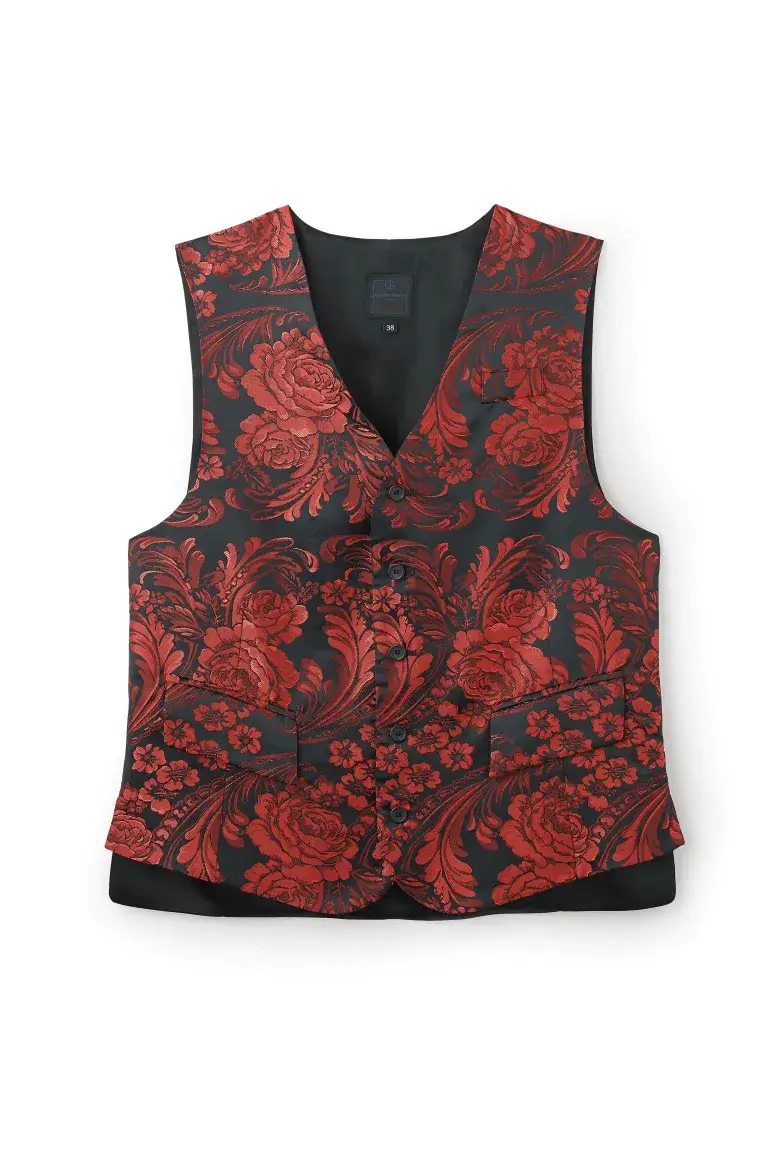
One of the details that separates a well-made waistcoat from an ordinary one is the quality of its buttons. The Jeffery Green Royal Jacquard Waistcoat uses real horn buttons for its front fastening.
Horn buttons have a subtle, natural variation in their finish that elevates the look of the garment without drawing unnecessary attention to themselves. They are the kind of detail that people with an eye for quality will notice and appreciate. It is a small touch that speaks clearly about the overall standard of the piece.
Made in London, England
Every Royal Jacquard Waistcoat is tailored with precision in Jeffery Green's own factory in the heart of London. Proudly Made in the UK, with the attention to fit and finish that British tailoring is known for.
The tailored construction gives the waistcoat a sharp, clean profile that enhances the body and sits neatly over a shirt or beneath a jacket. This is not an off-the-peg piece that happens to be waistcoat-shaped. It is a properly considered garment built to flatter.
Three Colourways, Three Different Moods
The Black and Red Jacquard colourway is bold and dramatic. The deep black base with rich red floral baroque damask detailing makes it an ideal choice for weddings, formal evening events, or any occasion where making a strong impression matters.
The Pink Jacquard brings a more playful energy. The hot pink oriental blossom print works beautifully for summer weddings, celebratory occasions, or for any man confident enough to wear colour with purpose and conviction.
The Glossy Ethnic Jacquard Satin in cream with an oriental dragon print sits in its own category entirely. It carries a sense of heritage and craftsmanship that makes it one of the most distinctive pieces in the Jeffery Green range.
Who This Waistcoat Is Built For
The Royal Jacquard Waistcoat is designed for occasions that deserve more than the ordinary. Weddings are the obvious setting, whether as part of a complete formal look or worn over a crisp shirt for something slightly more relaxed. Evening events, celebrations, and formal dinners all suit it equally well.
It also works for any man who simply wants to dress with more intention on days that call for it. Worn over a plain black or white shirt, any of the three colourways immediately transforms the outfit into something that looks properly dressed and carefully chosen.
Available in a Full Size Range
The Royal Jacquard Waistcoat is available in sizes 34 through to 44, with a detailed size chart covering shoulder, chest, length, and waist measurements to help find the right fit. Sizing is structured around a tailored profile, so getting the right size makes a significant difference to how the finished look comes togethere you.
https://jefferygreen.store/product-category/waistcoat/The Royal Jacquard Waistcoat That Makes Every Occasion Look Intentional
There are certain pieces in menswear that do something no other garment quite manages. They take an outfit from put-together to genuinely impressive. The waistcoat from Jeffery Green does exactly that, and the Royal Jacquard range does it with real conviction.
The Royal Jacquard Waistcoat Explained
Jeffery Green offers the Royal Jacquard Waistcoat in three distinct colourways: Black and Red Jacquard, Pink Jacquard, and Glossy Ethnic Jacquard Satin. Each one is built on the same foundation of premium satin and rich Jacquard detailing, but each carries its own distinct character and occasion appeal.
This is not a wardrobe afterthought. It is a piece designed to be noticed, to add depth to formal dressing, and to set a man apart in any room he walks into.
Premium Satin With Jacquard Detailing
The fabric is where this waistcoat earns its reputation. Each Royal Jacquard Waistcoat is crafted from premium satin enhanced with Jacquard pattern detailing woven directly into the cloth.
Satin brings a smooth, polished sheen that catches the light in a way that flat or matte fabrics simply cannot. The Jacquard weave adds texture and visual depth on top of that, creating a surface that looks genuinely luxurious rather than just shiny. Together, they produce a finish that reads as expensive and considered.
Real Horn Button Fastening
One of the details that separates a well-made waistcoat from an ordinary one is the quality of its buttons. The Jeffery Green Royal Jacquard Waistcoat uses real horn buttons for its front fastening.
Horn buttons have a subtle, natural variation in their finish that elevates the look of the garment without drawing unnecessary attention to themselves. They are the kind of detail that people with an eye for quality will notice and appreciate. It is a small touch that speaks clearly about the overall standard of the piece.
Made in London, England
Every Royal Jacquard Waistcoat is tailored with precision in Jeffery Green's own factory in the heart of London. Proudly Made in the UK, with the attention to fit and finish that British tailoring is known for.
The tailored construction gives the waistcoat a sharp, clean profile that enhances the body and sits neatly over a shirt or beneath a jacket. This is not an off-the-peg piece that happens to be waistcoat-shaped. It is a properly considered garment built to flatter.
Three Colourways, Three Different Moods
The Black and Red Jacquard colourway is bold and dramatic. The deep black base with rich red floral baroque damask detailing makes it an ideal choice for weddings, formal evening events, or any occasion where making a strong impression matters.
The Pink Jacquard brings a more playful energy. The hot pink oriental blossom print works beautifully for summer weddings, celebratory occasions, or for any man confident enough to wear colour with purpose and conviction.
The Glossy Ethnic Jacquard Satin in cream with an oriental dragon print sits in its own category entirely. It carries a sense of heritage and craftsmanship that makes it one of the most distinctive pieces in the Jeffery Green range.
Who This Waistcoat Is Built For
The Royal Jacquard Waistcoat is designed for occasions that deserve more than the ordinary. Weddings are the obvious setting, whether as part of a complete formal look or worn over a crisp shirt for something slightly more relaxed. Evening events, celebrations, and formal dinners all suit it equally well.
It also works for any man who simply wants to dress with more intention on days that call for it. Worn over a plain black or white shirt, any of the three colourways immediately transforms the outfit into something that looks properly dressed and carefully chosen.
Available in a Full Size Range
The Royal Jacquard Waistcoat is available in sizes 34 through to 44, with a detailed size chart covering shoulder, chest, length, and waist measurements to help find the right fit. Sizing is structured around a tailored profile, so getting the right size makes a significant difference to how the finished look comes togethere you.
https://jefferygreen.store/product-category/waistcoat/




 About SPORTIVO Network






 Czech
Czech
 Arabic
 French
 Spanish
 Portuguese
 Deutsch
 Turkish
 Dutch
Dutch
 Italiano
 Russian
 Romaian
 Portuguese (Brazil)
 Greek
Greek