


 Android App
 About SPORTIVO Network
Creating Utility-Driven Fan Tokens for Modern Sports Fans
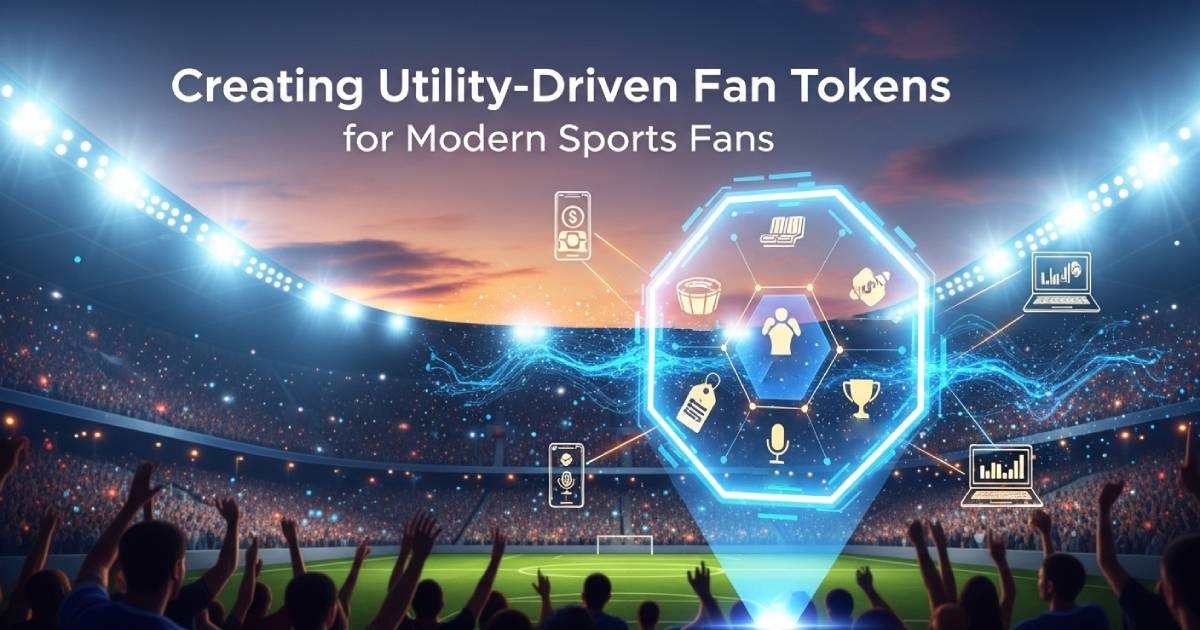
Sports organizations have spent the last decade trying to solve the same problem in new ways: how do you keep supporters engaged between fixtures, across borders, and beyond the limits of ticketing, TV, and merchandise? Fan tokens emerged as one answer, but the early wave often leaned too heavily on novelty. Many clubs treated the token itself as the product. That was the wrong emphasis. The token is only useful when it unlocks an experience fans actually value.
That distinction matters more now than it did during the first rush of sports Web3 experiments. Fan tokens remain an active category, with CoinGecko listing a fan-token market capitalization of roughly $225 million and daily trading volume near $95 million as of April 2026. At the same time, the category has matured enough for clubs, regulators, and fans to better understand both its promise and its weaknesses. Socios, the best-known platform in the space, says it works with more than 70 teams. FIFA, meanwhile, has continued investing in blockchain-based digital fan infrastructure through FIFA Collect and its broader Web3 stack. The market clearly still exists, but the standard for success is higher now.
A utility-driven fan token, then, should not be designed as a speculative side asset attached to a sports brand. It should function more like a programmable loyalty and participation layer. The best versions reward fandom with access, recognition, influence, and continuity. They turn passive spectators into active members of a digital fan economy.
What fan tokens are really supposed to do
At their best, fan tokens give supporters a lightweight stake in the culture of the club. That does not mean equity in the legal sense, and it certainly does not mean meaningful control over corporate governance. It means structured participation. A supporter who holds a token may vote on selected club decisions, gain access to exclusive merchandise, compete for matchday experiences, unlock gated content, or join reward systems built around activity rather than simple spending. Official club descriptions for Paris Saint-Germain and FC Barcelona fan tokens, for example, emphasize voting opportunities, merchandise access, and exclusive experiences rather than financial claims.
That framing is important because it tells us where real value sits. Fans rarely wake up wanting a token. They want a better relationship with the team. The token only matters if it becomes the mechanism through which that relationship becomes more direct, more personalized, or more rewarding. In that sense, fan tokens belong less to the world of pure crypto finance and more to the worlds of membership design, loyalty architecture, and digital community strategy.
This is also where many first-generation projects fell short. They launched tokens with thin utility: a few polls, a few one-off campaigns, and a resale market that overshadowed everything else. Once the novelty wore off, the product felt hollow. Modern sports fans are more digitally fluent and more skeptical. They can tell the difference between engagement infrastructure and branded financialization.
A fan token development company plays a crucial role in turning this idea into something fans actually use, not just hold. It focuses on building the full experience around the token, from voting systems and reward mechanics to app integration and access-based features, ensuring the token connects naturally with how fans already interact with the club. When done right, the token does not feel like a separate crypto product but an extension of the fan journey, encouraging ongoing participation rather than one-time interest.
Why utility matters more than hype
A sports franchise does not need another product that produces a short burst of attention and then becomes a reputational burden. It needs something that can survive a losing season, a transfer-window lull, or an off-season. Utility is what gives the token a reason to remain relevant when market sentiment fades.
This is not just a design preference. It is a strategic necessity. A 2025 academic study on blockchain-based fan tokens in professional football identified revenue growth, global engagement, and stronger supporter loyalty as major opportunities, but it also highlighted serious challenges, including regulatory uncertainty and the difficulty of fitting tokens into existing governance structures. In other words, the upside is real, but only when the product is built with stakeholder balance in mind rather than as a cash-grab.
That finding aligns with what sports organizations already know from broader digital engagement efforts. The most durable fan products are the ones that create repeat interaction. A token that only works at the moment of sale is weak. A token that becomes part of matchday rituals, online communities, loyalty tiers, rewards, fantasy-style activations, and global membership journeys has a much better chance of lasting.
The practical implication is simple: token utility has to be designed around behavior. What should a fan do more often because the token exists? Watch more? Vote more? Attend more? Buy earlier? Stay subscribed longer? Share more content? Participate during the off-season? Every successful use case begins by answering that question.
The building blocks of a utility-driven model
A serious sports franchise should think of fan-token utility in layers rather than as a single perk. The strongest models combine emotional value with functional value.
The first layer is participation utility. Fans want to feel heard, even when the decisions they influence are symbolic. Voting on matchday songs, warm-up graphics, jersey details, tunnel messages, or fan-zone elements may not alter the sporting result, but it creates visible involvement. Symbolic participation works when it is frequent, transparent, and clearly linked to the identity of the club.
The second layer is access utility. This is where tokens start to feel tangible. Early ticket windows, meet-and-greet opportunities, training-ground visits, signed merchandise drops, premium content, and members-only events all create reasons to hold rather than flip. Access utility works best when it is scarce enough to feel meaningful but broad enough that ordinary supporters still see a path to benefit.
The third layer is status utility. Sports fandom is social. Tokens can create visible tiers of belonging, not just private entitlements. Reputation badges, loyalty streaks, leaderboard systems, seasonal missions, and “super fan” recognition can all turn a token ecosystem into a social layer around the club. Fans do not just want rewards; many want recognition.
The fourth layer is activity utility. This is where the product becomes sticky. Instead of rewarding mere ownership, clubs can reward actions: attending matches, watching highlights, completing quizzes, buying merchandise, participating in predictions, joining sponsor activations, or engaging in community campaigns. FIFA Collect, for instance, ties digital collecting to challenges, points, and rewards rather than stopping at ownership. That broader loop is closer to where sports fan products are heading.
The fifth layer is ecosystem utility. This is the most advanced and often the most valuable. A token should not sit outside the club’s other digital products. It should connect with ticketing, memberships, collectibles, loyalty systems, mobile apps, sponsors, fantasy games, and e-commerce. Once the token becomes the common thread across these touchpoints, it starts functioning like infrastructure rather than a campaign.
Case studies and what they reveal
The Socios ecosystem offers the clearest large-scale case study because it turned fan tokens into a repeatable format across dozens of sports properties. Its pitch is straightforward: holders can engage, earn points, and redeem rewards, with partner coverage spanning football clubs, combat sports, and other major properties. That scale proved there was real institutional appetite for tokenized fan engagement.
Paris Saint-Germain is one of the better-known examples because its token was tied from the start to recognizable club interactions and reward mechanics. FC Barcelona followed a similar path, using the token as a digital bridge between global supporters and selected club experiences. These examples show that major brands are willing to tokenize fan access when the product sits inside an official, controlled environment.
But the more interesting lesson is not that large clubs can launch tokens. It is that the clubs with the strongest brands still needed structured utility to make the concept intelligible. Brand recognition may drive awareness. It does not automatically create sustained participation.
FIFA’s approach points to the next stage. Rather than focusing only on tradable tokens, FIFA Collect has emphasized packs, challenges, club and federation affiliations, points, and reward-linked participation. Its World Cup 2026 ticket-linked mechanics are especially telling. That model shifts attention from speculation toward access and event utility, which is much more natural for sports audiences.
This broader movement suggests that “fan token” as a category may gradually merge with digital membership, collectibles, and gamified loyalty. The winning franchises will be the ones that stop debating labels and start designing coherent supporter journeys.
The design mistake clubs keep making
The biggest mistake is treating liquidity as the main value proposition. Secondary-market trading can create visibility, but it also distorts incentives. Once price action dominates the story, fans stop behaving like members and start behaving like traders. That changes the tone of the product and can damage trust.
Regulators have already shown they are paying attention. In the UK, the Advertising Standards Authority ruled against Arsenal’s fan-token advertising because the promotions did not sufficiently make clear the risks, the cryptoasset nature of the product, or the fact that paid-for fan tokens were unregulated in the UK. The ASA also said the ads failed to make the volatility and purchasing mechanics sufficiently clear. That was not a rejection of digital fan products as such. It was a warning that clubs cannot market them casually.
That ruling matters well beyond one club. It underscores a larger principle: fan tokens must be positioned first as utility products with clear disclosures, not as easy gateways into asset speculation. Every sports franchise considering this space should treat compliance, consumer education, and risk language as product essentials, not legal footnotes.
What a modern franchise should build instead
A modern utility-driven fan token should be structured around retention, not launch-day excitement. That means starting with a narrow, believable set of benefits and expanding over time.
For a football club, the first season of utility might include matchday polls, token-gated video content, sponsor discounts, a reward-point engine, and occasional access lotteries. In the second season, the token could connect to ticketing priority, in-app predictions, travel bundles, and collectibles. By the third season, it might anchor a full digital membership system spanning community forums, fan chapters, fantasy experiences, sponsor campaigns, and international supporter clubs.
This phased approach does two things. First, it prevents overpromising. Second, it gives the club time to learn which utilities actually change fan behavior. The most useful data will not come from token sales. It will come from repeat usage: vote rates, content consumption, redemption frequency, churn reduction, sponsor conversion, and cross-border engagement.
That data value is often underestimated. Sports organizations are increasingly focused on building a stronger first-party relationship with supporters. A well-designed token system can help clubs identify their most active digital fans, understand what those fans respond to, and create more precise experiences across commerce and media. In that sense, the token becomes not only a membership tool but also an intelligence layer.
The commercial logic for sports franchises
From a business perspective, utility-driven tokens are attractive because they can monetize fan attention without relying entirely on traditional inventory. Instead of just selling tickets, shirts, and sponsorship impressions, clubs can build ongoing digital engagement loops. Sponsors can be woven into token missions. Retail can be tied to reward unlocks. International fans who may never visit the stadium can still participate meaningfully in the club’s economy.
That said, the commercial case only works when fans feel they are getting something more than a branded payment obligation. The token should reduce distance between club and supporter. It should not merely create another thing to buy.
This is why clubs should avoid copying generic crypto playbooks. Scarcity alone is not enough. Staking alone is not enough. A treasury story is not enough. Sports audiences care about closeness, ritual, exclusivity, and identity. The token has to serve those emotional realities.
Where the market goes from here
The next phase of fan tokens will likely be less loud and more sophisticated. We are already seeing the category broaden into digital collectibles, reward-linked participation, and event access. Infrastructure is improving, rights holders are becoming more selective, and users are less tolerant of empty Web3 experiments. That is a healthy development.
A utility-driven fan token can still be powerful, but only when it is built as a fan product first and a blockchain product second. The franchises most likely to win in this space are not the ones that launch the flashiest token. They are the ones that understand fandom as a long-term relationship and design digital systems that make that relationship richer, more visible, and more rewarding over time.
In practical terms, that means a successful fan token should do three things consistently: give supporters something to do, give them something to earn, and give them something to belong to. Once those conditions are met, the token stops feeling like a speculative add-on and starts feeling like part of the club itself.
That is the real future of fan tokens in sport. Not hype. Not novelty. Not financial theater. Useful digital membership, shaped around how modern fans actually live with their teams.

 Czech
Czech
 English
 Arabic
 French
 Spanish
 Portuguese
 Deutsch
 Turkish
 Dutch
Dutch
 Italiano
 Russian
 Portuguese (Brazil)
 Greek
Greek