


 Android App
 About SPORTIVO Network
The Comfort of Repetition: Why Papa’s Pizzeria Never Really Gets Old
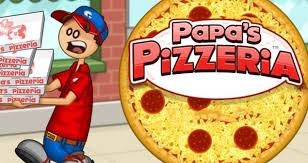
When repetition stops feeling like repetition
At a glance, Papa’s Pizzeria is one of those games that should wear out quickly. The structure barely changes: take an order, prepare a pizza, bake it, slice it, serve it. The same stations, the same motions, the same end result.
And yet, people don’t tend to describe it as boring.
They describe it as something they can return to.
That difference matters. Because what the game actually delivers isn’t novelty—it’s repetition that keeps just enough variation to avoid feeling mechanical.
Each order changes the details. Each customer shifts expectations slightly. Each timing cycle creates a new rhythm of pressure. The framework stays the same, but the experience never quite repeats in a perfect loop.
That’s where its long-term appeal quietly comes from.
The satisfaction of predictable structure
There’s a kind of comfort in knowing exactly what will happen next.
In Papa’s Pizzeria, the structure is always stable. You don’t need to guess what comes after baking a pizza or what the goal of the game is. Everything is visible, ordered, and consistent.
Order. Build. Bake. Slice. Serve.
That predictability removes uncertainty, which makes the game easier to mentally process even when it becomes fast-paced.
But predictability alone isn’t enough to keep attention. If everything were identical every time, the game would flatten out quickly.
Instead, what keeps it alive is how predictable structure interacts with unpredictable timing.
You know what will happen—but not when everything will overlap.
That difference creates the core tension.
Why small variations matter more than they should
One of the subtle strengths of the game is how it treats variation.
A slightly different topping combination. A customer with more complex instructions. A pizza that needs just a little more baking time than usual.
None of these changes the system itself, but they change how you move through it.
What feels repetitive at first slowly becomes a series of micro-adjustments. You’re no longer just repeating steps—you’re adjusting timing, sequencing, and attention based on small differences.
This is where games like Papa’s Pizzeria start to resemble structured [restaurant simulation loops], where mastery isn’t about learning new systems, but refining response to familiar ones.
And that refinement is surprisingly satisfying.
The rhythm you don’t notice forming
After enough time, players stop thinking in individual actions and start thinking in rhythm.
Not consciously, at first. It builds slowly.
Start a pizza → check oven → prep next order → return to build station → rotate tasks → repeat.
Eventually, this stops feeling like separate decisions and starts feeling like a flow pattern that runs in the background of attention.
That rhythm is fragile. It breaks when too many orders overlap or when timing shifts unexpectedly. But when it holds, the game feels almost effortless—even during busy moments.
That’s the strange part: the same mechanics that create pressure are also what allow flow.
Why repetition doesn’t equal boredom here
Repetition usually becomes boring when it stops producing new information.
But in Papa’s Pizzeria, repetition always produces slightly different outcomes. Not dramatically different, but enough to keep attention engaged.
A pizza is never just “the same task again.” It’s the same structure under different timing conditions, different order combinations, and different levels of pressure.
That means repetition becomes a way of measuring improvement instead of a signal of stagnation.
You don’t feel like you’re doing the same thing—you feel like you’re doing the same thing better.
That’s a subtle but important distinction.
The illusion of mastery through smoothness
One of the most interesting parts of long-term play is how mastery feels.
There’s no dramatic notification when you become better. No clear level-up moment. No announcement that you’ve “figured it out.”
Instead, mastery shows up as absence.
Fewer mistakes. Less hesitation. Cleaner transitions between stations. More awareness of timing without actively thinking about it.
The experience becomes smoother, and that smoothness itself becomes the reward.
At some point, the game stops feeling like a challenge to survive and starts feeling like a system you can move through with increasing control.
And that transition is easy to miss unless you look back at earlier sessions.
Why the game feels different depending on your mindset
Interestingly, Papa’s Pizzeria doesn’t feel exactly the same every time you play it.
If you’re distracted, it feels chaotic. If you’re focused, it feels structured. If you’re tired, it feels overwhelming faster. If you’re alert, it feels almost rhythmic.
The game doesn’t change—but your capacity to track its layers does.
That means the experience is partly shaped by internal state, not just external mechanics.
And that’s one reason it sticks in memory: it reflects how attention feels in different conditions.
Sometimes controlled. Sometimes scattered. Sometimes surprisingly sharp.
The quiet loop that keeps pulling you back
There’s a reason players often return to games like this even after long breaks.
It’s not because they need to see new content. It’s because the loop itself is satisfying to re-enter.
There’s something grounding about returning to a system where everything is understandable again within seconds. No onboarding needed. No learning curve that stretches over hours.
You step back in, and the structure is already there waiting.
Order. Build. Bake. Slice. Serve.
And within a few minutes, the rhythm returns.
That ease of re-entry is part of the design’s strength. It doesn’t demand commitment—it just reactivates familiarity.
Why “simple” systems stay memorable longer than expected
Games like Papa’s Pizzeria tend to linger in memory in a way that feels disproportionate to their complexity.
Not because they are deep in the traditional sense, but because they create recognizable patterns of attention, pressure, and rhythm.
Those patterns map onto everyday experiences more than expected: multitasking, prioritizing, managing small time pressures.

 Czech
Czech
 English
 Arabic
 French
 Spanish
 Portuguese
 Deutsch
 Turkish
 Italiano
 Russian
 Romaian
 Portuguese (Brazil)
 Greek
Greek