


 Android App
 About SPORTIVO Network
How to Choose the Right Powerlifting Weight Class for Maximum Results
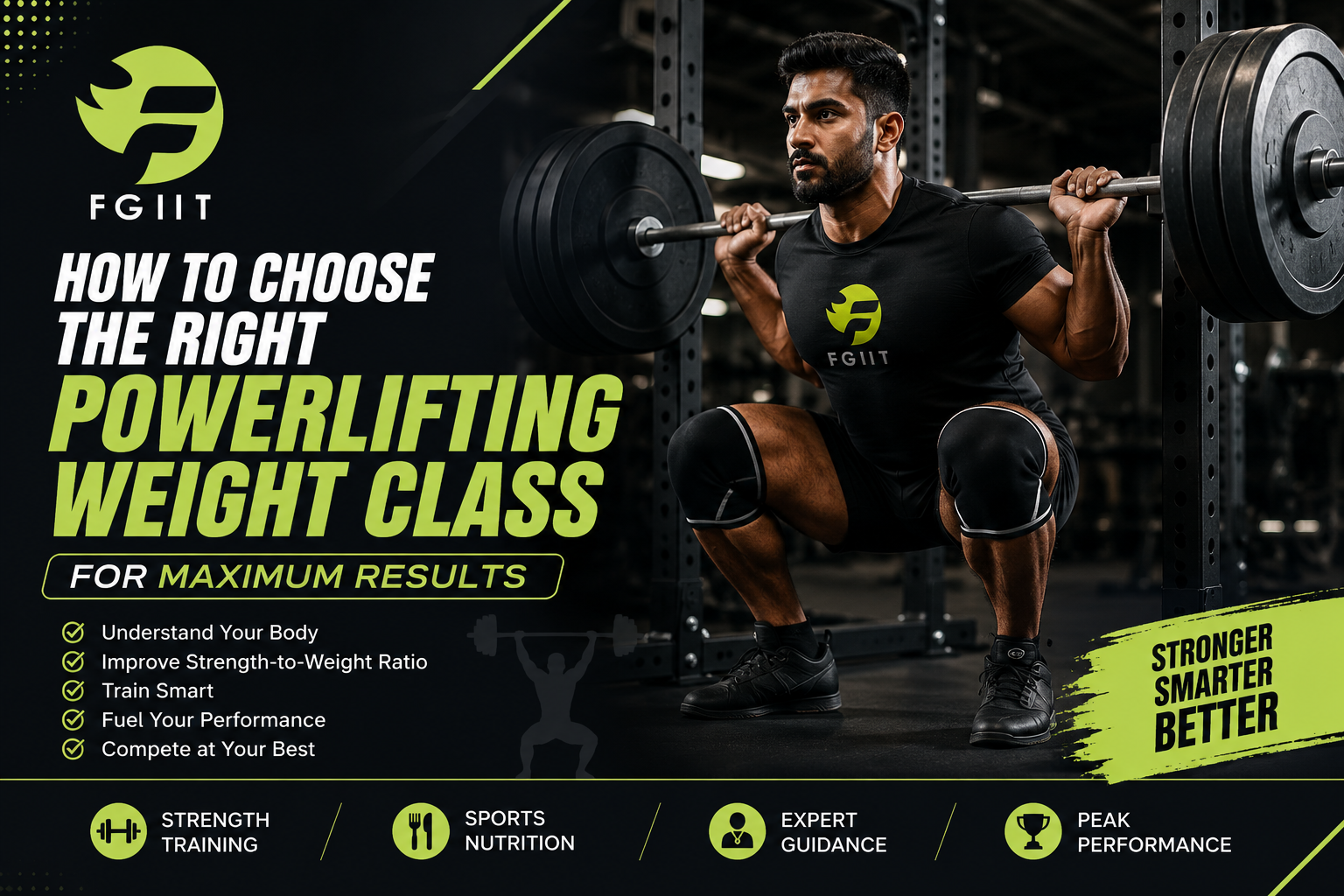
Powerlifting is one of the fastest-growing strength sports in the world. It focuses on three major lifts: squat, bench press, and deadlift. Whether you are a beginner or an experienced lifter, choosing the right weight class is extremely important for improving performance, building strength, and achieving success in competitions.
Many athletes make the mistake of selecting a weight class based only on body weight. However, the right powerlifting weight classes depend on several factors such as muscle mass, body composition, recovery, strength levels, and long-term fitness goals. Selecting the correct category can help you lift heavier weights, maintain better energy levels, and improve your overall performance.
At FGIIT India, students learn professional powerlifting techniques, strength training methods, competition preparation, and sports nutrition strategies to perform better in different weight categories.
What Are Powerlifting Weight Classes?
Powerlifting competitions divide athletes into different bodyweight categories to ensure fair competition. Lifters compete against others with similar body weight, making the sport more balanced and competitive.
Weight classes differ slightly depending on the federation, but the basic purpose remains the same — creating equal opportunities for athletes.
Common Men’s Powerlifting Weight Classes
- 59 kg
- 66 kg
- 74 kg
- 83 kg
- 93 kg
- 105 kg
- 120 kg
- 120+ kg
Common Women’s Powerlifting Weight Classes
- 47 kg
- 52 kg
- 57 kg
- 63 kg
- 69 kg
- 76 kg
- 84 kg
- 84+ kg
Understanding these categories helps athletes choose the most suitable division based on their body type and strength levels.
Why Choosing the Right Weight Class Matters
Your weight class directly affects your strength, performance, and recovery. Selecting the wrong category may lead to:
- Low energy levels
- Poor recovery
- Muscle loss
- Reduced strength
- Increased fatigue
- Higher injury risk
On the other hand, the right weight class helps you:
- Maximize strength output
- Improve muscle performance
- Maintain better endurance
- Recover faster
- Stay healthier during preparation
Professional coaches at FGIIT teach athletes how to balance strength, body weight, and nutrition for better competitive performance.
Understand Your Natural Body Weight
One of the biggest mistakes athletes make is forcing themselves into an unrealistic weight category. Your natural body weight plays a major role in determining the ideal class.
If you naturally maintain a healthy body weight close to a specific category, it is usually best to compete there rather than making extreme changes.
For example:
- If your body naturally stays around 82–83 kg, competing in the 83 kg class may be ideal.
- Cutting too much weight may reduce strength and energy.
- Gaining unnecessary body fat to move up a class may slow down performance.
The goal is to stay strong, healthy, and powerful without excessive stress on the body.
Focus on Strength-to-Weight Ratio
In powerlifting, success is not just about body weight. The most important factor is your strength-to-weight ratio.
A lifter with high strength relative to body weight often performs better than someone heavier but weaker.
For example:
- A 74 kg athlete deadlifting 250 kg demonstrates excellent relative strength.
- A heavier athlete lifting only slightly more may not have the same advantage.
Improving muscle quality, lifting technique, and training consistency often produces better results than simply increasing body weight.
Consider Your Muscle Mass
Muscle mass is another key factor when selecting a powerlifting weight class. Athletes with higher lean muscle mass usually perform better than those carrying excess body fat.
Before changing categories, ask yourself:
- Am I gaining muscle or fat?
- Does my current weight support strength gains?
- Can I recover properly at this body weight?
Lean muscle improves power, speed, and lifting efficiency. Proper nutrition and resistance training are essential for maintaining muscle while preparing for competitions.
At FGIIT India, students learn advanced fitness, nutrition and strength conditioning techniques to improve lean muscle development.
Avoid Extreme Weight Cutting
Many athletes try rapid weight cuts before competitions. While temporary cuts may help meet weigh-in requirements, extreme dieting and dehydration can negatively impact performance.
Problems caused by aggressive weight cutting include:
- Weakness
- Muscle cramps
- Low stamina
- Poor concentration
- Reduced lifting power
- Increased injury risk
Instead of drastic cuts, athletes should focus on gradual and healthy body composition changes over time.
A smart strategy includes:
- Balanced nutrition
- Proper hydration
- Structured training
- Slow fat loss
- Maintaining muscle mass
Long-term performance is always more important than temporary weight reduction.
Decide Based on Competition Goals
Your ideal powerlifting weight class also depends on your goals.
For Beginners
New lifters should avoid complicated weight cuts. Focus on:
- Learning proper technique
- Building strength
- Improving mobility
- Developing consistency
Beginners usually perform best near their natural body weight.
For Competitive Athletes
Advanced athletes may strategically choose categories based on:
- Competitive rankings
- Strength advantages
- Federation standards
- Qualification requirements
Experienced lifters often work closely with coaches and nutrition experts to optimize body composition.
Monitor Your Performance Regularly
Tracking performance is essential when selecting the correct weight class.
Monitor factors such as:
- Strength progression
- Recovery speed
- Energy levels
- Sleep quality
- Training intensity
- Body composition
If your strength improves while maintaining good recovery, your current class may be ideal. If performance drops significantly during dieting or weight gain, adjustments may be necessary.
Keeping a workout journal can help identify patterns and improve long-term progress.
Nutrition Plays a Major Role
Nutrition is one of the most important aspects of powerlifting success. Proper eating habits support:
- Muscle growth
- Recovery
- Strength gains
- Hormonal balance
- Performance consistency
Powerlifters should focus on:
Protein Intake
Protein supports muscle repair and recovery.
Sources include:
- Eggs
- Chicken
- Fish
- Paneer
- Greek yogurt
- Lentils
Healthy Carbohydrates
Carbs provide energy for heavy lifting sessions.
Examples include:
- Rice
- Oats
- Potatoes
- Fruits
- Whole grains
Healthy Fats
Healthy fats support hormone production and recovery.
Sources include:
- Nuts
- Seeds
- Avocados
- Olive oil
At FGIIT, students learn sports nutrition planning for strength athletes and competitive lifters.
Train According to Your Weight Class
Training methods may vary depending on body size and competition goals.
Lightweight Lifters
Often focus on:
- Speed
- Explosive power
- Technique
- Mobility
Heavyweight Lifters
Usually emphasize:
- Maximum strength
- Recovery management
- Joint stability
- Muscle endurance
A properly designed program helps athletes improve performance without unnecessary weight fluctuations.
Importance of Professional Guidance
Choosing the right powerlifting weight class can be confusing without expert support. Professional coaching helps athletes:
- Analyze body composition
- Build customized nutrition plans
- Improve lifting technique
- Increase strength safely
- Prepare for competitions
Learning from experienced trainers also reduces the risk of injuries and performance plateaus.
FGIIT India offers professional fitness and strength training education for aspiring powerlifters, trainers, and fitness professionals.
Common Mistakes to Avoid
Copying Other Athletes
Every athlete has a different body structure and metabolism. Avoid copying someone else’s weight strategy.
Ignoring Recovery
Overtraining and under-eating can reduce performance and increase injury risk.
Chasing Lower Weight Classes
Competing with lighter is not always better. Weakness from excessive dieting often reduces total lifts.
Gaining Excess Fat
Moving to a heavier class should involve building muscle, not just increasing body fat.
Final Thoughts
Choosing the right powerlifting weight class is one of the most important decisions for achieving maximum strength and performance. The ideal category should support your natural body structure, strength potential, recovery ability, and long-term goals.
Instead of focusing only on body weight, athletes should prioritize muscle quality, training consistency, nutrition, and recovery. Smart preparation always produces better results than extreme dieting or rapid weight changes.
With proper guidance, structured training, and sports nutrition knowledge, powerlifters can improve performance safely and effectively. At FGIIT India, aspiring athletes and fitness professionals can learn advanced powerlifting techniques, fitness nutrition, and strength training methods to build successful careers in the fitness industry.

 Czech
Czech
 English
 Arabic
 French
 Spanish
 Portuguese
 Deutsch
 Turkish
 Dutch
Dutch
 Italiano
 Russian
 Romaian
 Greek
Greek