


 Android App
 About SPORTIVO Network
Innovative TPU Film Manufacturing
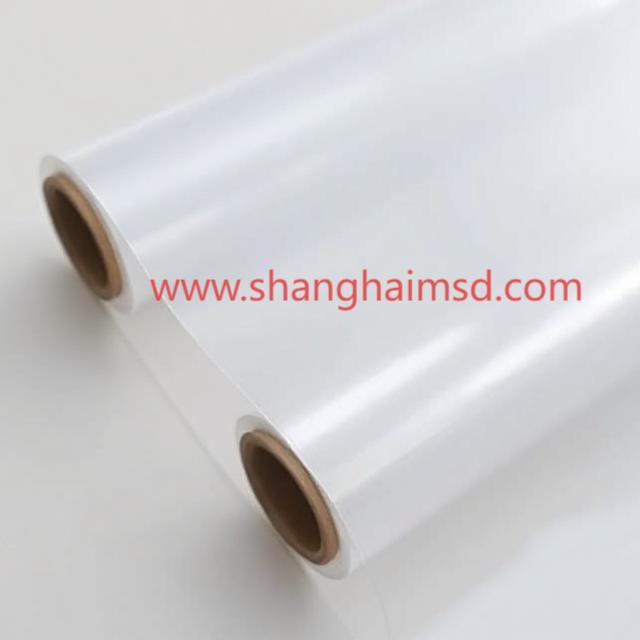
The manufacturing landscape for advanced polymers is continually advancing, with processes centered around the TPU Compound Film enabling precise control over material performance and structural integrity in composite applications. This film, derived from thermoplastic polyurethane compounded with specific additives, benefits greatly from flat die extrusion, a method that ensures uniform thickness distribution and minimal internal stresses, resulting in enhanced optical clarity and mechanical uniformity across large sheets.
Flat die extrusion involves feeding compounded TPU pellets into a single-screw or twin-screw extruder, where they are heated to a molten state and pushed through a wide, flat die to form a continuous web. This technique supports thicknesses from as thin as 0.01mm for delicate laminates to over 1mm for robust standalone films, allowing manufacturers to tailor the output for specific end-use requirements. Co-extrusion variants integrate multiple layers in one pass, incorporating barrier materials or adhesives to create multifunctional composites without secondary bonding steps.
Blown film extrusion represents another key process, particularly suited for producing tubular forms that can be collapsed into double-layered films. In this method, molten TPU is extruded upward through an annular die, inflated with air to form a bubble, and then cooled before winding. The blow-up ratio directly influences the film's biaxial orientation, improving tensile strength in both machine and transverse directions while reducing gauge variation. This approach is ideal for creating seamless, high-strength films used in containment structures.
Calendering offers a distinct pathway for achieving ultra-smooth surfaces and precise gauging. Here, the compounded TPU is passed through a series of heated rollers that progressively thin and polish the material, often achieving mirror-like finishes essential for aesthetic or functional coatings. This rolling process excels in high-volume production, maintaining consistent hardness levels across the film while allowing inline embossing for textured variants that enhance grip or visual appeal.
Post-extrusion treatments further refine the film's properties, such as corona or plasma surface activation to improve adhesion in subsequent lamination, or annealing to relieve residual stresses and boost dimensional stability. These steps ensure the material's thermoplastic nature facilitates easy welding via high-frequency or ultrasonic methods, opening avenues for complex fabrications.Shanghai MSD nternational Trade Co., with expertise in producing high-quality TPU films and fabrics, provides customized solutions for various extrusion-based requirements. Explore their product range at https://www.shanghaimsd.com/product .

 Czech
Czech
 English
 Arabic
 French
 Spanish
 Portuguese
 Deutsch
 Turkish
 Dutch
Dutch
 Italiano
 Russian
 Romaian
 Greek
Greek