


 About SPORTIVO Network
Is Wheat Straw Tableware Really Sustainable?
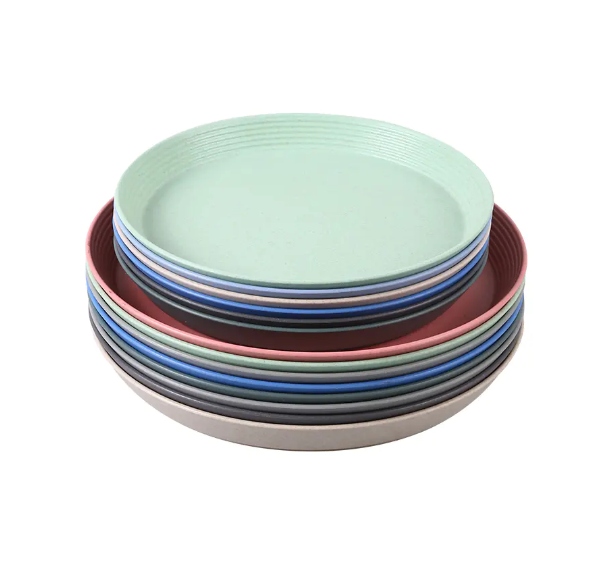
The environmental discussion around modern kitchenware increasingly focuses on life cycle assessment rather than simple material labeling. Wheat Straw Material Tableware is often promoted as an eco-oriented alternative, but its actual environmental impact depends on production methods, material composition, and disposal pathways.
Raw material origin and agricultural impact
Wheat straw is an agricultural residue left after grain harvesting. Globally, large quantities of wheat straw are produced annually, and a significant portion has historically been burned or left unused. Utilizing this residue for tableware production helps reduce open-field burning practices, which are associated with particulate emissions and air quality issues.
From a resource perspective, using agricultural byproducts reduces pressure on virgin plastic production and partially offsets waste management burdens in farming systems.
Manufacturing stage environmental load
The environmental impact of Wheat Straw Material Tableware is not limited to its raw material origin. Processing stages such as fiber cleaning, drying, grinding, and polymer blending require energy input. Injection molding machines typically operate at elevated temperatures, contributing to electricity consumption and associated emissions depending on the energy source.
Composite formulations that rely heavily on polypropylene introduce fossil-based content into the lifecycle, reducing overall biodegradability while improving mechanical stability.
Distribution and transportation efficiency
Due to relatively low product weight, wheat straw tableware offers transportation advantages compared with heavier ceramic or glass alternatives. Reduced shipping weight can translate into lower fuel consumption during logistics operations, particularly in bulk distribution scenarios.
Packaging efficiency also plays a role. Stackable designs allow higher volume per shipping container, reducing per-unit transport impact.
Usage phase considerations
During the usage phase, wheat straw tableware behaves similarly to conventional plastic composites. It is resistant to water absorption at low levels (typically below 2%), which ensures structural stability during repeated washing.
Microwave compatibility varies depending on composition, but most products can withstand moderate heating cycles up to approximately 100°C–120°C.
End-of-life scenarios
The final stage of the lifecycle is where environmental performance diverges significantly. Pure or high-fiber wheat straw products may degrade under industrial composting conditions, breaking down into biomass over time. However, composite versions containing synthetic binders may persist longer in landfill environments.
Life cycle studies on agricultural straw utilization show that environmental benefits are highly dependent on the treatment method used at end-of-life, with composting and material recovery providing better outcomes than uncontrolled disposal or incineration.
Comparative environmental perspective
Compared with traditional plastic tableware, wheat straw composites reduce reliance on fossil fuel extraction and can lower carbon intensity in certain production pathways. However, some life cycle assessments indicate that bio-based alternatives may still generate significant emissions during manufacturing stages if not optimized properly.
This highlights that “plant-based” does not automatically equal zero-impact; system design and infrastructure play critical roles.
Practical sustainability interpretation
From a practical standpoint, Wheat Straw Material Tableware sits in a transitional category between conventional plastics and fully biodegradable materials. Its sustainability value depends on:
Percentage of renewable fiber content
Type of binding polymer used
Availability of composting or recycling systems
Product lifespan and reuse frequency
Summary
The lifecycle of Wheat Straw Material Tableware demonstrates a mixed environmental profile. It provides advantages in agricultural waste utilization and fossil resource reduction, while still relying partially on industrial processing and synthetic binders. Its environmental performance is therefore context-dependent rather than absolute.

 Czech
Czech
 English
 Arabic
 French
 Spanish
 Portuguese
 Deutsch
 Turkish
 Dutch
Dutch
 Russian
 Romaian
 Portuguese (Brazil)
 Greek
Greek