


 About SPORTIVO Network
RF Microneedling vs. Standard Microneedling in Winnipeg: What's the Difference?
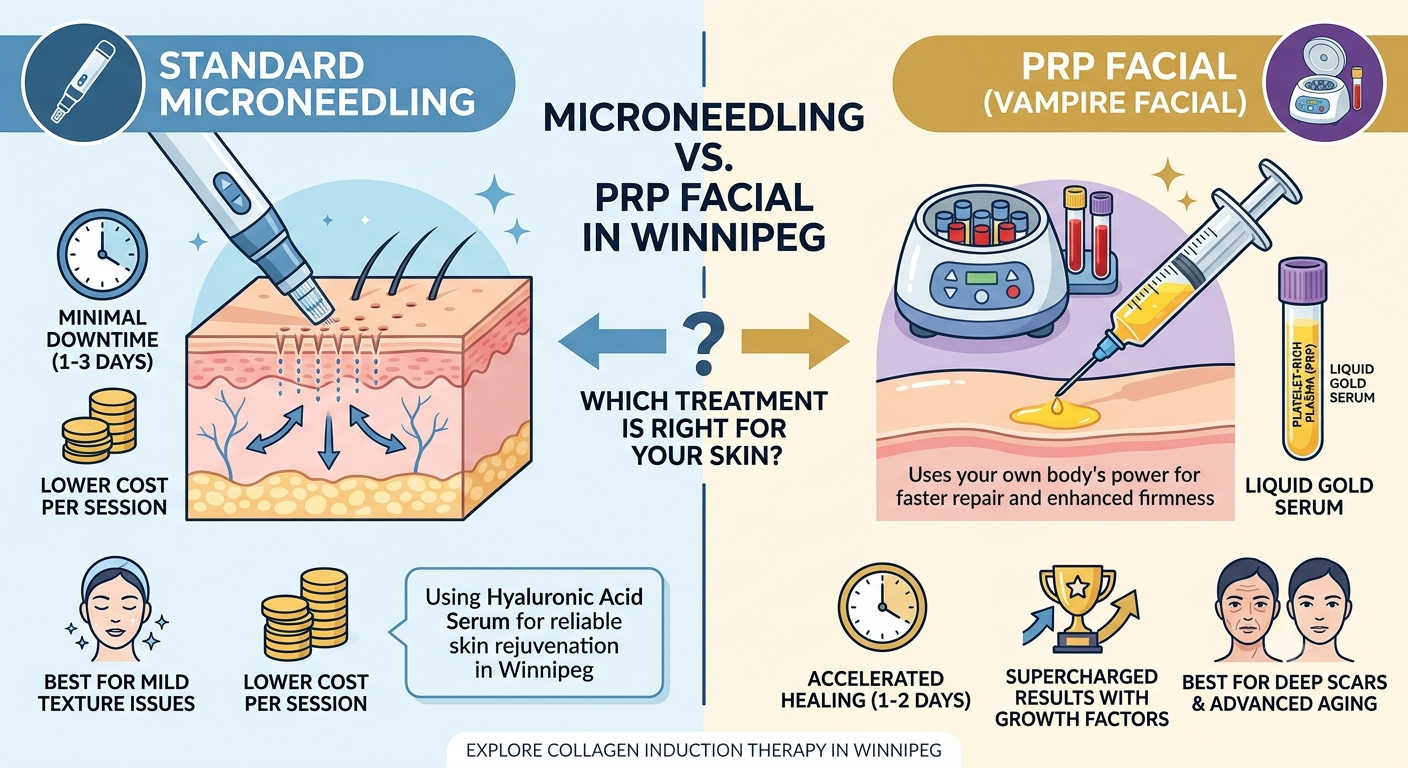
If you've been exploring skin treatments in Winnipeg, chances are you've come across both microneedling and RF microneedling. They sound similar, they look similar, and both involve tiny needles — but the results they deliver can be quite different. Understanding what sets them apart helps you make a smarter decision for your skin.
What is standard microneedling?
Standard microneedling uses a device with very fine needles to create controlled micro-injuries in the skin. Those tiny channels trigger your body's natural repair response, prompting fresh collagen and elastin to form near the surface.
The procedure is well-established, minimally invasive, and works across a wide range of skin concerns. Most patients experience redness for 24–48 hours after a session, similar to a mild sunburn, and can return to normal activities quickly. For many people in Winnipeg, it's an ideal starting point for skin rejuvenation — effective results without significant downtime.
Standard microneedling works best for:
- Uneven skin texture and tone
- Enlarged pores
- Mild to moderate acne scars
- Early fine lines
- Dull or tired-looking skin
When combined with PRP (platelet-rich plasma), the results go even further. PRP uses your own blood's growth factors, applied directly into the micro-channels created during treatment, to accelerate healing and supercharge collagen production. This combination — sometimes called the Vampire Facial — is one of the most popular treatments for skin renewal in Winnipeg right now.
What is RF microneedling?
RF microneedling combines the collagen-boosting benefits of traditional microneedling with the added power of radiofrequency energy. During an RF microneedling treatment, the microneedles deliver heat deep into the dermis while simultaneously creating microchannels in the skin.
RF microneedling takes the concept further by delivering thermal energy through the needles into deeper tissue layers, producing more significant tightening and remodeling effects. The radiofrequency heat contracts existing collagen fibres immediately, while also stimulating long-term new collagen growth in the deeper dermis — something standard microneedling alone cannot reach.
RF microneedling works best for:
- Skin laxity and sagging
- Deeper wrinkles and folds
- Significant or pitted acne scars
- Stretch marks
- Overall skin tightening on face, neck, and body
Devices like Morpheus8 are among the most well-known RF microneedling platforms, offering precise control over needle depth and energy intensity for customised treatments.
Key differences at a glance
| Standard Microneedling | RF Microneedling | |
|---|---|---|
| How it works | Needles only | Needles + radiofrequency heat |
| Depth | Superficial to mid dermis | Deep dermis |
| Best for | Texture, pores, mild scars | Laxity, deep scars, tightening |
| Downtime | 24–48 hours | 2–4 days |
| Sessions needed | 3–6 | 3–4 |
| Pairs well with | PRP, serums | PRP, topical actives |
Which one is right for you?
Microneedling is ideal for mild scars, texture, and pores with minimal downtime, while RF microneedling generates more collagen for deeper improvements in scars, laxity, and texture. RF is more effective but has slightly more downtime. Both are safe for all skin tones.
A good way to think about it: if your main concerns are surface-level — texture, tone, pore size, or early signs of aging — standard microneedling (especially with PRP) will likely give you everything you're looking for. If you're dealing with skin looseness, significant scarring, or deeper wrinkles and want more dramatic results with fewer sessions, RF microneedling is worth the upgrade.
For hyperpigmentation and uneven tone, regular microneedling is gentle and effective, especially when combined with targeted serums applied during treatment. For stretch marks and significant laxity, RF microneedling is the stronger option.
What to expect at a Winnipeg clinic
Both treatments are performed in a clinical setting by trained professionals. A topical numbing cream is applied before either procedure, making them comfortable for the vast majority of patients. Results continue to improve over several weeks as new collagen develops — you won't see the full picture immediately after your first session.
Most providers recommend a series of treatments spaced four to six weeks apart, with the exact number depending on your skin's condition and goals. A proper consultation before booking is essential.
Final thoughts
Standard microneedling and RF microneedling are both excellent treatments — they just solve different problems. Knowing which one fits your skin concerns will save you time, money, and guesswork.
If you're based in Winnipeg and want professional guidance, the team at Embrace Skin offers microneedling and PRP treatments with a personalised approach. Book a consultation and let the results speak for themselves.

 Czech
Czech
 English
 Arabic
 French
 Spanish
 Portuguese
 Deutsch
 Turkish
 Italiano
 Russian
 Romaian
 Portuguese (Brazil)
 Greek
Greek