


 Android App
 About SPORTIVO Network
Welding Automation: Transforming Industrial Manufacturing with Precision and Efficiency
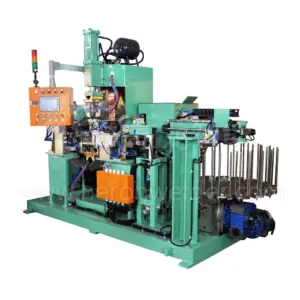
In today’s fast-paced manufacturing environment, efficiency, quality, and repeatability are no longer optional they are essential. Welding automation has become a cornerstone for modern factories, enabling manufacturers to achieve higher productivity, consistent quality, and safer operations. As a leading global provider of industrial welding and metal-joining equipment, Heron Welder specializes in advanced solutions ranging from resistance welding machines and self-pierce riveting (FSPR) systems to fully automated production lines. This article explores the principles, applications, and best practices of welding automation while highlighting how Heron supports manufacturers in achieving operational excellence.
What is Welding Automation?
Welding automation refers to the use of automated equipment and control systems to perform welding processes with minimal human intervention. These systems integrate welding machinery, robotics, and software controls to execute precise, repeatable welds. The goal is to reduce variability, increase throughput, and optimize material usage while maintaining the highest quality standards.
At Heron, welding automation solutions include:
-
Resistance welding machines: Spot, projection, seam, MFDC, and capacitor discharge machines for fast, reliable welds.
-
FSPR (self-pierce riveting) and clinching systems: Non-fusion joining technologies for lightweight and multi-material applications.
-
Welding guns and controllers: High-precision components for robotic and manual automated integration.
-
Automated welding production lines: Complete, turnkey systems designed for OEMs and high-volume manufacturing.
Principles of Welding Automation
Successful welding automation relies on three key principles: precision, repeatability, and integration.
1. Precision
Automated systems ensure that each weld is performed with exact parameters, including current, pressure, speed, and electrode positioning. This reduces defects, minimizes rework, and ensures consistent mechanical performance.
2. Repeatability
Unlike manual welding, automated systems can reproduce the same weld hundreds or thousands of times with minimal variation. This is particularly critical in high-volume automotive, aerospace, and appliance manufacturing.
3. Integration
Modern automation integrates welding machines with robotic manipulators, sensors, and advanced control software. This allows manufacturers to monitor performance in real-time, adjust processes dynamically, and optimize production flows.
Applications of Welding Automation
Welding automation spans multiple industries, particularly where speed, quality, and repeatability are critical.
Automotive Manufacturing
The automotive industry relies heavily on resistance welding automation for assembling body-in-white structures. Systems like spot welders and FSPR machines from Heron help achieve high-strength joints for steel, aluminum, and hybrid materials while reducing cycle times.
Aerospace and Transportation
In aerospace and rail manufacturing, welding automation ensures that structural components meet stringent safety standards. Automated seam and projection welding systems provide consistent weld penetration and strength, critical for high-stress applications.
Consumer Appliances and Electronics
For appliances and electronic enclosures, capacitor discharge welding and clinching automation offer precise metal joining without damaging sensitive components, enabling high-volume production with consistent quality.
Industrial Fabrication
Factories producing large metal assemblies benefit from automated production lines where welding robots and controllers handle repetitive tasks efficiently, freeing human operators for higher-value functions.
Comparing Manual vs. Automated Welding
| Feature | Manual Welding | Welding Automation |
|---|---|---|
| Consistency | Operator-dependent | Highly repeatable |
| Productivity | Limited by human skill | High-volume, continuous operation |
| Quality Control | Variable | Real-time monitoring and adjustment |
| Safety | Higher risk of operator injury | Safer with minimal human contact |
| Material Efficiency | Moderate | Optimized electrode use and minimal scrap |
The comparison demonstrates that welding automation is the future for manufacturers seeking quality, speed, and cost savings.
Best Practices for Implementing Welding Automation
-
Assess Production Requirements
Evaluate production volume, material types, and joint specifications to select the right automation solution. -
Integrate with Existing Systems
Ensure that welding machines, robots, and controllers are compatible with current production lines for smooth implementation. -
Train Staff
While automation reduces manual work, operators and engineers must be trained in programming, maintenance, and troubleshooting of automated systems. -
Monitor and Optimize
Use sensors and software to track performance, detect anomalies, and continuously improve welding quality. -
Partner with Experienced Providers
Choosing a reliable partner like Heron ensures access to advanced technology, custom solutions, and ongoing support.
Why Choose Heron for Welding Automation?
Heron Welder combines decades of experience in industrial welding solutions with global expertise in automation integration. Manufacturers benefit from:
-
Tailored solutions for specific industry applications.
-
Advanced welding technologies including spot, seam, projection, and capacitor discharge.
-
Turnkey automated production lines for OEMs and high-volume operations.
-
Expert consultation, training, and after-sales support.
Whether upgrading a single workstation or deploying a fully automated factory line, Heron delivers solutions that maximize efficiency, reduce operational risk, and ensure top-quality joints.
FAQs About Welding Automation
1. What types of welding processes can be automated?
Resistance welding (spot, seam, projection), FSPR, capacitor discharge, and clinching are commonly automated processes in industrial production.
2. Is welding automation suitable for small manufacturers?
Yes. Automation solutions can be scaled for low- to high-volume production, providing consistent quality and productivity gains even in smaller facilities.
3. How does welding automation improve safety?
Automation reduces human exposure to high temperatures, sparks, and fumes, lowering the risk of injuries in manufacturing environments.
4. Can welding automation handle multi-material joints?
Absolutely. Advanced systems, including FSPR and clinching machines, can join aluminum, steel, and other hybrid materials efficiently.
5. What industries benefit most from welding automation?
Automotive, aerospace, consumer electronics, appliance manufacturing, and large-scale industrial fabrication are prime beneficiaries.
Take the Next Step with Heron Welding Automation Solutions
Investing in welding automation is a strategic move that improves productivity, quality, and workplace safety. With Heron’s comprehensive portfolio of resistance welding machines, FSPR systems, and automated production lines, manufacturers can achieve precise, repeatable results tailored to their specific needs.
Request a quote today or consult Heron’s engineering experts to explore customized welding automation solutions for your facility. Experience the efficiency and reliability that leading manufacturers worldwide trust.

 Czech
Czech
 English
 French
 Spanish
 Portuguese
 Deutsch
 Turkish
 Dutch
Dutch
 Italiano
 Russian
 Romaian
 Portuguese (Brazil)
 Greek
Greek