


 About SPORTIVO Network
Stitching Intelligence into Style: An Introduction to the AI In Fashion Industry
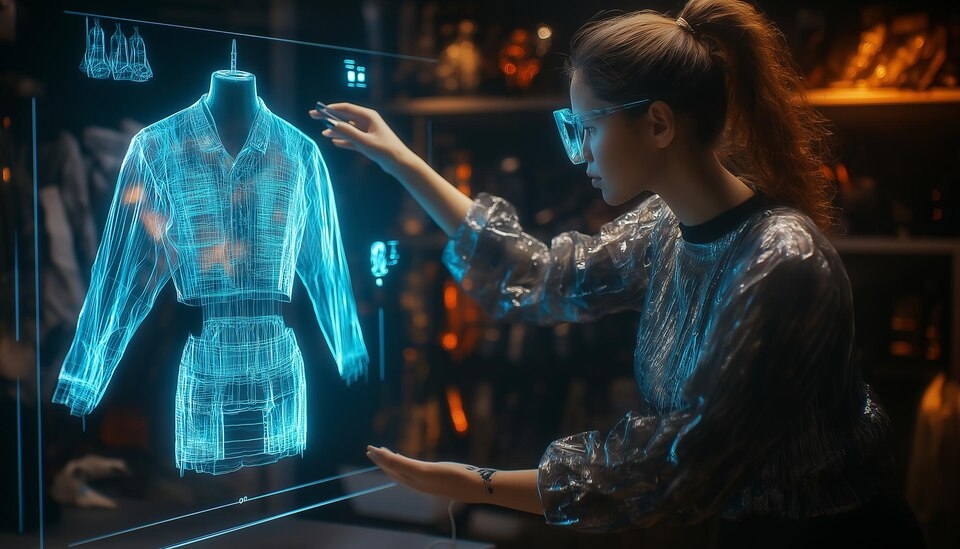
In the fast-paced, trend-driven world of fashion, creativity and intuition are being powerfully augmented by a new, data-driven force: artificial intelligence. The global AI In Fashion industry is a dynamic and transformative sector focused on applying machine learning, computer vision, and predictive analytics to every segment of the fashion value chain. This is not about replacing human designers with robots; it is about empowering every role—from the creative director to the supply chain manager to the retail associate—with intelligent tools to make faster, smarter, and more customer-centric decisions. AI is being used to analyze vast datasets of social media trends and runway shows to forecast the next "big thing." It is optimizing complex supply chains to reduce waste and improve speed to market. And it is personalizing the online shopping experience to a degree that was previously unimaginable. By infusing data science into the art of style, the AI in fashion industry is fundamentally reshaping how clothes are designed, manufactured, marketed, and sold, heralding a new era of efficiency, sustainability, and personalization.
The impact of AI begins at the very inception of a garment: the design and trend forecasting stage. Traditionally, designers and buyers have relied on intuition, experience, and painstaking manual research to predict upcoming trends. AI revolutionizes this process by acting as a powerful analytical engine. AI platforms can scan and analyze millions of images and data points from social media, fashion blogs, street style photography, and e-commerce sites in real time. Using sophisticated computer vision and natural language processing, these systems can identify emerging patterns in colors, silhouettes, fabrics, and styles, providing designers with data-backed insights into what consumers will want to wear next season. Beyond analysis, generative AI tools, such as Generative Adversarial Networks (GANs), are now being used as creative partners. A designer can feed a generative model a set of initial ideas or images, and the AI can produce a vast array of novel design variations, patterns, and colorways, dramatically accelerating the ideation process and opening up new avenues of creativity that a human designer might not have considered on their own.
Once a design is finalized, AI plays an equally crucial role in optimizing the back-end operations of the fashion business, particularly in the supply chain and manufacturing. The fashion industry has long been plagued by the problem of overproduction and waste, largely due to inaccurate demand forecasting. AI-powered predictive analytics addresses this head-on. By analyzing historical sales data, current trends, and even external factors like weather patterns, AI models can forecast demand for a specific product in a specific region with a much higher degree of accuracy. This allows brands to produce closer to actual demand, significantly reducing excess inventory and the associated environmental and financial costs. Within the manufacturing process, AI-driven computer vision systems are being deployed for quality control, automatically inspecting fabrics for defects or checking finished garments for stitching errors at a speed and consistency that surpasses human capability. AI also optimizes production scheduling and logistics, ensuring that materials arrive just in time and that finished goods are shipped through the most efficient routes.
Perhaps the most visible application of AI in fashion is in the transformation of the retail and customer experience. Personalization is the key to success in modern e-commerce, and AI is the engine that powers it. When a customer browses an online store, AI algorithms are working in the background, analyzing their browsing history, past purchases, and similarities to other customers to provide highly relevant, personalized product recommendations. This significantly increases engagement and conversion rates. The advent of AI-powered "virtual try-on" technology is another game-changer. Using computer vision, these tools allow a customer to upload a photo or use their device's camera to see how a garment would look on their own body, reducing the uncertainty of online shopping and lowering the high rate of returns. AI-powered chatbots and virtual styling assistants are also being deployed to provide 24/7 customer support and personalized style advice, creating a more interactive, helpful, and engaging shopping journey that builds customer loyalty and drives sales.
Top Trending Reports:
Wireless Telecommunication Service Market

 Czech
Czech
 English
 Arabic
 French
 Spanish
 Portuguese
 Deutsch
 Turkish
 Dutch
Dutch
 Italiano
 Russian
 Romaian
 Greek
Greek