


 Android App
 About SPORTIVO Network
Understanding EV Dynamics: Why Cold Weather Impacts Regenerative Braking
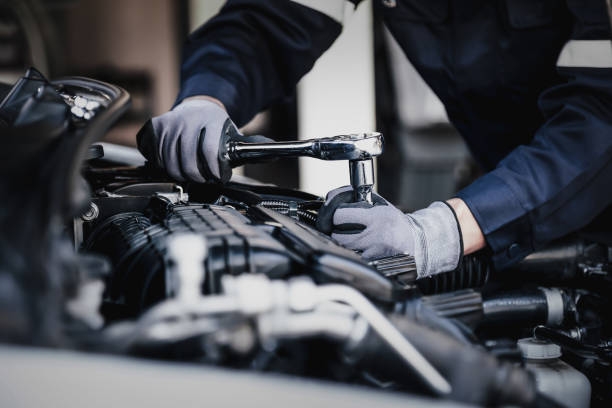
The transition from internal combustion engines to electric vehicles (EVs) has introduced drivers to a variety of new mechanical concepts and driving sensations. Perhaps the most significant of these is regenerative braking—a system that allows the vehicle to recover kinetic energy during deceleration and store it back in the battery. For many EV owners, this feature becomes a primary way of driving, often referred to as "one-pedal driving." However, as the temperature drops during winter months, many drivers notice a frustrating phenomenon: even with a full charge, the car doesn't seem to slow down as aggressively when they lift off the accelerator. This shift in performance isn't just a quirk of the software; it is deeply rooted in the electrochemical properties of modern battery systems and the physics of energy transfer.
When you notice your EV’s regenerative braking performance reduced in cold weather, you are witnessing the physical limitations of lithium-ion technology. Understanding these limitations is essential for any modern driver or aspiring technician. If you are interested in the deeper mechanics of how vehicle systems adapt to environmental changes, enrolling in a car mechanic course can provide the technical foundation necessary to diagnose and maintain these complex high-voltage systems. Unlike traditional friction brakes, which rely on mechanical pressure and heat dissipation, regenerative braking is a delicate dance between the electric motor acting as a generator and the battery’s ability to accept a high-current charge.
The Chemistry of Cold Batteries
To understand why performance dips, we must look at what happens inside the battery cells when the mercury falls. Lithium-ion batteries rely on the movement of ions through a liquid electrolyte. When the battery is cold, this electrolyte becomes more viscous—essentially thicker and more resistant to flow. This increased internal resistance means that the chemical reactions required to store energy happen much more slowly. If the car were to force a high-current charge (produced by regenerative braking) into a cold battery, it could cause "lithium plating," where metallic lithium forms on the surface of the anode instead of intercalating into it. This can lead to permanent capacity loss or even short circuits.
To prevent this damage, the Battery Management System (BMS) automatically limits the amount of power the battery can accept. This is why, on a freezing morning, you might see a dashed line on your power meter indicating limited "regen" availability. Even if you have a high-end vehicle, the laws of chemistry remain the same. Learning how to manage these thermal states is a key part of modern automotive education. Students who pursue a car mechanic certification spend significant time studying these thermal management systems, as they are the "brain" that keeps the EV powertrain safe and efficient during extreme weather fluctuations.
The Full Charge Dilemma
A common point of confusion for drivers is why regenerative braking is restricted when the battery is at or near a 100% state of charge (SoC). It helps to visualize the battery as a sponge. When the sponge is completely dry, it can soak up water rapidly. However, when the sponge is already saturated, it cannot hold any more liquid, no matter how much you pour onto it. Regenerative braking works by "pouring" electricity back into the battery. If your battery is already at 100%, there is literally no chemical "room" left to store the energy generated by the motor. Consequently, the vehicle must rely entirely on traditional hydraulic friction brakes to slow down.
When you combine a full charge with cold weather, you face a "double hit" to performance. The battery is full, so it can’t take energy, and it is cold, so it wouldn't be able to take it quickly anyway. This is why many EV manufacturers recommend setting a charge limit of 80% or 90% for daily use. Not only does this leave "buffer room" for regenerative braking to function immediately when you start your drive, but it also extends the overall lifespan of the battery pack. For those looking to work in the industry, understanding the relationship between SoC and energy recovery is a fundamental skill taught in a car mechanic course, ensuring that technicians can explain these behaviors to concerned vehicle owners.
Thermal Management Systems and Preconditioning
Modern EVs are equipped with sophisticated thermal management systems designed to combat the negative effects of cold weather. Most EVs use liquid cooling and heating loops that circulate through the battery pack to keep the cells within an ideal temperature window (usually between 15°C and 35°C). Many vehicles allow you to "precondition" the battery via a mobile app while the car is still plugged into a charger. This uses grid power to warm the battery, ensuring that when you hit the road, the electrolyte is fluid enough to accept regenerative energy right away. Without preconditioning, the car must use its own stored energy to heat the battery, which further reduces your total driving range.
The complexity of these heating loops, which often involve heat pumps, PTC heaters, and complex valving, represents the new frontier of automotive repair. The transition from simple radiators to multi-stage thermal circuits means the role of the technician has evolved. By taking a car mechanic program, individuals learn how to troubleshoot these thermal systems. If a heat pump fails or a coolant valve sticks, the vehicle might lose its ability to precondition, leading to a permanent state of reduced regenerative braking during the winter. Being able to scan, diagnose, and repair these high-voltage components is what separates a hobbyist from a professional in the current market.
Safety Implications of Variable Braking
One of the most overlooked aspects of reduced regenerative braking in winter is the impact on driving safety. Drivers who become accustomed to "one-pedal driving" rely on the car to slow down predictably the moment they lift off the accelerator. If the regen is limited due to cold or a high SoC, the car will "coast" much further than expected. This can be startling and potentially dangerous if the driver is not prepared to use the brake pedal manually. In icy conditions, the sudden engagement of heavy regenerative braking on the drive wheels could also potentially cause a loss of traction, which is why some vehicles automatically reduce regen when they detect slippery surfaces.
The integration of regenerative systems with ABS (Anti-lock Braking Systems) and Electronic Stability Control is a masterclass in software engineering and mechanical integration. As vehicles become more autonomous and "drive-by-wire," the need for experts who understand these integrated safety systems grows. Completing a car mechanic course ensures that you understand how the mechanical backup (the friction brakes) interacts with the electrical slowing force. This knowledge is vital for ensuring that a vehicle's braking bias remains balanced and safe, regardless of whether the battery is freezing cold or the thermometer is topping forty degrees.
The Future of Cold Weather EV Performance
As battery technology evolves, we are seeing the emergence of new chemistries and solid-state batteries that promise to be less sensitive to temperature fluctuations. Furthermore, engineers are developing faster ways to scavenge waste heat from the electric motors and inverters to warm the battery pack more efficiently. However, until these technologies become mainstream, the "cold weather regen" issue will remain a standard characteristic of electric motoring. Education remains the best tool for both drivers and technicians to navigate this transition. Understanding the "why" behind the vehicle's behavior reduces anxiety for the owner and provides a clear path for the technician.


 Czech
Czech
 English
 Arabic
 French
 Portuguese
 Deutsch
 Turkish
 Dutch
Dutch
 Italiano
 Russian
 Romaian
 Portuguese (Brazil)
 Greek
Greek