


 Android App
 About SPORTIVO Network
Deconstructing the Technology of a Quantum Communication Market Platform
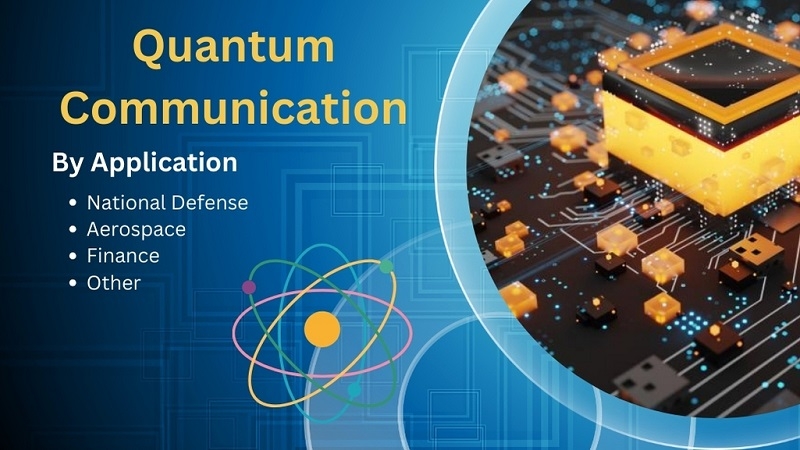
The ability to transmit information securely using the fundamental laws of physics is not accomplished by a single device but by an intricate system of specialized hardware and software. The modern Quantum Communication Market Platform, with its primary application today being Quantum Key Distribution (QKD), is an end-to-end system designed to generate, transmit, receive, and process quantum signals to establish a shared, secret cryptographic key between two distant parties. This platform consists of two main hardware terminals, traditionally named "Alice" (the transmitter) and "Bob" (the receiver), which are connected by a "quantum channel." These terminals house the sophisticated optical and electronic components needed to manipulate single photons. The entire process is orchestrated by classical control software and a classical communication channel, which are used to synchronize the devices and perform the post-processing steps necessary to distill a secure key. Understanding the interplay between these quantum and classical components is key to appreciating how a QKD platform transforms the fragile and probabilistic nature of quantum mechanics into a robust and deterministic security tool.
The transmitter terminal, "Alice," is the starting point of the quantum communication process. Its core component is a single-photon source, which is tasked with emitting individual photons in a controlled manner. In practice, true on-demand single-photon sources are still a research challenge, so many commercial systems use a "weak coherent pulse" source, which is a heavily attenuated laser pulse that, on average, contains much less than one photon per pulse, making the probability of emitting two photons at once very low. Alice's platform then uses a quantum state modulator to encode information onto each photon. For polarization-based QKD protocols (like the famous BB84 protocol), this would involve a set of polarizers that prepare each photon in one of several specific polarization states (e.g., horizontal, vertical, +45 degrees, or -45 degrees). The sequence of these states is chosen randomly by Alice and will form the basis of the secret key. The platform's control electronics must precisely synchronize the photon emission with the rapid modulation of its quantum state, creating a carefully prepared stream of encoded single photons ready for transmission.
The photons then travel from Alice to the receiver terminal, "Bob," through the quantum channel. This channel can be either a standard telecommunications optical fiber or free space (i.e., through the atmosphere or the vacuum of space). In either case, the quantum channel is inherently lossy and noisy. Photons can be absorbed or scattered by the medium, and environmental factors can disturb their delicate quantum states (a process called decoherence). This limits the maximum achievable distance for QKD over optical fiber to typically a few hundred kilometers before the signal becomes too weak to be useful. For longer distances, free-space communication via satellites, as demonstrated by China's Micius satellite, is a promising alternative. A critical component for extending the range of terrestrial networks is the concept of a trusted node. Since quantum states cannot be amplified like classical signals, long-distance networks are built by linking together shorter QKD segments with trusted intermediary nodes that receive a key from one side and generate a new one for the next, effectively daisy-chaining the secure links.
The receiver terminal, "Bob," is responsible for detecting the incoming photons and measuring their quantum states. The heart of Bob's platform is a set of single-photon detectors, which are extremely sensitive devices, such as avalanche photodiodes (APDs), capable of registering the arrival of a single photon. Before the detector, Bob has a quantum state analyzer. This consists of a set of measurement bases (e.g., polarization filters) that he randomly chooses for each incoming photon. According to the rules of quantum mechanics, if Bob chooses the same measurement basis that Alice used to prepare the photon, he will measure its state with 100% accuracy. If he chooses a different basis, his result will be random. After the quantum transmission is complete, Alice and Bob use a separate, authenticated classical communication channel to compare the bases they used for each photon. They discard all the measurements where their bases did not match. The remaining sequence of shared, secret bits forms the "sifted key." They then sacrifice a portion of this key to check for errors, which would reveal the presence of an eavesdropper. If the error rate is below a certain threshold, they perform final post-processing steps (error correction and privacy amplification) to distill a final, provably secure cryptographic key.
Explore More Like This in Our Regional Reports:
India AI Meeting Assistants Market

 Czech
Czech
 English
 Arabic
 French
 Spanish
 Portuguese
 Deutsch
 Dutch
Dutch
 Italiano
 Russian
 Romaian
 Portuguese (Brazil)
 Greek
Greek