


 Android App
 About SPORTIVO Network
Understanding the Foundational Role of the Platform as a Service Industry
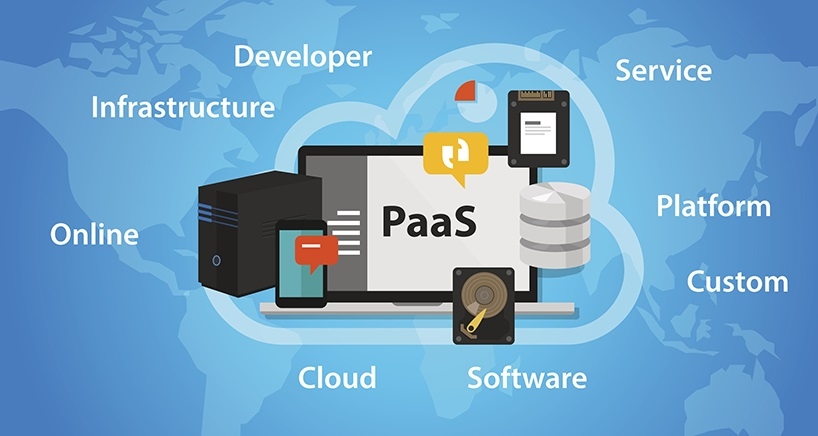
In the modern cloud computing landscape, the quest for speed, agility, and developer productivity has led to a fundamental rethinking of how applications are built and deployed. This evolution is championed by the global Platform as a Service industry, a sector that provides a crucial middle ground between raw infrastructure and ready-to-use software. Platform as a Service (PaaS) is a cloud computing model where a third-party provider delivers a complete development and deployment environment over the internet. This environment includes not just the underlying infrastructure—servers, storage, and networking—but also a rich set of middleware, development tools, business intelligence (BI) services, database management systems, and more. The core value proposition of PaaS is abstraction. It frees developers from the complex and time-consuming burden of managing the underlying infrastructure, such as provisioning servers, patching operating systems, and configuring databases. Instead, they can focus exclusively on their core task: writing, testing, and deploying their application code. This dramatic simplification of the development lifecycle is what makes PaaS a powerful catalyst for innovation, enabling organizations to bring new applications to market faster and more cost-effectively than ever before.
To fully appreciate the significance of PaaS, it is essential to understand its place within the broader spectrum of cloud service models, which also includes Infrastructure as a Service (IaaS) and Software as a Service (SaaS). IaaS, the most basic layer, provides fundamental computing resources like virtual machines, storage, and networking. With IaaS, the organization is still responsible for managing everything "above" the hardware virtualization layer, including the operating systems, middleware, and application runtime environments. This offers maximum control and flexibility but also requires significant IT operational overhead. At the other end of the spectrum is SaaS, where a complete, ready-to-use application (like Salesforce or Microsoft 365) is delivered over the internet. With SaaS, the user simply consumes the software, with no control over the underlying application or infrastructure. PaaS sits neatly in between these two models. It provides more than just raw infrastructure, but less than a fully-packaged application. It gives developers a ready-made platform on which to build, but still allows them complete control over their own application code. It strikes a crucial balance, offering the efficiency of a managed environment without sacrificing the flexibility needed for custom application development.
The components of a typical PaaS offering are designed to support the entire software development lifecycle. At its foundation, the platform provides the compute and storage infrastructure, managed by the PaaS provider. On top of this runs the operating systems and a suite of middleware services, which can include application servers, messaging queues, and caching services. A crucial component is the application runtime environment, which provides support for various programming languages and frameworks (e.g., Java, Python, .NET, Node.js). Developers can simply "push" their code to the platform, and the PaaS will automatically handle the deployment, scaling, and load balancing of the application. The platform also typically includes a variety of integrated services that developers can easily consume. This often includes a range of managed database services (both relational and NoSQL), business intelligence and analytics tools, and services for security and identity management. This rich, integrated toolset provides developers with all the building blocks they need to create sophisticated, enterprise-grade applications without having to build and manage each component from scratch.
The primary benefits delivered by the PaaS industry are centered on accelerating innovation and improving developer productivity. By abstracting away the complexity of infrastructure management, PaaS allows development teams to become significantly more agile. They can provision a complete development and testing environment in minutes, rather than the weeks it might take to procure and configure physical hardware. This dramatically shortens development cycles and enables a more rapid, iterative approach to software creation. The pay-as-you-go pricing model of PaaS also makes it highly cost-effective, particularly for startups and new projects, as it eliminates the need for large upfront capital expenditures on hardware. Furthermore, PaaS platforms are inherently designed for scalability and high availability. The provider takes care of scaling the underlying infrastructure to meet demand and ensures the platform is resilient, freeing the development team from these complex operational concerns. In essence, PaaS empowers developers to focus on writing code that delivers unique business value, rather than on managing the plumbing of the IT infrastructure, thus becoming a powerful engine for digital transformation.
Explore More Like This in Our Regional Reports:

 Czech
Czech
 English
 Arabic
 French
 Spanish
 Portuguese
 Deutsch
 Turkish
 Dutch
Dutch
 Italiano
 Russian
 Romaian
 Greek
Greek