


 Android App
 About SPORTIVO Network
Paired vs Unpaired t Test: What’s the Difference?
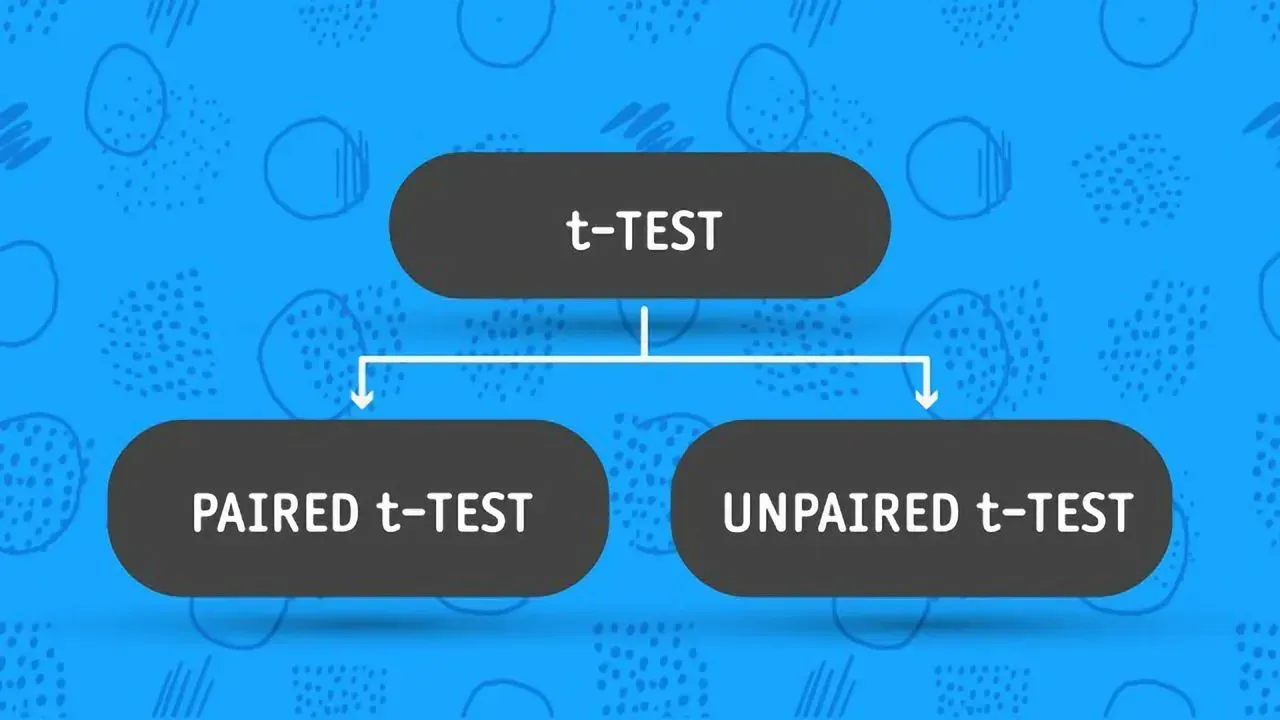
Understanding the difference between a paired vs unpaired t test is essential for choosing the right statistical method when comparing two sets of data. Both tests are used to determine whether there is a significant difference between means, but each applies to different study designs and data relationships.
What Is a Paired t Test?
A paired t test (also known as a dependent t test) is used when the two sets of data are related or matched. This happens when measurements are taken from the same subjects before and after a treatment, or when subjects are matched in pairs with similar characteristics.
Because the data pairs are connected, the paired t test accounts for the dependency between observations, which often increases test sensitivity and accuracy.
Examples of paired data:
-
Before and after weights of the same group after a diet
-
Test scores of students before and after training
-
Blood pressure readings before and after medication
What Is an Unpaired t Test?
An unpaired t test (also known as an independent t test) applies when the two sets of data are independent and unrelated. This means the samples consist of different subjects with no natural pairing or matching.
The unpaired t test compares the means of two distinct groups and determines whether any observed difference is statistically significant.
Examples of unpaired data:
-
Comparing test scores of two separate classrooms
-
Blood pressure levels of two different patient groups
-
Average heights of males vs females in a population
Key Differences Between Paired and Unpaired t Tests
| Feature | Paired t Test | Unpaired t Test |
|---|---|---|
| Relationship Between Samples | Dependent / Matched | Independent |
| Use Case | Same subjects measured twice | Different groups |
| Variance Consideration | Accounts for paired differences | Assumes independent variances |
| Test Sensitivity | More sensitive if pairing is appropriate | Standard sensitivity |
When to Use Which Test
Choose a paired t test when you have matched samples or measurements taken from the same subjects at different times. Choose an unpaired t test when comparing two independent groups without any inherent connection between data points.
Understanding this distinction ensures correct analysis and avoids misleading conclusions.
Learn More
For an in-depth comparison of paired vs unpaired t test and when to use each method, check out this guide:
👉 paired vs unpaired t test

 Czech
Czech
 English
 Arabic
 French
 Spanish
 Deutsch
 Turkish
 Dutch
Dutch
 Italiano
 Russian
 Romaian
 Portuguese (Brazil)
 Greek
Greek