


 Android App
 About SPORTIVO Network
What Challenges Arise During Bottle Preform Heating Processes?
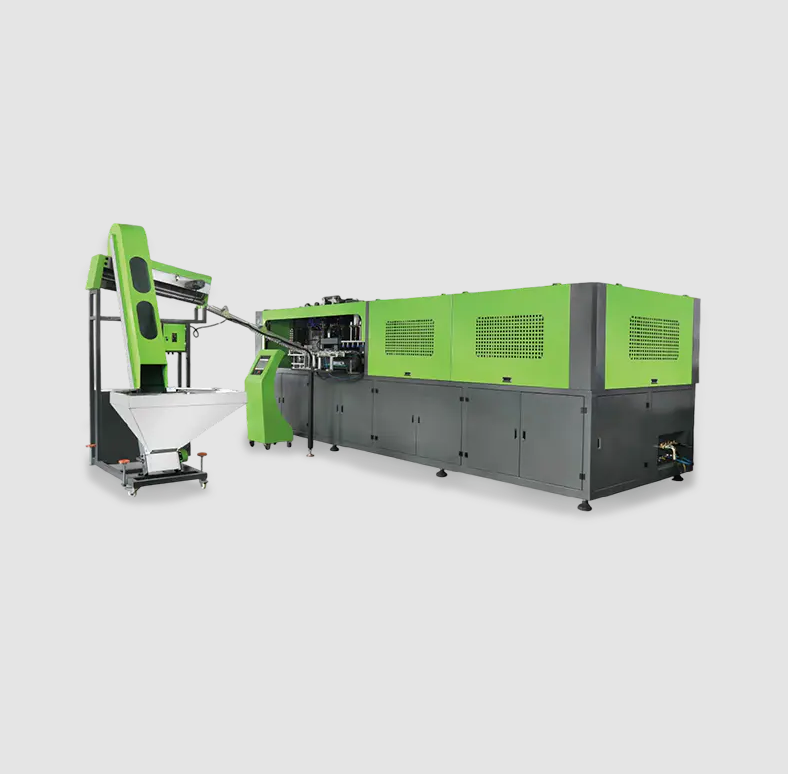
During bottle production, temperature control often determines whether a container meets functional and visual expectations. When operating a Wide-Mouth Bottle Blowing Machine together with an Edible Oil Bottle Blowing Machine, manufacturers must adjust heating strategies to accommodate differences in bottle geometry and material flow. These adjustments are rarely universal and usually reflect accumulated production experience.
Preform heating is the stage where raw material properties begin to translate into final bottle characteristics. Infrared heaters are commonly arranged in multiple zones, allowing gradual and controlled softening of the preform. Uneven heating can lead to inconsistent stretching during blowing, which affects wall thickness and structural balance. This risk increases as bottle designs become more diverse.
Wide-mouth bottles often require special attention around the neck transition. Because the opening diameter is larger, material distribution near the neck must remain stable to support cap sealing and repeated opening. Excessive heat in this area may cause deformation, while insufficient heat can result in poor stretching. A Wide-Mouth Bottle Blowing Machine is therefore typically configured with fine-tuned heating profiles near the upper zones.
Edible oil bottles emphasize uniform body strength rather than neck openness. Their cylindrical or slightly contoured bodies must withstand internal pressure changes and stacking loads. Heating zones are adjusted to ensure consistent axial stretching, which helps maintain vertical alignment and reduces the likelihood of panel deformation after filling.
Rotation speed of preforms during heating also plays a role. Controlled rotation helps distribute heat evenly across the surface, reducing temperature gradients. Machines designed for multiple bottle types often allow independent adjustment of rotation speed to match preform length and wall thickness.
Environmental conditions within the production area can influence heating behavior. Ambient temperature, airflow, and humidity may alter heat transfer efficiency. Operators often compensate by making incremental adjustments rather than drastic changes, maintaining stable output over long runs.
Material variations add another layer of complexity. Even when using the same PET grade, slight differences in preform manufacturing can affect heat absorption. Experienced operators monitor visual cues and process data to identify when heating adjustments are needed, especially during extended production cycles.
Cooling behavior immediately after blowing is equally important. Mold cooling channels help set the bottle shape, preventing relaxation before ejection. Wide-mouth bottles may cool differently due to their geometry, requiring balanced airflow to avoid distortion. Oil bottles, particularly larger volumes, rely on consistent cooling to maintain base stability.

 Czech
Czech
 English
 Arabic
 French
 Spanish
 Portuguese
 Deutsch
 Turkish
 Dutch
Dutch
 Italiano
 Russian
 Romaian
 Greek
Greek