


 Android App
 About SPORTIVO Network
DIN Type Fuse or BS Type Fuse: Which Is Better for Electrical Protection?
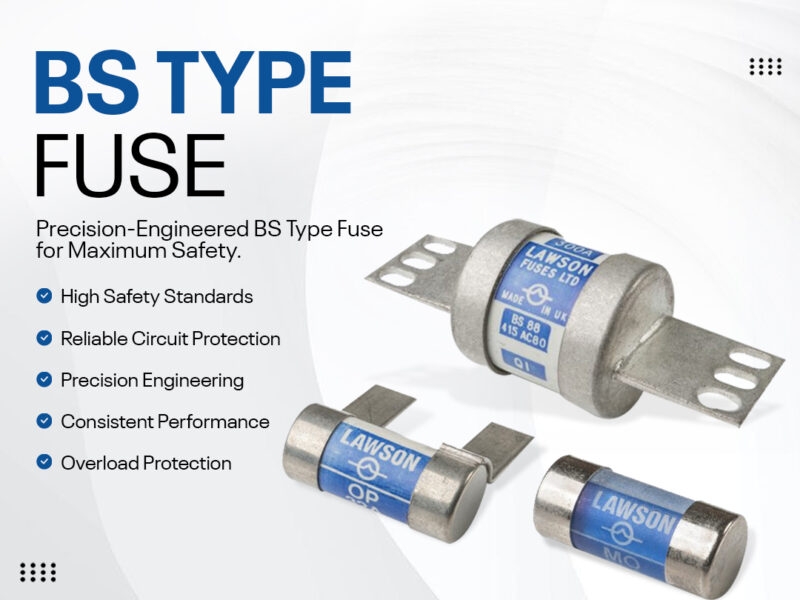
Electrical safety is not optional—it is foundational to every residential, commercial, and industrial power system. At the heart of this safety framework lies a deceptively simple yet critical component: the fuse. Among the most widely used standards globally are the BS Type Fuse and the DIN Type Fuse. Both are engineered to protect electrical circuits from overloads and short circuits, yet they differ significantly in design philosophy, standards compliance, applications, and performance characteristics.
This in-depth guide explores DIN Type Fuse or BS Type Fuse: which is better, not from a marketing angle, but through an expert, standards-based, real-world lens. Whether you are an electrical engineer, consultant, maintenance professional, or informed decision-maker, this article will help you understand where each fuse excels—and where it may fall short.
Understanding the Role of a Fuse in Electrical Systems
Before comparing fuse types, it’s important to understand what a fuse actually does.
A fuse is a sacrificial safety device designed to interrupt electrical current when it exceeds a predefined safe limit. By melting under excess current, the fuse breaks the circuit and prevents damage to equipment, wiring, and, most importantly, human life.
Key objectives of a fuse:
-
Prevent overheating and fire hazards
-
Protect sensitive equipment
-
Ensure system reliability and continuity
-
Comply with regional and international safety standards
Different fuse standards evolved to meet different regional practices, voltage systems, and industrial needs—leading us to BS and DIN fuse types.
What Is a BS Type Fuse?
A BS Type Fuse is designed according to British Standards, primarily governed by BS 88 and related specifications. These fuses are extensively used in the UK, parts of Europe, the Middle East, Asia, and many Commonwealth-influenced electrical systems.
Key Characteristics of BS Type Fuse
-
Conforms to British Standards (BS 88)
-
Typically used in low-voltage distribution systems
-
Available in multiple forms: cartridge, offset blade, bolted tag
-
Designed for high breaking capacity
-
Robust construction suitable for harsh environments
BS Type Fuses are widely trusted for their reliability and consistency in performance, especially in systems where fault levels can be high.
What Is a DIN Type Fuse?
A DIN Type Fuse follows standards established by the Deutsches Institut für Normung (DIN), widely adopted across Germany and much of continental Europe. DIN standards emphasize modularity, compact design, and seamless integration into modern electrical panels.
Key Characteristics of DIN Type Fuse
-
Designed to DIN and IEC standards
-
Commonly cylindrical in shape
-
Compact and space-efficient
-
Ideal for modular switchgear systems
-
Easy installation and replacement
DIN Type Fuses are particularly favored in modern industrial automation and control panels where space optimization and standardization are critical.
Standards and Compliance: BS vs DIN
Standards are not just paperwork—they define safety, compatibility, and legal acceptance.
BS Type Fuse Standards
-
BS 88 series
-
High rupture capacity (HRC)
-
Designed for high fault current applications
-
Widely accepted in utility and infrastructure projects
DIN Type Fuse Standards
-
DIN 43620 / IEC 60269
-
Harmonized with international IEC norms
-
Suitable for standardized European systems
-
Emphasis on interchangeability
From a compliance perspective, neither standard is “better” universally—it depends on the regulatory framework of the region and project.
Performance Comparison: DIN Type Fuse vs BS Type Fuse
Breaking Capacity
-
BS Type Fuse typically offers very high breaking capacity, making it ideal for systems with high prospective fault currents.
-
DIN Type Fuse also provides reliable breaking capacity but is generally optimized for controlled industrial environments.
Edge: BS Type Fuse
Thermal Stability
-
BS Type Fuses are built to withstand higher thermal stress over longer durations.
-
DIN Type Fuses perform well but may require closer thermal management in dense panels.
Edge: BS Type Fuse
Response Time
Both fuse types are available in fast-acting and time-delay variants, suitable for different load characteristics such as motors or sensitive electronics.
Edge: Equal (application-dependent)
Design and Installation Differences
BS Type Fuse Design
-
Larger physical size
-
Heavier construction
-
Often requires dedicated fuse carriers or switch-fuse units
-
Designed for long-term durability
DIN Type Fuse Design
-
Compact, cylindrical format
-
Designed for rail-mounted systems
-
Quick replacement
-
Minimal footprint in panels
Edge: DIN Type Fuse for space-constrained installations
Applications and Use Cases
Where BS Type Fuse Excels
-
Power distribution boards
-
Industrial plants
-
Infrastructure projects
-
Commercial buildings
-
Systems with high fault levels
The BS Type Fuse is often chosen where safety margins must be exceptionally high and downtime is costly.
Where DIN Type Fuse Excels
-
Industrial automation
-
Control panels
-
Machinery protection
-
Modular electrical systems
DIN Type Fuses are well-suited to modern manufacturing environments where efficiency and standardization matter.
Maintenance and Reliability
BS Type Fuse
-
Longer service life
-
Designed for rugged conditions
-
Less frequent replacement in stable systems
DIN Type Fuse
-
Easy to inspect and replace
-
Lower downtime during maintenance
-
Ideal for systems requiring frequent reconfiguration
Reliability is high for both, provided correct selection and installation.
Cost Considerations
While pricing varies by region and specification:
-
BS Type Fuse generally costs more due to heavier construction and higher breaking capacities.
-
DIN Type Fuse tends to be more economical for standardized installations.
However, upfront cost should never outweigh safety and compliance requirements.
Global Perspective: Which Is Better Worldwide?
In a global context, the answer is nuanced.
-
BS Type Fuse is often preferred in regions with British-influenced electrical systems and where heavy-duty protection is required.
-
DIN Type Fuse dominates in European-style installations and modern industrial automation globally.
Neither is obsolete. Both coexist because they serve different engineering philosophies.
Choosing the Right Fuse: Key Decision Factors
When deciding between a BS Type Fuse and a DIN Type Fuse, consider:
-
Regulatory Requirements – Local standards often dictate fuse type
-
Fault Level of the System – Higher fault levels favor BS Type Fuse
-
Panel Space – Compact panels favor DIN Type Fuse
-
Maintenance Strategy – Frequent access favors DIN Type Fuse
-
Application Type – Infrastructure vs automation
A technically correct fuse selection is always context-specific.
Common Misconceptions
“DIN Type Fuse Is Always More Modern”
Not necessarily. Modernity depends on application design, not just form factor.
“BS Type Fuse Is Overkill”
In high-risk systems, “overkill” often translates to safety margin.
Future Trends in Fuse Technology
While circuit breakers and smart protection devices are evolving, fuses remain irreplaceable in many applications due to their:
-
Predictable behavior
-
No moving parts
-
High reliability
-
Low failure rates
Both BS Type Fuse and DIN Type Fuse standards continue to evolve alongside IEC harmonization efforts.
Conclusion: DIN Type Fuse or BS Type Fuse – Which Is Better?
So, DIN Type Fuse or BS Type Fuse: which is better?
The honest, expert answer is: the better fuse is the one that fits your system requirements, standards, and risk profile.
The BS Type Fuse stands out for heavy-duty applications, high fault capacity, and long-term reliability in demanding environments. The DIN Type Fuse, on the other hand, excels in compact, modular, and modern industrial systems where efficiency and standardization are key.
Rather than viewing them as competitors, it is more accurate to see them as complementary solutions within the global electrical protection ecosystem. When chosen correctly, both deliver exceptional safety, performance, and peace of mind.
In electrical engineering, the best choice is never about preference—it’s about precision.
For More Details: Lawson Fuse

 Czech
Czech
 English
 French
 Spanish
 Portuguese
 Deutsch
 Turkish
 Dutch
Dutch
 Italiano
 Russian
 Romaian
 Portuguese (Brazil)
 Greek
Greek