


 Android App
 About SPORTIVO Network
Optimizing Travel Speed for Fluid Alloys
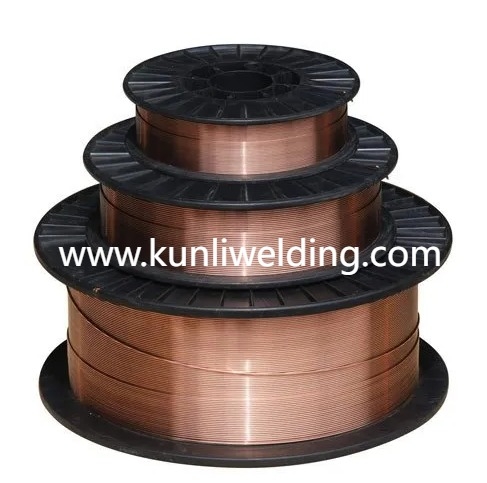
In the precise world of aluminum fabrication, the introduction of advanced consumables has shifted the way operators approach machine setup. To fully leverage the capabilities of Aluminum Welding Wire ER4943 , fabricators must look beyond the standard settings used for traditional silicon-based fillers. While this modern alloy shares some characteristics with older materials, its enhanced chemical formulation offers distinct behaviors—specifically regarding fluidity and wetting—that require a deliberate adjustment of welding parameters to achieve improved structural and aesthetic results.
The most noticeable difference when working with this alloy is its exceptional fluidity. The molten pool flows much more freely than previous generations of filler metal. Consequently, the first parameter that often requires adjustment is voltage. Operators accustomed to "pushing" the puddle with higher voltage to get the toes to wet out will find that this wire does the work naturally. Therefore, it is often effective to lower the voltage slightly. Reducing the voltage tightens the arc cone and provides more control over the fluid puddle. This adjustment not only saves energy but also reduces the total heat input into the base material, which is a critical factor in controlling distortion on thin gauge sheets.
Travel speed goes hand-in-hand with voltage adjustments. Because the puddle wets out rapidly, the operator can, and often should, increase travel speed. Moving too slowly with such a fluid alloy can result in a convex bead profile or excessive build-up, which defeats the purpose of using a wire designed for smooth, flat welds. By increasing the travel speed, the welder takes advantage of the alloy's capillary action, allowing for a flatter bead profile that blends seamlessly with the base metal. This increase in speed translates directly to productivity gains without sacrificing penetration or fusion.
Wire feed speed is another variable that deserves attention. While the density of Aluminum Welding Wire ER4943 is similar to other 4xxx series alloys, its deposition efficiency can be higher due to the lack of spatter and smoother transfer. Operators might find that they can maintain the same deposition rate with a slightly different wire feed setting compared to what they use for magnesium-heavy alloys. It is crucial to balance the wire feed with the travel speed to ensure that the arc length remains consistent. A stable arc is necessary to prevent burn-back, especially given the responsive nature of the material.
Pulse parameters also play a significant role in optimization, particularly for pulsed MIG welding. The background current and peak time can be fine-tuned to manage the heat. Since this alloy flows so well, a slightly lower background current can help freeze the puddle faster on the edges, providing that classic "stacked dime" appearance without the risk of the puddle sagging or dripping, especially in out-of-position welding. Adjusting the frequency of the pulse can also stiffen the arc, giving the operator more directional control over where the metal is deposited.
Gas flow is the final piece of the puzzle. While pure argon is the standard shielding gas, ensuring the correct flow rate is vital. Turbulence caused by excessive gas flow can disturb the fluid puddle of this alloy more easily than stiffer puddles. Ensuring a laminar flow protects the reactive aluminum from oxygen and hydrogen, preventing porosity.
By respecting the unique chemistry of the material and adjusting voltage, speed, and pulse settings accordingly, fabricators can unlock the full potential of the wire. It transforms the welding process from a struggle against the material into a smooth, efficient operation.For professional inquiries and detailed product specifications, please visit https://kunliwelding.psce.pw/8p6qax .

 Czech
Czech
 English
 Arabic
 French
 Spanish
 Portuguese
 Deutsch
 Turkish
 Dutch
Dutch
 Italiano
 Russian
 Romaian
 Greek
Greek