


 Android App
 About SPORTIVO Network
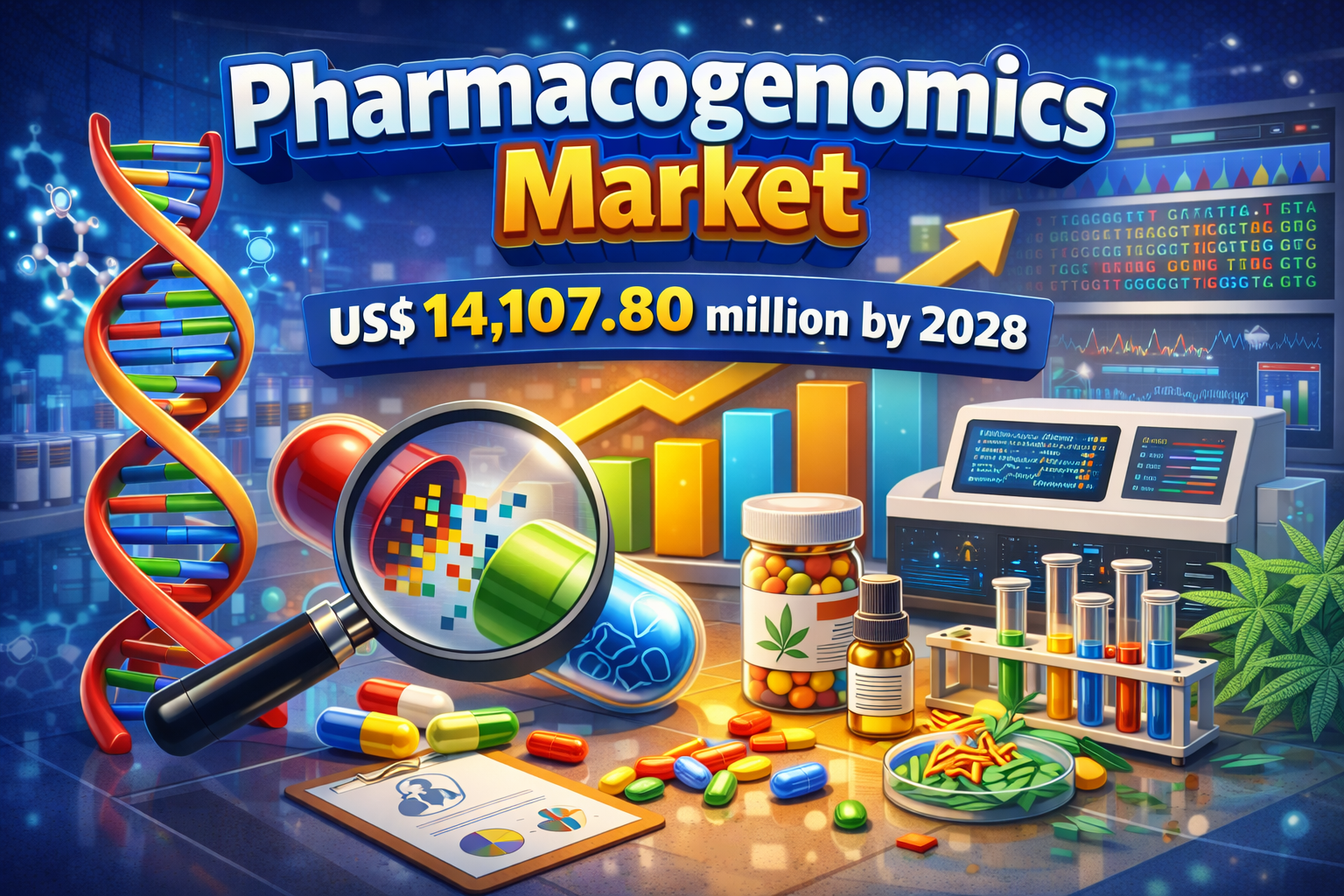
Pharmacogenomics Market Value Set at US$ 14,107.80 Million
Pharmacogenomics combines pharmacology and genomics to understand how inherited genetic differences affect drug metabolism and therapeutic response. It helps identify which patients are likely to benefit from a specific medication and which may experience harmful side effects. As genetic testing becomes more accessible, pharmacogenomics is playing an increasingly important role in delivering individualized and evidence-based treatment strategies.
The pharmacogenomics market is projected to reach US$ 14,107.80 million by 2028 from US$ 7,087.81 million in 2021, registering a CAGR of 10.3% during the forecast period. Market expansion is strongly supported by the increasing burden of chronic diseases and the rising demand for targeted therapies. Conditions such as cardiovascular diseases, diabetes, obesity, rheumatoid arthritis, Alzheimer’s disease, and depression are closely linked to genetic predispositions. With nearly 6 in 10 adults in the United States living with at least one chronic condition, the need for tailored treatment solutions continues to grow.
Driving Factors
One of the primary driving factors is the escalating prevalence of chronic illnesses worldwide. Genetic insights derived from genome-wide association studies allow clinicians to assess individual disease risks and customize therapeutic interventions. This capability significantly enhances treatment efficacy and patient safety.
Growing funding for genomic research is another major catalyst. Governments and private institutions are investing heavily in large scale genome sequencing initiatives. Over the next few years, genomic data from more than 60 million patients is expected to be integrated into healthcare systems globally. Public private collaborations, including large genome database projects in the United Kingdom and other nations, are accelerating the integration of pharmacogenomics into routine clinical practice.
Regulatory support also strengthens the market landscape. Approvals of targeted therapies, particularly in oncology, demonstrate confidence in pharmacogenomic approaches. The approval of novel treatments for gene specific mutations in cancer patients reflects the shift toward precision medicine.
Market Trends
A significant market trend is the increasing adoption of pharmacogenomics in oncology. Cancer treatment decisions are now frequently guided by genetic testing to identify actionable mutations. The global cancer burden continues to rise, creating sustained demand for accurate diagnostics and personalized treatment protocols. With millions of new cases projected in the coming decades, pharmacogenomics offers a pathway to more effective and less toxic therapies.
Technological advancements are shaping the competitive environment. Polymerase chain reaction technologies, next generation sequencing, microarrays, and mass spectrometry are widely used for gene analysis and mutation detection. PCR remains a widely adopted method due to its reliability, scalability, and cost effectiveness. Companies are introducing advanced real time and digital PCR platforms to improve sensitivity and turnaround time.
Another emerging trend is the increasing role of contract research and development organizations. These entities provide clinical trial management, gene analysis services, data validation, and regulatory support. Their expertise accelerates drug development timelines and reduces operational complexity for pharmaceutical companies.
Download Sample PDF: https://www.theinsightpartners.com/sample/TIPRE00007564
Growth Opportunities
Expanding applications beyond oncology present promising growth opportunities. Pharmacogenomics is gaining traction in neurology, psychiatry, pain management, and cardiovascular therapy. Personalized dosing strategies can improve treatment response in mental health disorders and chronic pain conditions, areas where conventional therapies often show variable outcomes.
Emerging markets in Asia Pacific and Latin America offer untapped potential. Rising healthcare investments, improving diagnostic infrastructure, and increasing awareness of personalized medicine are fostering regional growth. Collaborative agreements, mergers, and acquisitions are enabling companies to expand their geographic footprint and technology portfolios.
The integration of genomic data with digital health platforms is another opportunity. Combining artificial intelligence with genetic datasets can enhance predictive analytics and streamline clinical decision making. This convergence is expected to create new business models and service offerings in the coming years.
Key Players
Leading companies operating in the pharmacogenomics market include:
- F. Hoffmann La Roche Ltd
- Abbott
- Oxford Nanopore Technologies
- Thermo Fisher Scientific Inc.
- Illumina Inc.
- QIAGEN
- Agilent Technologies Inc.
- Myriad Genetics Inc.
- Admera Health
These organizations focus on product innovation, strategic collaborations, acquisitions, and global expansion to strengthen their market presence.
Future Outlook
The future outlook for the pharmacogenomics market remains highly promising. As healthcare systems prioritize precision medicine, the integration of genetic insights into routine diagnostics will accelerate. Continued regulatory support, technological innovation, and expanding clinical evidence will further validate the economic and therapeutic benefits of pharmacogenomics. With rising awareness among clinicians and patients, the market is expected to witness sustained double digit growth and broader adoption across multiple therapeutic areas.
Frequently Asked Questions
1. What is driving the growth of the pharmacogenomics market?
The Pharmacogenomics market is primarily driven by the rising prevalence of chronic diseases, increasing adoption of precision medicine, growing genomic research funding, and supportive regulatory approvals for targeted therapies.
2. Why is oncology a major area for pharmacogenomics?
Oncology benefits significantly from genetic profiling because cancer treatments often depend on identifying specific mutations. Personalized therapies improve effectiveness and reduce adverse effects.
3. How will technological advancements impact the market?
Advances in PCR, sequencing, and data analytics enhance diagnostic accuracy, reduce costs, and speed up drug development, thereby expanding the adoption of pharmacogenomics in clinical practice.
Related Report
Laboratory Developed Test Market Size Trends & Key Opportunities 2034


 Czech
Czech
 English
 Arabic
 French
 Spanish
 Portuguese
 Deutsch
 Turkish
 Dutch
Dutch
 Italiano
 Romaian
 Portuguese (Brazil)
 Greek
Greek