


 Android App
 About SPORTIVO Network
Chatbots & AI Assistants: The Future of Web Development Services
The web development industry is undergoing one of its most significant transformations since the rise of mobile-first design and cloud computing. Artificial intelligence is no longer a futuristic concept reserved for research labs and enterprise giants. It has become a practical, accessible, and increasingly essential component of modern digital experiences. At the center of this shift are chatbots and AI assistants.
From customer support automation to intelligent content generation and predictive user experiences, AI-driven systems are reshaping how websites are built, managed, and optimized. Businesses are no longer asking whether they should implement AI—they are asking how quickly they can integrate it effectively.
This article explores how chatbots and AI assistants are redefining web development services, the technologies behind them, their business impact, implementation strategies, and what the future holds.
Understanding Chatbots and AI Assistants
Chatbots and AI assistants are often used interchangeably, but they represent different levels of sophistication. Traditional chatbots operate using rule-based logic. They follow predefined scripts and respond to specific keywords or user selections. AI assistants, by contrast, use machine learning and natural language processing to understand context, intent, and conversation flow.
The evolution of conversational AI accelerated with advancements in large language models such as OpenAI’s systems and conversational platforms like ChatGPT. These technologies demonstrated that AI could hold fluid, human-like conversations, answer complex questions, and generate high-quality content in real time.
This shift has fundamentally expanded what is possible within web development.
The Evolution of AI in Web Development
Early websites were static and informational. Then came dynamic content management systems, followed by responsive design and eCommerce integration. Today, AI represents the next stage in that progression.
Major technology companies such as Google and Microsoft have integrated AI deeply into search engines, cloud platforms, and productivity tools. Their investments have made AI APIs widely accessible to developers, enabling even small businesses to deploy advanced conversational systems.
Web development agencies are now incorporating AI capabilities directly into the core architecture of websites rather than treating them as add-ons.
Why Chatbots Are Becoming Essential in Modern Websites
User expectations have changed dramatically. Visitors expect instant responses, personalized recommendations, and seamless digital experiences. They do not want to search through multiple pages to find answers.
Chatbots address this demand by acting as real-time digital assistants. They can guide users to relevant content, recommend products, schedule appointments, qualify leads, and provide support 24 hours a day.
From a business perspective, chatbots reduce operational costs while increasing engagement. Instead of hiring additional support staff, companies can deploy AI systems that handle thousands of simultaneous conversations without fatigue.
Enhancing User Experience Through Conversational Interfaces
Conversational interfaces fundamentally change how users interact with websites. Instead of navigating menus manually, users can simply type or speak their needs.
These interfaces create a guided experience. For example, on an eCommerce site, an AI assistant can ask clarifying questions about budget, preferences, or use cases before recommending products. On a service-based website, the assistant can pre-qualify leads by collecting project requirements.
This interactive approach reduces bounce rates and increases conversion rates by simplifying decision-making.
Personalization at Scale
One of the most powerful advantages of AI assistants is their ability to personalize experiences at scale. Traditional websites deliver the same content to all users. AI-powered systems analyze browsing behavior, past interactions, geographic data, and purchase history to tailor recommendations.
For example, a returning user might see customized product suggestions or content aligned with previous interests. An AI assistant can reference past conversations and continue them naturally, creating continuity across sessions.
This level of personalization was previously achievable only with large marketing teams and complex CRM systems. AI makes it accessible to businesses of all sizes.
Lead Generation and Sales Automation
In web development services, one of the most valuable applications of chatbots is automated lead qualification. Instead of relying solely on static forms, AI assistants engage visitors in conversation, ask relevant questions, and determine whether they meet specific criteria.
For instance, a web development agency can deploy a chatbot that asks about budget range, project timeline, business size, and required features. Based on responses, the system can categorize leads as high priority or informational.
AI assistants can also schedule consultations directly into a company’s calendar, integrate with CRM systems, and trigger automated email sequences. This transforms websites into proactive sales engines rather than passive information portals.
AI-Powered Customer Support
Customer support is one of the most common use cases for chatbots. AI systems can handle frequently asked questions, track orders, provide troubleshooting guidance, and escalate complex cases to human agents when necessary.
Unlike traditional support teams, AI assistants operate continuously without downtime. They can handle surges in traffic without delays. For global businesses, multilingual AI assistants eliminate language barriers and provide consistent support worldwide.
This scalability significantly reduces operational strain while maintaining high service quality.
Content Generation and Dynamic Website Management
AI assistants are not limited to conversational interfaces. They are increasingly integrated into content management systems to assist with content creation and optimization.
Web developers now use AI tools to generate blog drafts, product descriptions, meta tags, and landing page copy. These systems can also analyze SEO performance and suggest improvements.
For example, platforms built on WordPress can integrate AI plugins that recommend keyword optimization or automatically generate summaries. Similarly, AI services from IBM and Amazon provide cloud-based AI capabilities that developers can embed directly into websites.
This integration streamlines workflows and accelerates content production.
AI in Web Design and Development Workflows
Beyond user-facing features, AI is transforming the development process itself. AI-powered design tools can generate layout suggestions based on industry best practices. Code-generation assistants help developers write cleaner, more efficient code.
Machine learning algorithms analyze user behavior data to recommend UX improvements. Heatmap predictions, automated A/B testing insights, and performance monitoring systems allow continuous optimization.
This reduces development time and enhances overall website quality.
Integration with Voice and Multimodal Interfaces
As voice assistants like Amazon Alexa and Google Assistant become more common, web development is expanding beyond text-based interfaces. AI-powered websites can integrate voice search, allowing users to navigate and interact hands-free.
Multimodal AI combines text, voice, and image recognition. For example, a user might upload a product image and ask an AI assistant for similar items. This expands accessibility and creates more inclusive digital experiences.
Security and Ethical Considerations
While AI offers enormous benefits, it also introduces challenges. Data privacy is a primary concern. AI assistants rely on user data to provide personalized experiences. Developers must ensure compliance with regulations such as GDPR and other data protection laws.
Transparency is equally important. Users should know when they are interacting with an AI system rather than a human representative. Clear disclosures build trust and avoid ethical pitfalls.
Bias in AI models is another critical issue. Developers must carefully evaluate training data and implement safeguards to prevent discriminatory outputs.
Implementation Strategies for Businesses
Successful implementation of chatbots and AI assistants requires strategic planning. Businesses should begin by identifying clear objectives. Whether the goal is customer support automation, lead generation, or content optimization, clarity ensures measurable outcomes.
Next, companies must choose appropriate technology platforms. Options range from custom-built AI integrations to third-party SaaS chatbot solutions. Integration with existing CRM, ERP, and marketing systems is crucial for seamless operation.
Testing and continuous optimization are essential. AI systems improve over time as they learn from interactions. Regular monitoring ensures accuracy, relevance, and user satisfaction.
Measuring ROI of AI in Web Development
Investing in AI must produce measurable returns. Key performance indicators may include increased conversion rates, reduced customer support costs, shorter response times, and improved customer satisfaction scores.
Analytics dashboards track conversation volume, resolution rates, and user engagement. By comparing these metrics before and after implementation, businesses can quantify impact.
Over time, AI-driven insights often reveal new growth opportunities, from identifying common customer pain points to discovering unmet market needs.
The Future of AI-Driven Web Experiences
The future of web development services will likely revolve around deeper AI integration. Websites may become fully adaptive environments that change layout, content, and navigation dynamically based on real-time behavior analysis.
AI assistants could evolve into proactive digital advisors that anticipate user needs before questions are asked. Predictive analytics may enable websites to suggest solutions even before visitors articulate problems.

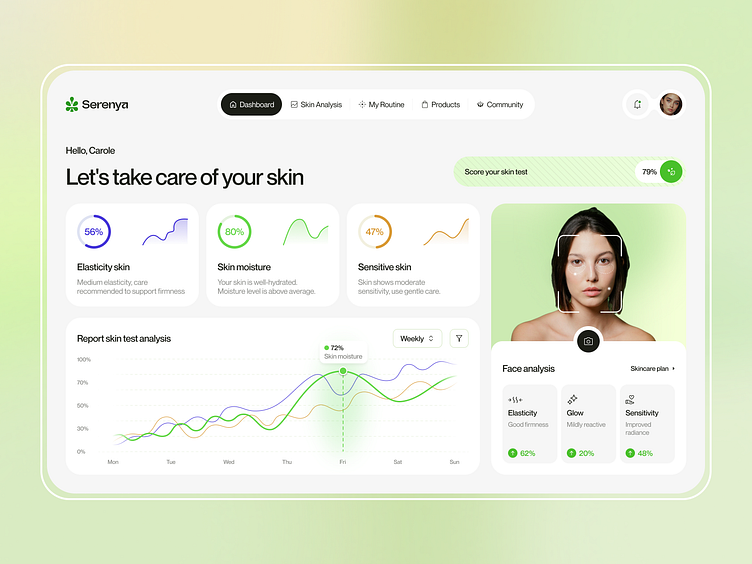

Advancements in generative AI will likely allow websites to generate personalized landing pages instantly for each visitor. Integration with augmented reality and virtual reality may further expand possibilities.
The Role of Web Development Agencies
Web development agencies must evolve alongside these technological changes. Agencies that integrate AI strategy into their service offerings gain competitive advantages. They move from building static websites to developing intelligent digital ecosystems.
Clients increasingly expect AI-driven features as standard rather than optional upgrades. Agencies must therefore invest in AI expertise, ethical guidelines, and scalable infrastructure.
The future web developer is not only a coder or designer but also a strategist who understands data, automation, and machine learning integration.
Conclusion
Chatbots and AI assistants are not temporary trends. They represent a foundational shift in how websites are built, managed, and experienced. By enabling real-time interaction, personalization at scale, automated lead generation, and intelligent content management, AI is redefining web development services.
For any forward-thinking web development agency, integrating AI-driven solutions is no longer optional—it is essential. Businesses that embrace these technologies gain efficiency, scalability, and competitive differentiation, while agencies that implement them deliver smarter, higher-performing digital platforms. Those that hesitate risk falling behind as user expectations continue to rise.
The future of web development lies in intelligent, adaptive, and conversational digital experiences. As AI technology continues to advance, websites will transform from static information platforms into dynamic, responsive ecosystems powered by smart assistants.
For companies and developers alike, the question is no longer whether AI will shape the future of the web. It already is.

 Czech
Czech
 English
 Arabic
 French
 Spanish
 Portuguese
 Deutsch
 Turkish
 Dutch
Dutch
 Italiano
 Romaian
 Portuguese (Brazil)
 Greek
Greek