


 Android App
 About SPORTIVO Network
The Science of Smooth: A Simple Guide to Industrial Grinding
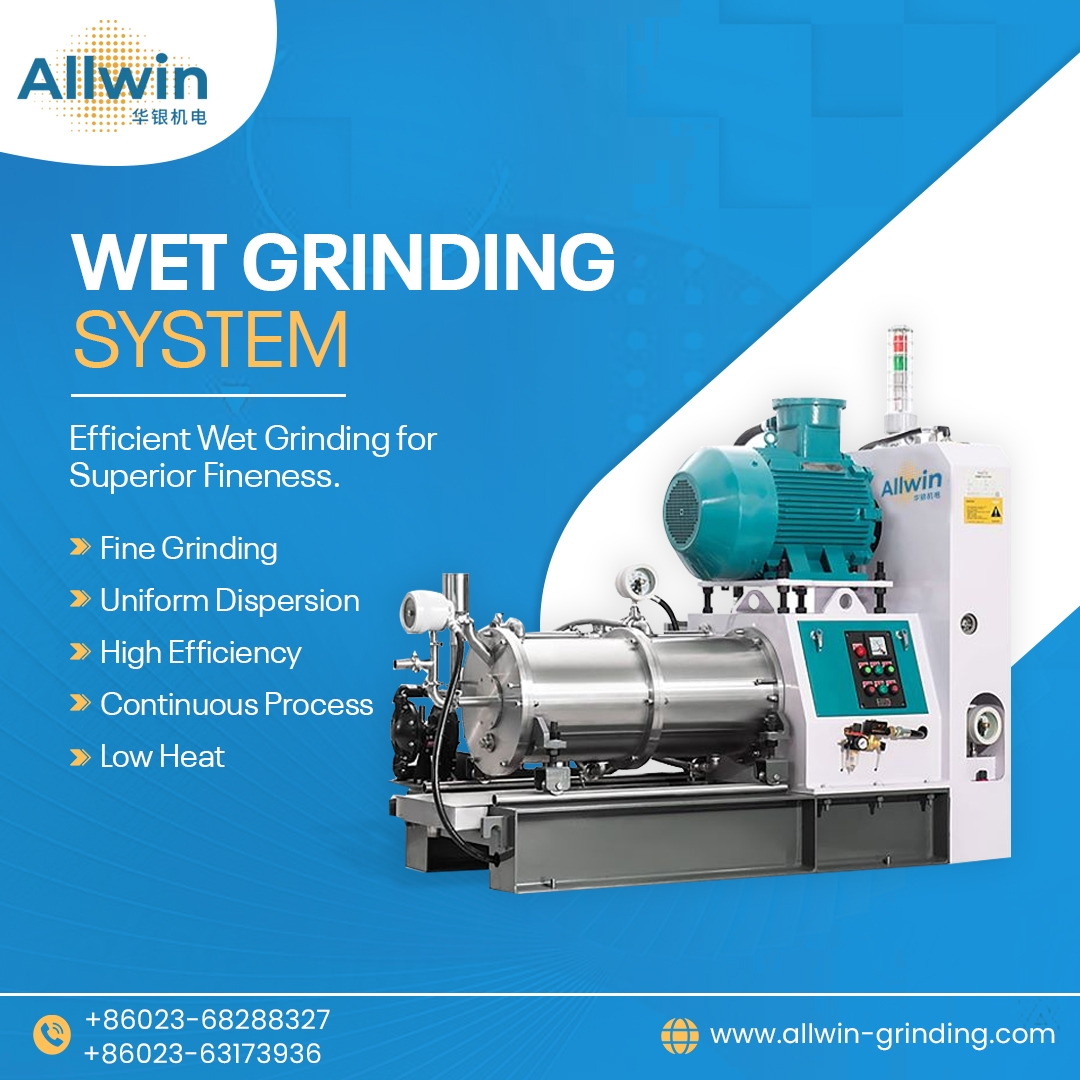
Did you ever wonder how your new car got that great shiny paint? What about the brightly colored ink on your favorite breakfast cereal? Or even the silky texture that is found in most sun screen lotions? You probably don't think about it daily, but every single one of those examples would not be possible if they were not manufactured using a very specialized production technique.
How do manufacturers make these end products into such smooth products? How do they take their raw materials from large unrefined chunks to finely ground smooth liquids? The answer is "wet grinding" technology.
This article will provide an overview for companies interested in learning about making their raw materials into smooth liquids through the use of a Wet Grinding System, the Wet Bead Mill, and the Horizontal Sand Mill.
Examining the overall process, there are two methods (dry and wet) that factories utilize to micronize solid particulate matter. Dry grinding is performed using a mortar and pestle method and creates dust and excess heat. Conversely, wet grinding utilizes liquid to create a slurry of the raw material being processed.
For example, using dry sugar as a medium, if you crush the dry sugar, it will become powdered and become airborne. Instead, if you mix the dry sugar with water prior to crushing, you will achieve a much smoother product compared to the messy method of creating a powdered product. A wet grinding system cools the equipment and will also keep employees from experiencing unsafe dust explosions as well as producing a finer and more consistent end product.
How does the particle crushing work with respect to the system? By using a machine that has a very descriptive name called a "Wet Bead Mill?"
The idea behind this means of particle crushing is relatively straightforward to develop. There are basically thousands of tiny, hard (typically ceramic or glass) beads housed in a giant cylinder. In that same cylinder is also a spinning shaft that has some type of fins or discs on it.
As you place the slurry (liquid mixture) in the Wet Bead Mill, the shaft spins rapidly creating an agitation of the beads. That agitation creates millions of collisions per second between the beads, and the majority of the slurry will get caught in between those millions of beads as they collide, causing a crushing and/or shearing effect on the particles in the slurry.
Therefore, rather than think of the process of crushing to be like the tumbling of small rocks in a stream, think of it as being like a very rapid, very advanced form of tumbling, where through high velocity, you can turn large particles into "nanosized" particles in a just a few minutes.
Mill Design and Applications: The Horizontal Sand Mill
The design of a mill has changed significantly over time. In the past, vertical mills (which stand upright) were commonly used. Unfortunately,y are limited and inefficient because the weight of the grinding media is concentrated at the bottom of the mill, causing uneven grinding.
To correct this problem, engineers have redesigned the traditional mill with a horizontal design to provide for an even distribution of the grinding beads.
The term "sand" mill may be misleading because most modern sand mills use ceramic beads for the purpose of grinding materials. The term "sand" refers to the earlier designs that originally used sand particles as the grinding medium. The most important characteristic of a horizontal sand mill is that the grinding chamber is oriented horizontally.
There are three main advantages to the horizontal design:
- Even Distribution: The horizontal orientation allows for an even distribution of the grinding media along the entire length of the grinding chamber. As a result, all of the product being processed will be evenly ground.
- Improved Flow: The horizontal design can better handle thick/slime-like products (shown in comparison of heavy paint and chocolate), as opposed to vertical mills.
- Efficiency: Horizontal sand mills operate in a more energy-efficient manner, resulting in higher production output (by reducing processing times).
Conclusion
Whether you are manufacturing battery materials, inkjet printer ink, or agricultural chemicals, the goal is usually the same: consistency and quality.
-
-
The Wet Grinding System provides the overall framework for processing materials in a liquid state to avoid dust and heat.
-
The Wet Bead Mill is the actual machinery that uses tiny beads to pulverize particles.
-
The Horizontal sand mill is the most efficient design of that machine, ensuring a smooth flow and an even grind. By using these technologies, manufacturers can ensure that when you touch that car hood or apply that lotion, it feels perfectly smooth every single time.
-

 Czech
Czech
 English
 Arabic
 French
 Portuguese
 Deutsch
 Turkish
 Dutch
Dutch
 Italiano
 Russian
 Romaian
 Portuguese (Brazil)
 Greek
Greek