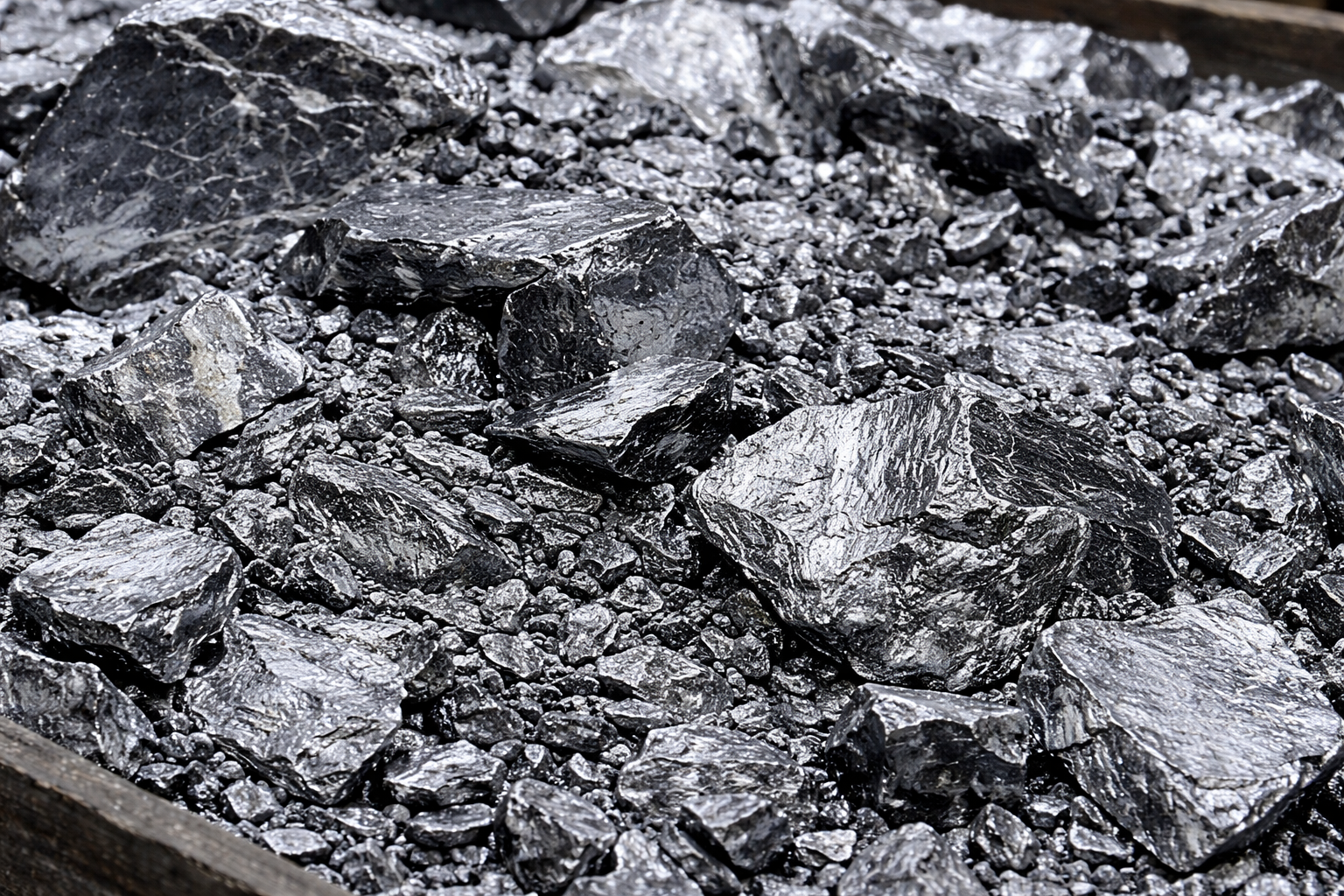
Graphite density is a key physical property defining the mass of graphite per unit volume. Graphite, a crystalline form of carbon, is known for its layered structure, high thermal stability, electrical conductivity, and lubricating properties. Its density impacts mechanical strength, durability, conductivity, and suitability for various industrial and technological applications. Understanding graphite density is crucial for industries ranging from battery production to metallurgy and refractories, ensuring proper material selection for optimum performance.
Structure of Graphite and Its Impact on Density
Graphite consists of carbon atoms arranged in hexagonal layers. Strong covalent bonds hold atoms within layers, while weak van der Waals forces between layers allow them to slide over each other. This layered arrangement influences density: tightly packed layers increase density, improving strength and conductivity, while loosely packed layers reduce density. The atomic structure also contributes to graphite's lubricating properties and thermal stability, making it versatile in multiple applications.
Typical Density Range of Graphite
Natural graphite generally has a density between 2.09 and 2.23 g/cm³. Synthetic graphite varies depending on manufacturing techniques such as extrusion, isostatic pressing, or chemical vapor deposition. High-density graphite is often achieved through compression and high-temperature treatments that minimize porosity, enhancing electrical conductivity and mechanical strength. Lower-density graphite is advantageous in applications where flexibility, lubricity, or reduced weight is required.
Factors Influencing Graphite Density
Several factors affect graphite density, including purity, porosity, and production methods. Impurities reduce density and affect structural consistency. Porosity, created by voids, lowers overall density. Manufacturing techniques such as pressing, baking, and graphitization compress graphite, increasing density and performance. Temperature and pressure during production also play significant roles in determining final density and application suitability.
Role of Graphite Density in Batteries
Graphite is commonly used as an anode material in lithium-ion batteries. Its density affects how much active material can fit into a cell, directly impacting energy storage capacity. High-density graphite enhances electrical conductivity and structural stability, resulting in longer battery life, efficient charge-discharge cycles, and better overall performance. Dense graphite is essential in applications such as smartphones, laptops, electric vehicles, and renewable energy storage systems.
Industrial Applications Based on Density
Graphite density determines its suitability for various industrial uses. High-density graphite is preferred for electrodes in electric arc furnaces due to superior conductivity and mechanical strength. In refractory materials, dense graphite withstands extreme heat and thermal shock. Low-density graphite is used in lubricants and sealing materials, where sliding properties are essential. Selecting the right density ensures reliability and performance in specific industrial applications.
Methods to Measure Graphite Density
Graphite density can be measured using water displacement, helium pycnometry, and X-ray density techniques. These methods provide accurate mass-to-volume calculations and ensure consistency in quality control. Precise measurement is critical for industrial applications to guarantee graphite meets required technical specifications and performs reliably under operational conditions.
Advantages of High-Density Graphite
High-density graphite offers several benefits, including improved mechanical strength, reduced porosity, enhanced thermal and electrical conductivity, and better wear resistance. In batteries, it provides higher energy density and more stable charge-discharge cycles. Its durability and stability make high-density graphite valuable for advanced technological and industrial applications requiring high performance.
Challenges in Density Optimization
Optimizing graphite density involves complex processing, which can increase production costs. Over-compression may reduce flexibility and affect other properties. Manufacturers must balance density with mechanical strength, conductivity, and porosity to meet application-specific requirements efficiently. Quality control and precise manufacturing parameters are essential for achieving consistent results.
Future Trends in Graphite Density
With increasing demand for electric vehicles and renewable energy technologies, graphite density optimization is a focus of ongoing research. Advanced synthetic graphite with controlled microstructures is being developed to improve density, conductivity, and performance. Innovations in nanotechnology and material engineering are expected to enhance graphite’s efficiency and applicability in batteries, electronics, and industrial systems.
Conclusion
Graphite density is a fundamental property that influences strength, conductivity, thermal stability, and overall usability of graphite materials. From batteries to industrial processes, selecting the correct density ensures optimal performance and reliability. Understanding factors affecting graphite density allows industries and researchers to optimize materials for specific applications. As technology advances and energy demands grow, graphite density will remain a critical consideration in material science, industrial innovation, and sustainable energy solutions.



 About SPORTIVO Network


 Czech
Czech
 English
 Arabic
 French
 Spanish
 Portuguese
 Deutsch
 Turkish
 Dutch
Dutch
 Italiano
 Russian
 Romaian
 Greek
Greek