


 About SPORTIVO Network
Expert Sandblasting Services 2026: Fast, Eco-Friendly & Precise
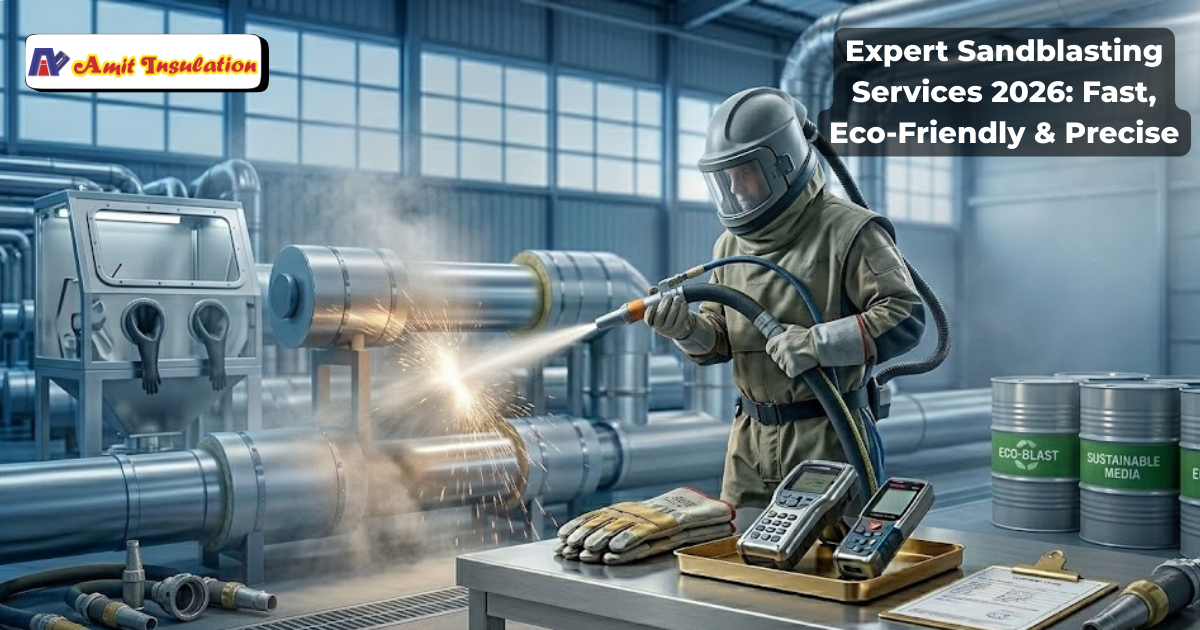
Expert Sandblasting Services in 2026 are no longer just about stripping paint or rust—they are now a tightly integrated part of modern surface‑preparation ecosystems that prioritize speed, environmental responsibility, and micron‑level precision. With the global sandblasting machines market already topping USD 648.6 million in 2026 and projected to near USD 932 million by 2035, demand is being driven by smarter equipment, stricter regulations, and a growing appetite for eco‑friendly, automated solutions across industries ranging from automotive and aerospace to marine, infrastructure, and renewable energy.
What modern sandblasting means in 2026
Sandblasting (also called abrasive blasting) in 2026 is a controlled process in which compressed air or a mechanical wheel projects abrasive media against a surface to clean, etch, texture, or prepare it for coating. Unlike traditional “sand‑only” blasting, today’s systems use a wide range of engineered media—metal, glass, plastic, and even walnut shells—alongside water‑assisted or vacuum‑assisted technologies to minimize dust, reduce waste, and improve finish quality.
Key drivers pushing the industry forward include:
-
Rising infrastructure renewal and maintenance programs worldwide.
-
Stricter environmental and worker‑safety regulations (e.g., dust‑control and silica‑exposure rules).
-
Growth in corrosion‑sensitive sectors such as marine, oil & gas, and wind‑turbine maintenance.
How the 2026 sandblasting market looks
Recent industry analyses show that the global sandblasting services and equipment markets are both expanding steadily, with a clear tilt toward automation, precision, and sustainability. By 2026, blasting‑service revenue is already in the multi‑billion‑dollar range, with double‑digit growth projected in the abrasive‑media segment alone.
A few headline numbers (2026 snapshot):
-
Sandblasting machines market: about USD 648.6 million in 2026, with a projected compound annual growth rate (CAGR) of 4.1% through 2035.
-
Sandblasting media market: forecast to grow at around 8.1% CAGR from 2023 to 2028, implying a fast move away from cheap, dusty orthodox media toward engineered, reusable, and niche abrasives.
-
Sandblasting services:_REPORT‑level forecasts put the global blasting‑services market at roughly USD 7.4 billion by 2026, with a strong upward trajectory through 2035.
Table 1: Sandblasting market snapshot (2026)
Why speed matters in today’s sandblasting jobs
Speed in 2026 is no longer just about “finishing quickly”; it is about reducing downtime, minimizing labor costs, and fitting into tighter project schedules on bridges, pipelines, ships, and production‑line equipment. High‑productivity blasting systems now deliver:
-
Larger nozzle sizes and higher air‑flow rates that remove coatings faster while maintaining control.
-
Automated robotic arms and gantry systems that can “paint” surfaces with abrasive patterns, eliminating manual fatigue and human‑speed bottlenecks.
-
Digitally controlled blast parameters (pressure, angle, media feed rate) so operators can dial‑in the fastest safe profile for each substrate.
In practice, a modern automated sandblasting cell can prepare a large industrial component in minutes instead of hours, with consistent profile and minimal rework—making speed and precision complementary, not conflicting, goals.
The eco‑friendly revolution in abrasive blasting
Environmental pressure has reshaped abrasives and methods. Pure sand (quartz) is now restricted or heavily regulated in many regions because of silica‑dust health risks, and providers are switching to safer, often recyclable media.
Major eco‑friendly trends in 2026
-
Dustless and wet‑blasting systems: These mix water or other liquids with abrasives to suppress dust plumes, reduce airborne silica, and cut down on secondary cleanup.
-
Vacuum‑blast and enclosed systems: Vacuum‑assisted units capture spent media and debris in‑line, turning multi‑step cleanup into a single‑step operation while drastically lowering emissions.
-
Recycled‑glass and engineered‑ceramic media: These abrasives are reusable, generate less hazardous waste, and often provide a cleaner, more uniform profile than traditional sand.
Table 2: Comparison of traditional vs eco‑friendly blasting methods
Precision blasting: Why “microns” matter
In 2026, surface‑profile depth (often measured in microns or thousandths of an inch) is a critical specification for coatings, adhesives, and anti‑corrosion systems. Over‑blasting can thin metal, distort fine edges, or create an uneven profile; under‑blasting leaves residual contaminants that compromise adhesion.
Modern “precision” sandblasting includes:
-
Adjustable nozzle‑tip geometry and standoff‑distance guides that keep the blast pattern tightly controlled.
-
Laser‑assisted profiling and automated feedback loops that monitor surface roughness in real time and adjust parameters on‑the‑fly.
-
Micro‑media options (e.g., fine glass or plastic beads) for delicate surfaces such as electronics enclosures, historic facades, or decorative metals.
For example, aerospace and high‑end automotive components often require a surface profile in the 25–75 µm (1–3 mils) range, with minimal dimensional change and no undercutting of edges—a level of control that only advanced, calibrated blasting systems can deliver reliably.
Types of sandblasting processes you’ll see in 2026
Even the term “sandblasting” is now a bit of a holdover. Today’s job sites deploy a mix of techniques tailored to substrate, environment, and end‑use requirements.
1. Dry abrasive blasting
Dry blasting uses compressed air to propel dry media against a surface. It is still the fastest option for removing thick coatings, heavy rust, or mill scale on large, outdoor structures such as bridges, tanks, and ship hulls.
Pros:
-
High material‑removal rate.
-
Widely available equipment and media.
Cons:
-
Significant dust and silica exposure without controls.
-
Requires stringent PPE and ventilation measures.
2. Wet and dustless blasting
Wet blasting injects water into the abrasive stream, while “dustless” systems often use water or other media dampeners to suppress airborne particles.
Pros:
-
Greatly reduced dust and particulate emissions.
-
Less heat buildup, which helps preserve dimensional stability on thin or heat‑sensitive parts.
Cons:
-
Slower than pure dry blasting on heavy‑scale removal.
-
Requires water management and drying steps where applicable.
3. Vacuum and enclosed blasting
Vacuum‑blast units suck the abrasive and debris back into the machine, creating a closed‑loop system. Enclosed blast cabinets and rooms are standard for workshops handling sensitive components or working under strict environmental permits.
Pros:
-
Very low emissions and minimal housekeeping.
-
Media can be screened and reused, cutting material costs.
Cons:
-
Higher initial equipment cost.
-
Limited to smaller or pre‑cut components in cabinet setups.
Table 3: Sandblasting methods and typical 2026 use‑cases
Equipment evolution: What’s new in 2026
Blasting equipment in 2026 is smarter, more connected, and often modular. The market is seeing a surge in demand for portable sandblasters, blast cabinets, and compact robotic cells, reflecting a shift toward flexible, on‑site, and shop‑integrated solutions.
Key trends in equipment:
-
Smart control panels: Pressure, media‑flow rate, and cycle time can be logged and tuned via touchscreens or even cloud‑linked dashboards on industrial blast systems.
-
Lightweight, mobile units: Portable sandblasters and mini‑blast cabinets let maintenance teams work in remote or confined areas without full fixed‑plant infrastructure.
-
High‑efficiency nozzles: New nozzle designs and wear‑resistant materials (e.g., tungsten carbide) extend life and reduce variability in blast pattern, improving both speed and finish quality.
Media innovation: From sand to engineered abrasives
Abrasive media is no longer a one‑size‑fits‑all choice. The 2026 media landscape is highly segmented, with engineered particles optimized for hardness, shape, recyclability, and environmental impact.
Common categories today:
-
Recycled glass: Sharp, angular particles that cut quickly and are often made from post‑consumer glass; widely used in eco‑friendly programs.
-
Steel grit and shot: High‑density metallic media for aggressive cleaning and “peening” to improve fatigue resistance.
-
Plastic media: Softer, lower‑impact options for delicate surfaces, such as automotive trim or composite panels.
-
Natural organics (walnut, corn, etc.): Used in niche restoration or food‑grade applications where chemical residues and harsh abrasives are unacceptable.
The choice of media directly affects surface profile, media consumption, and downstream waste volume, so expert service providers now pre‑audit projects with material‑selection matrices and lab‑scale trials.
Safety, regulations, and worker protection
Regulatory pressure is one of the strongest forces shaping 2026‑style sandblasting. In many regions, employers must comply with strict rules on silica exposure, dust control, ventilation, and personal‑protective equipment (PPE).
Key regulatory expectations today:
-
Risk assessments for each blasting operation, including ventilation and dust‑capture plans.
-
Mandatory use of respirators, blast suits, gloves, and hearing protection calibrated to the specific media and noise level.
-
Regular monitoring of airborne silica and other particulates, especially in dry‑blasting environments.
Expert services now integrate safety protocols directly into their quoting and planning: specifying wet or vacuum‑assisted methods where indoor work is required, scheduling blast operations in controlled enclosures, and using remote‑monitoring tools to ensure compliance without sacrificing throughput.
Industry‑specific applications in 2026
Different sectors demand different sandblasting profiles, speeds, and environmental tolerances. By 2026, specialized blasting‑service providers have carved out vertical‑specific niches.
Automotive and transportation
In automotive plants, sandblasting (or more commonly, abrasive‑blast or shot‑blast) is used to:
-
Prepare body‑in‑white and chassis components for primers and coatings.
-
Remove road‑salt corrosion and underbody coatings before refinishing.
Speed and automation are paramount here, with robotic blast cells integrated into production lines to match takt time.
Aerospace and defense
Aerospace components require ultra‑clean, tightly controlled surfaces. Blasting is used for:
-
Paint stripping from aircraft skins without damaging thin‑gauge aluminum.
-
Creating specific roughness profiles for adhesive bonding on composite parts.
Eco‑friendly media and low‑temperature, low‑peak‑pressure methods are favored to avoid thermal stress or micro‑cracking.
Marine and offshore
Marine environments are brutal on coatings, so sandblasting is central to:
-
Hull and tank maintenance, including ballast‑tank refurbishment.
-
Offshore‑platform structures exposed to salt spray and high UV.
Regulatory pressure to minimize waste and emissions pushes many shipyards toward enclosed or vacuum‑blast systems, especially in port‑city areas.
Infrastructure and construction
Bridges, pipelines, and power‑plant structures are now expected to last decades, not years. Modern blasting services support:
-
Surface preparation for high‑performance coatings on steel and concrete.
-
Restoration of historic steel structures where minimal substrate removal is critical.
Urban blasting projects often use water‑assisted or dustless methods to comply with local air‑quality rules.
Renewable energy
Amit Insulation The renewable‑energy sector is an emerging hotbed for sandblasting. Key applications include:
-
Wind‑turbine tower and blade maintenance, where corrosion control is mission‑critical.
-
Solar‑farm structural supports and mounting systems exposed to rain and salt.
Here, speed matters because turbine downtime is expensive, but eco‑compliance is equally important given the sector’s sustainability branding.
Automation and robotics: How they change sandblasting
Automation is transforming sandblasting from a manual, operator‑dependent craft into a repeatably precise, data‑driven process. By 2026, robotic arms and CNC‑guided blast heads are common in high‑volume or high‑precision environments.
Benefits of automated sandblasting:
-
Consistency: Every part receives the same profile and angle, reducing variability in adhesion and coating life.
-
Throughput: Robots can run longer shifts than human operators, especially in harsh environments.
-
Safety: Operators can oversee the process from a clean, controlled station instead of standing in a dusty blast zone.

 Czech
Czech
 English
 Arabic
 French
 Spanish
 Portuguese
 Deutsch
 Dutch
Dutch
 Italiano
 Russian
 Romaian
 Portuguese (Brazil)
 Greek
Greek